The Complete Collection & Life Timeline
Johann Sebastian Bach
Journey through the life and masterpieces of the Baroque era's supreme master of counterpoint. Discover the stories behind music written across a lifetime of devout service, family tragedy, and quiet, towering genius.
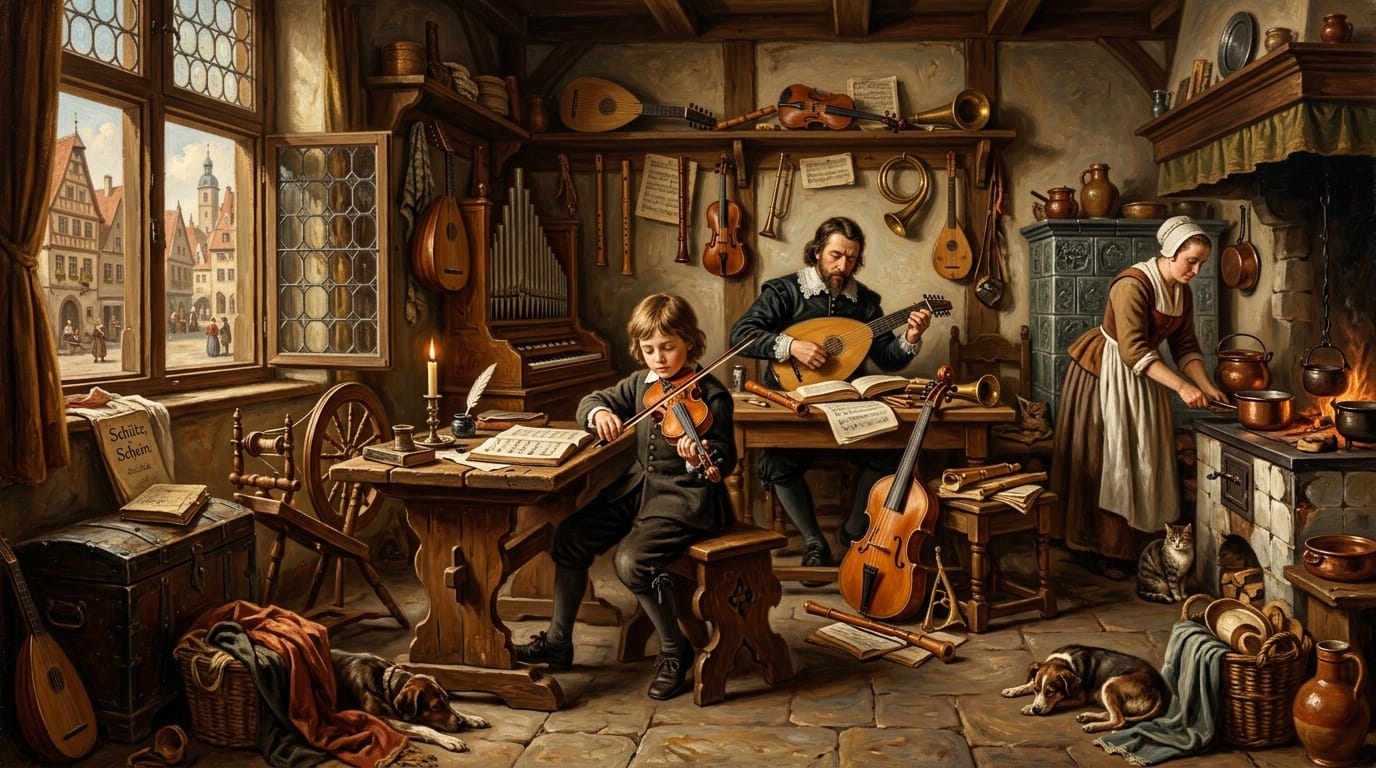
Johann Sebastian Bach was born on March 21, 1685 (by the Julian calendar still used in Lutheran Germany at the time; March 31 on today's Gregorian calendar), in Eisenach, a small town in the Duchy of Saxe-Eisenach. He was the eighth and youngest child of Johann Ambrosius Bach, a town musician (Stadtpfeifer) responsible for providing music at civic and church events, and Maria Elisabeth Lämmerhirt. The Bach family had been producing professional musicians for generations across central Germany, so young Sebastian grew up immersed in a family trade as much as an art, likely receiving his first violin instruction from his father.
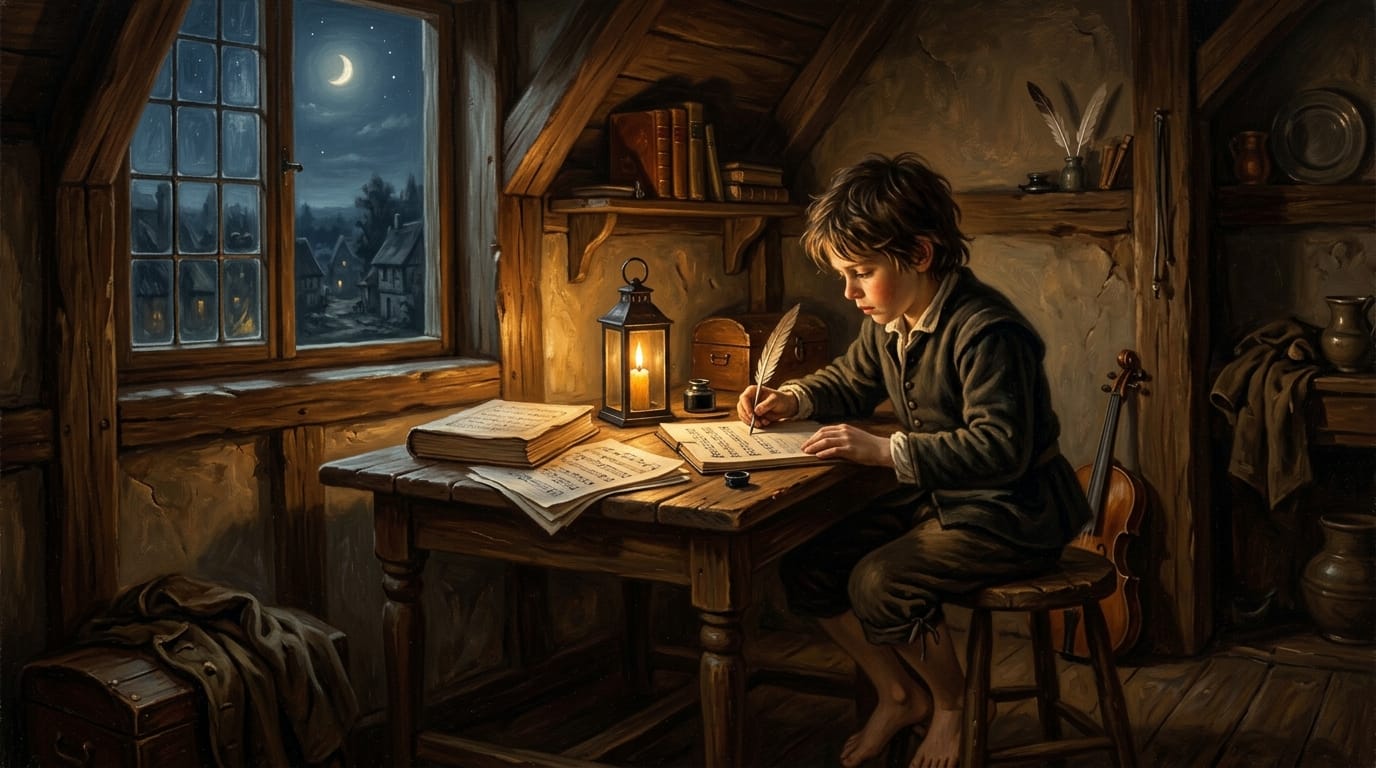
Bach's mother, Maria Elisabeth, died in 1694, and his father, Johann Ambrosius, followed only about eight months later, in February 1695, leaving ten-year-old Sebastian orphaned along with an older brother still at home. He was taken in by his eldest surviving brother, Johann Christoph Bach, who was organist at St. Michael's Church in the nearby town of Ohrdruf and had himself studied with the celebrated organist Johann Pachelbel. Under Johann Christoph's roof, young Sebastian received formal keyboard instruction and began building the technical foundation that would define his career, even as the double loss of both parents so early left a lasting mark.
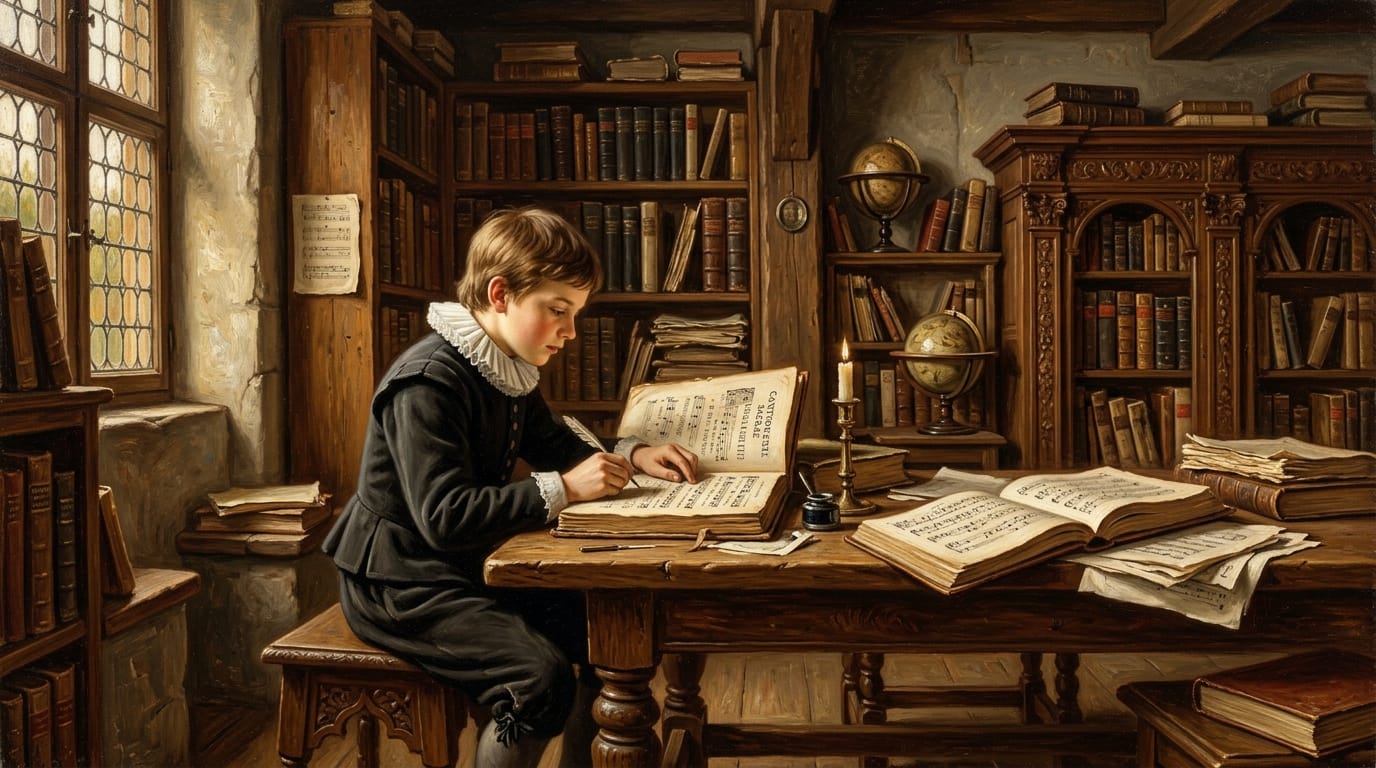
In 1700, at age fifteen, Bach traveled roughly 200 miles north from Ohrdruf to enroll at St. Michael's School in Lüneburg, where his fine soprano voice earned him a place in the Mettenchor, a choir of poor but musically gifted boys who received free room, board, and schooling in exchange for singing at services. At Lüneburg, Bach gained access to an exceptionally well-stocked music library and came into contact with the North German organ tradition through the town organist Georg Böhm, absorbing influences he would later fuse with the French and Italian styles he encountered elsewhere.
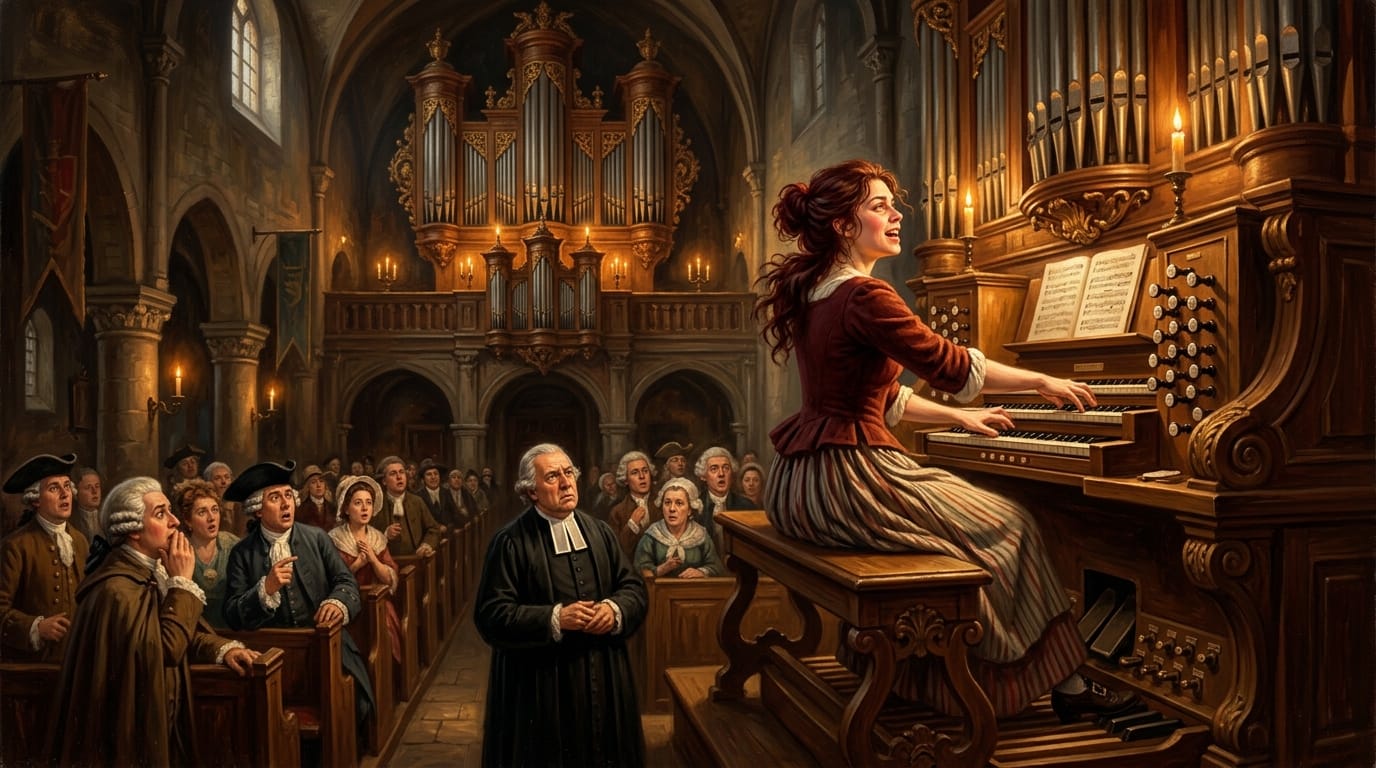
After a brief stint in early 1703 as a court musician in the chapel of Duke Johann Ernst III in Weimar, Bach was appointed organist of the New Church in Arnstadt on August 14, 1703, at just eighteen years old, drawn by the appeal of the church's brand-new organ and a generous salary. His talent was obvious, but so was his temper: church records from these years mention his impatience with the choir's poor singers and, in one notorious 1705 incident, a nighttime street confrontation with a bassoonist named Johann Heinrich Geyersbach, whom Bach had reportedly insulted, that escalated into a sword-drawing scuffle before onlookers separated them.

In October 1705, Bach requested a month's leave from his Arnstadt post to travel to Lübeck, roughly 250 miles away, in order to hear and study with Dieterich Buxtehude, the celebrated organist of the Marienkirche whose famous Abendmusiken concerts drew musicians from across northern Germany. Bach reportedly made the entire journey on foot in each direction, and he was so absorbed by what he learned that he overstayed his leave by roughly three months, not returning to Arnstadt until early 1706 — an extraordinary breach of professional discipline that the Arnstadt consistory did not let pass without a formal reprimand.
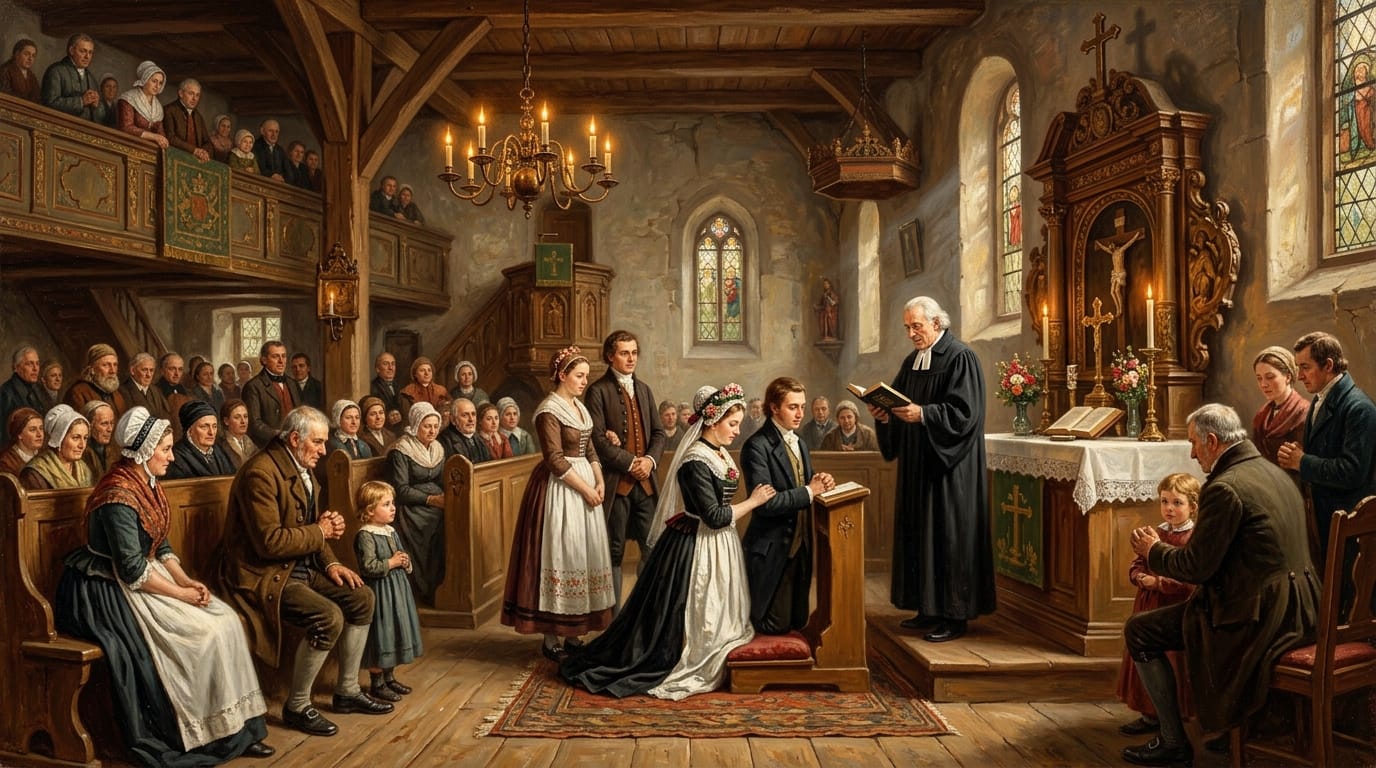
In June 1707, Bach left Arnstadt to become organist at St. Blasius's Church in Mühlhausen, and that October he married his second cousin Maria Barbara Bach, herself from a prominent branch of the wider Bach musical dynasty. In Mühlhausen he composed the festive council-inauguration cantata "Gott ist mein König," BWV 71, which the town paid to have printed — the only Bach cantata published in his own lifetime — though within a year he sought a new position, partly because of tension with a pastor who favored austere, unadorned worship music over Bach's elaborate style.
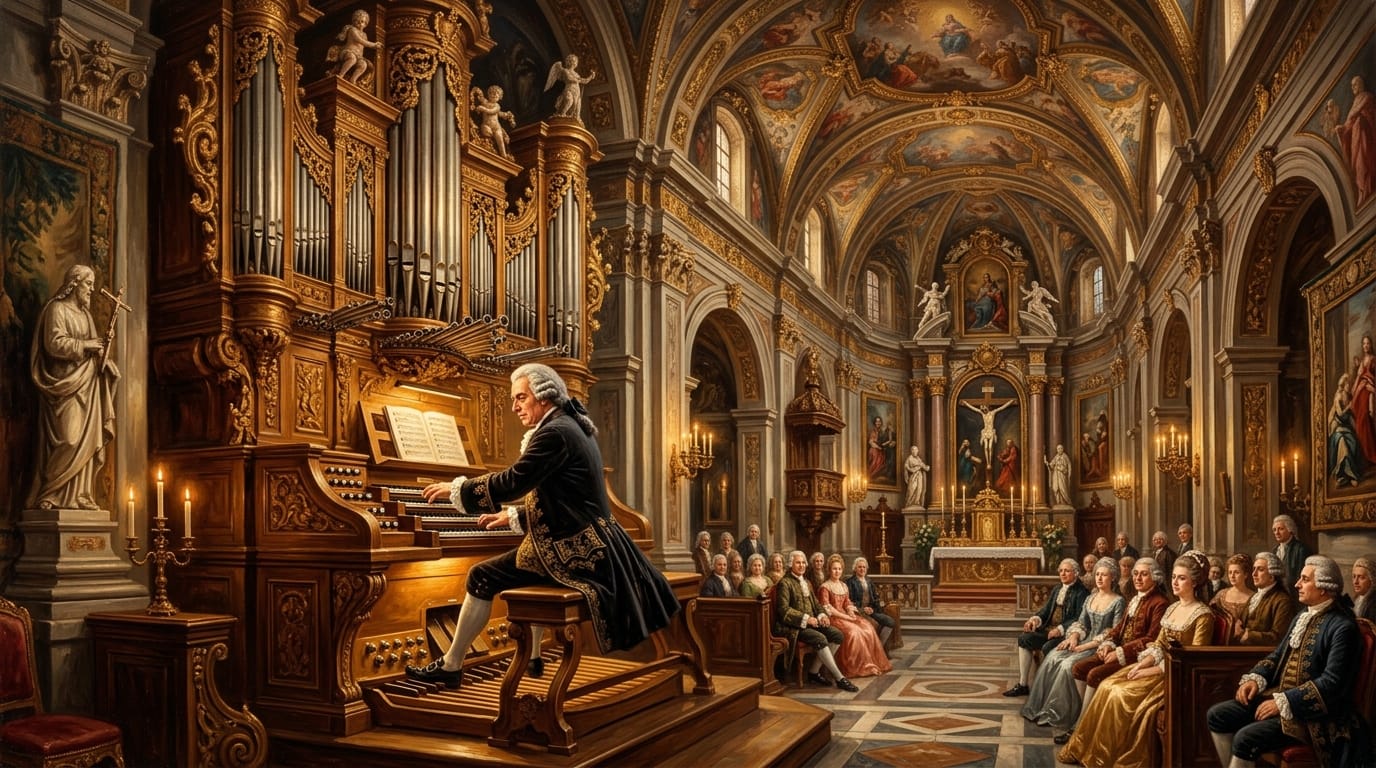
From 1708 to 1717, Bach served the ducal court in Weimar, first as court organist and chamber musician and, from 1714, as Konzertmeister, a promotion that required him to compose a new cantata roughly once a month. These prolific Weimar years produced much of his most important organ music, including the pedagogical collection of chorale preludes known as the Orgelbüchlein ("Little Organ Book") and early versions of preludes and fugues that would later form part of The Well-Tempered Clavier, while at home Maria Barbara bore several of the couple's children, including the future composers Wilhelm Friedemann and Carl Philipp Emanuel.
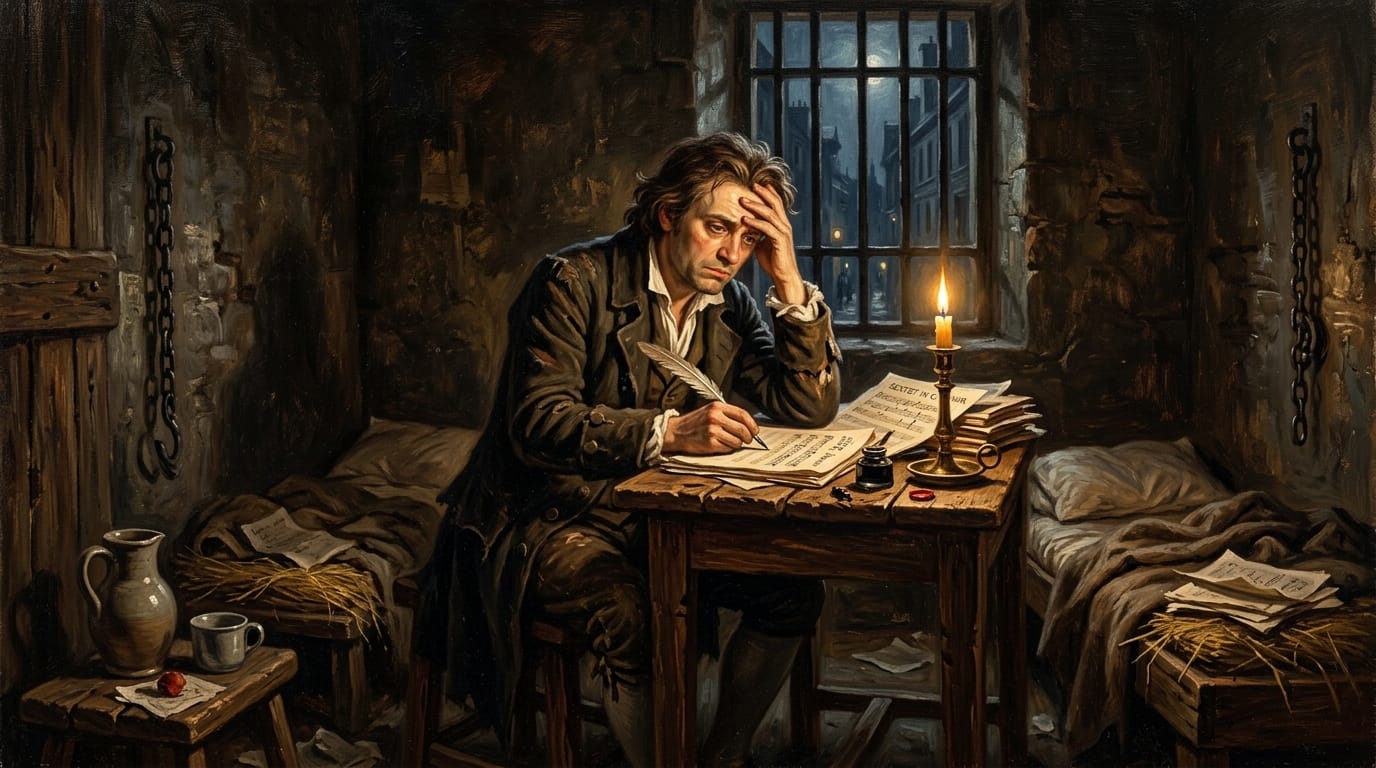
When Weimar's senior music director position came open in 1716, it went not to Bach but to a less accomplished court musician, prompting Bach to seek his release so he could accept a new post as Kapellmeister in Anhalt-Köthen. Duke Wilhelm Ernst, angered by what he saw as presumption, refused to grant Bach's release and, according to the court secretary's own records, had him confined from November 6 to December 2, 1717, "for too stubbornly forcing the issue of his dismissal," finally freeing him only alongside a formal notice of dishonorable discharge.
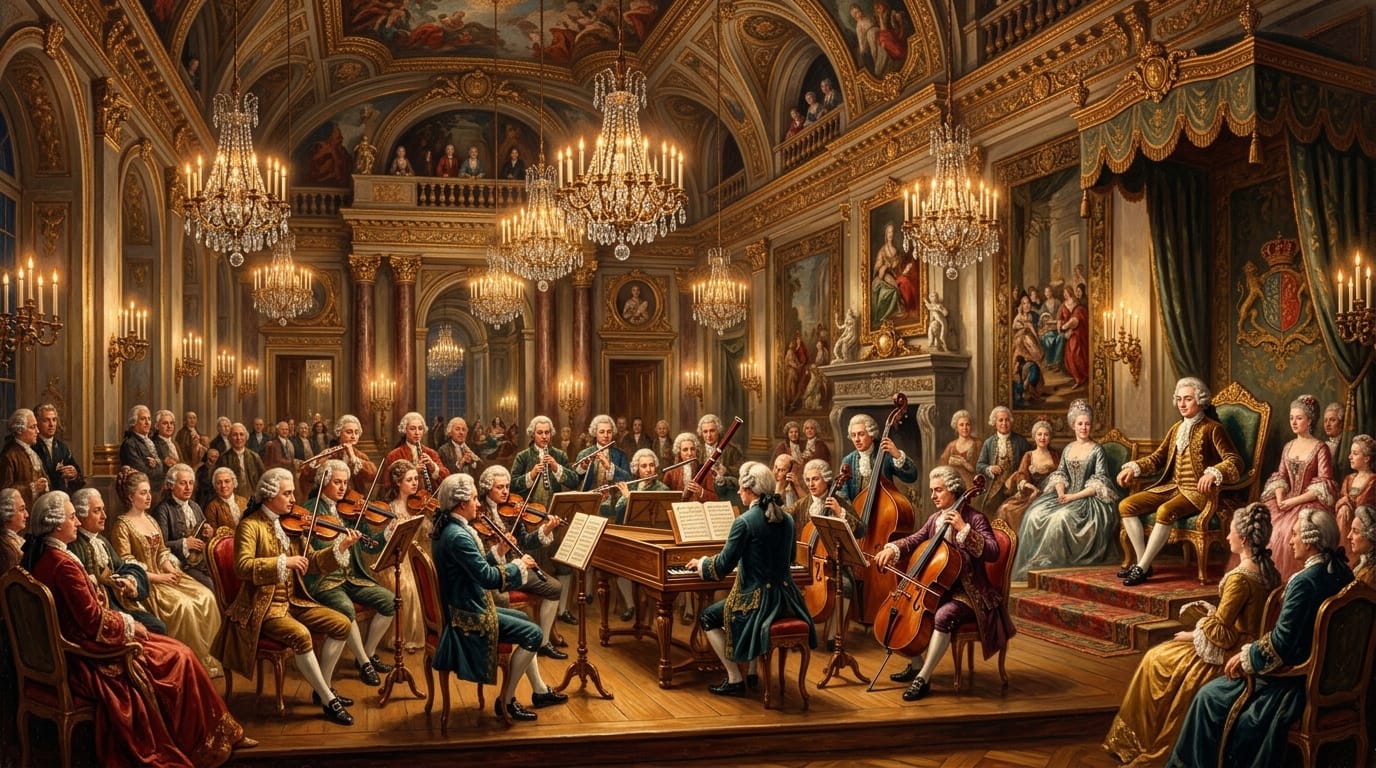
As Kapellmeister to the young, music-loving Prince Leopold of Anhalt-Köthen from 1717 to 1723, Bach entered what many biographers consider the happiest and most harmonious employment of his career, working for a patron who was himself an accomplished amateur musician. Because Leopold's Calvinist court required little elaborate church music, Bach's Köthen output turned heavily toward instrumental and secular composition, producing the Brandenburg Concertos, the Orchestral Suites, the Cello Suites, the Sonatas and Partitas for solo violin, and the first book of The Well-Tempered Clavier.
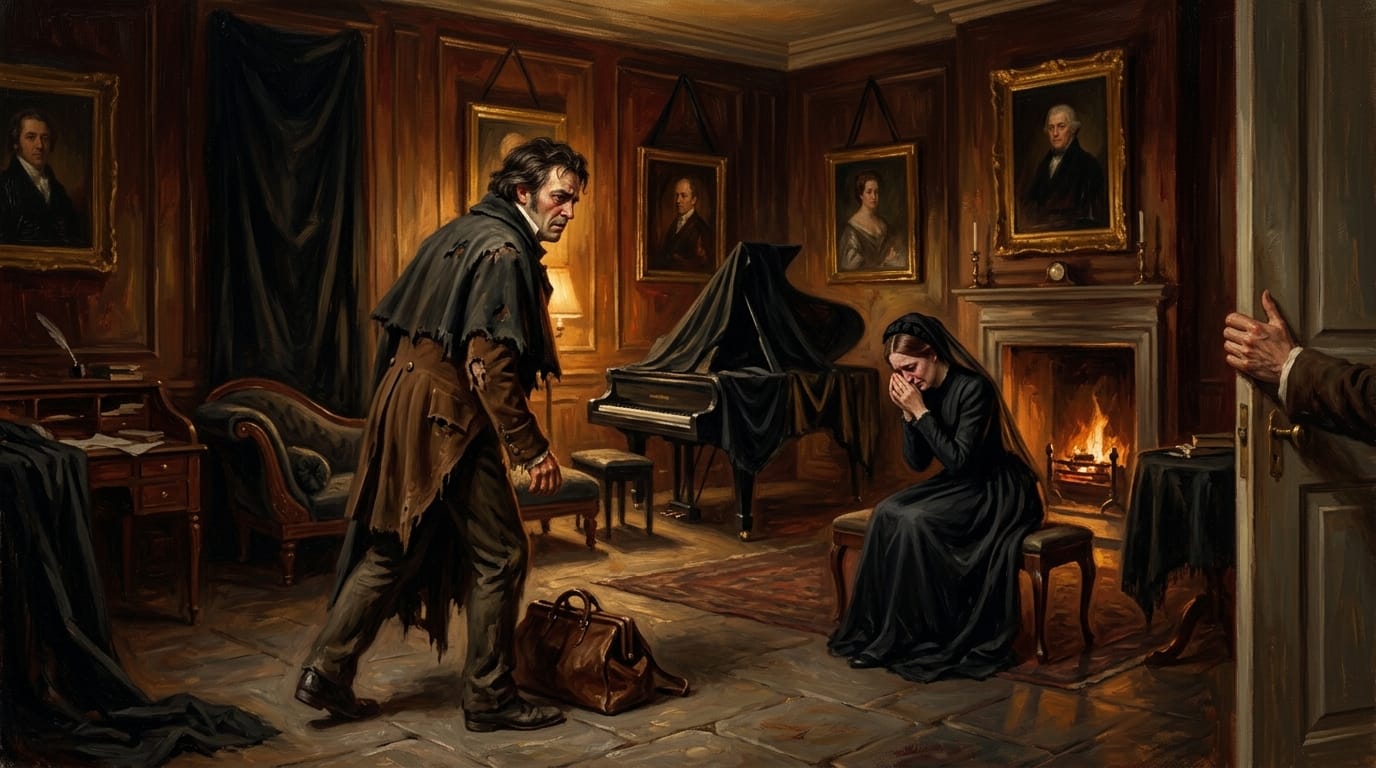
In late spring 1720, Bach accompanied Prince Leopold on a trip to the spa town of Carlsbad; while he was away, Maria Barbara fell suddenly and fatally ill back in Köthen, dying and being buried on July 7, 1720, with no means available to reach her traveling husband in time. Bach reportedly returned home with no warning at all of his wife's illness, only to learn that she had already died and been laid to rest, leaving him a widower responsible for four surviving young children, including the future composers Wilhelm Friedemann and Carl Philipp Emanuel.
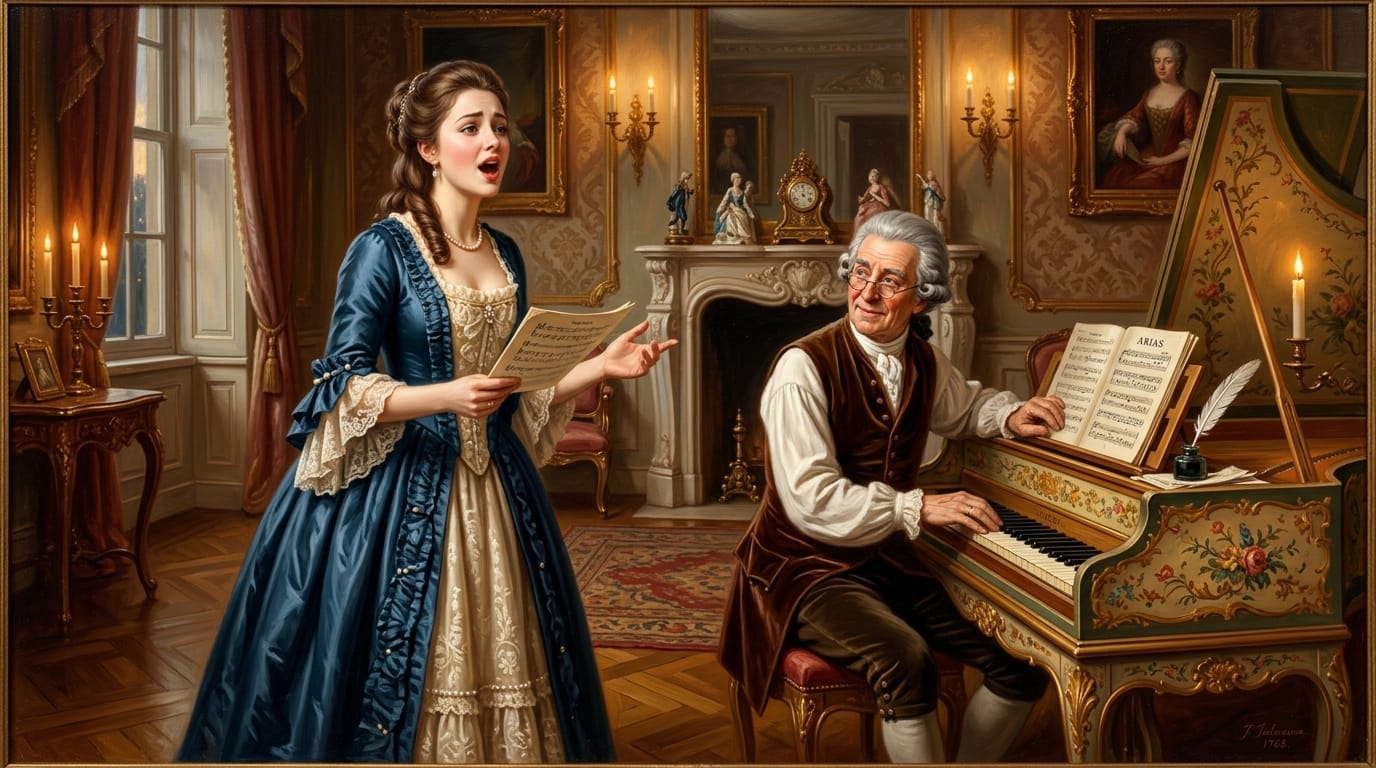
On December 3, 1721, Bach married Anna Magdalena Wilcke, a professional soprano at the Köthen court and daughter of a court trumpeter, seventeen years his junior. Anna Magdalena proved to be not merely a spouse but a genuine musical partner, becoming one of Bach's most trusted copyists of his manuscripts and receiving from him two "notebooks" of keyboard pieces compiled expressly for her use and enjoyment; over the course of their marriage the couple would have thirteen children together, though, as with his first marriage, more than half would not survive to adulthood.
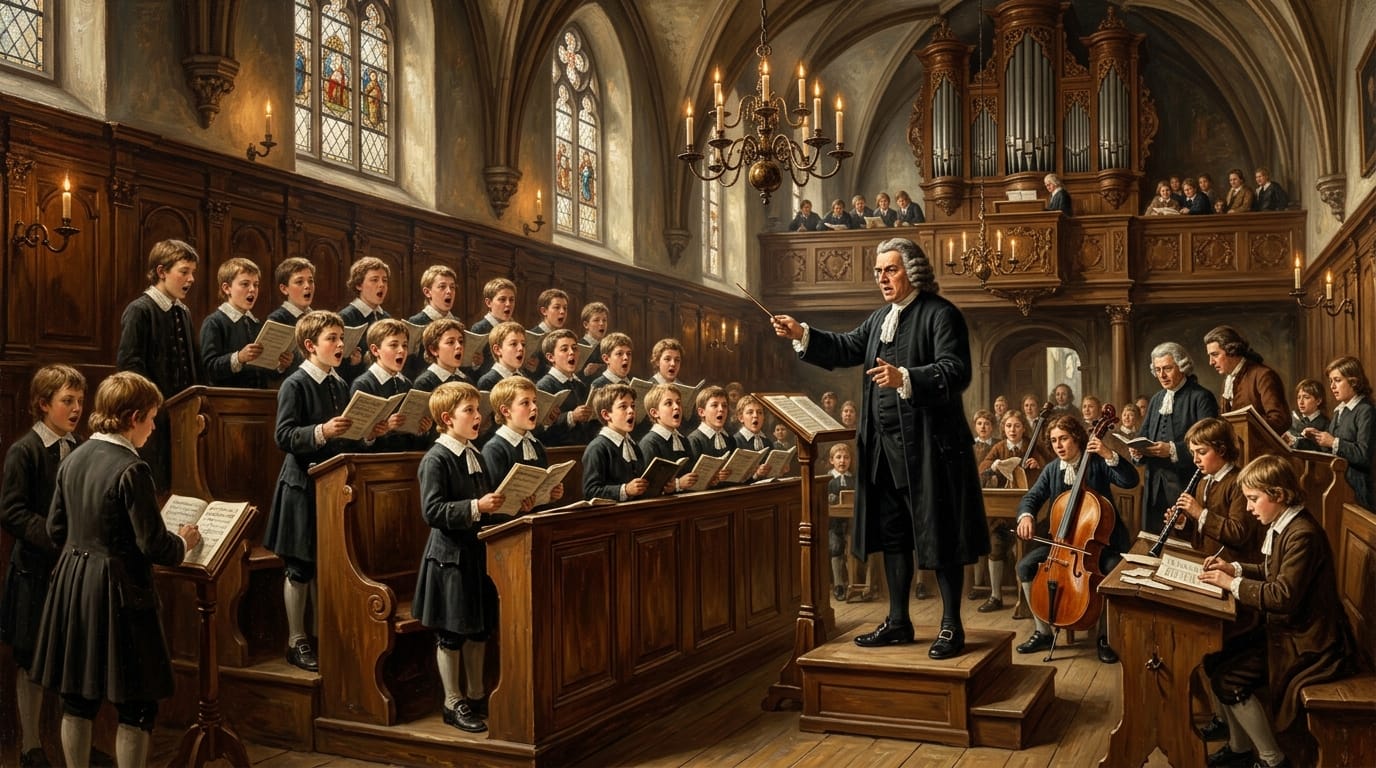
Bach was appointed Thomaskantor in Leipzig in 1723, taking charge of music for the city's four principal churches and teaching at the attached St. Thomas School, a post he accepted only after the town council's first two choices, Georg Philipp Telemann and Christoph Graupner, had both proven unavailable. Determined to establish his new position with an ambitious statement, Bach spent his first years in Leipzig composing an almost unbroken weekly stream of new cantatas for the Sunday and feast-day services, ultimately assembling several complete yearly cycles — a pace of composition, alongside his teaching duties, of almost superhuman intensity.
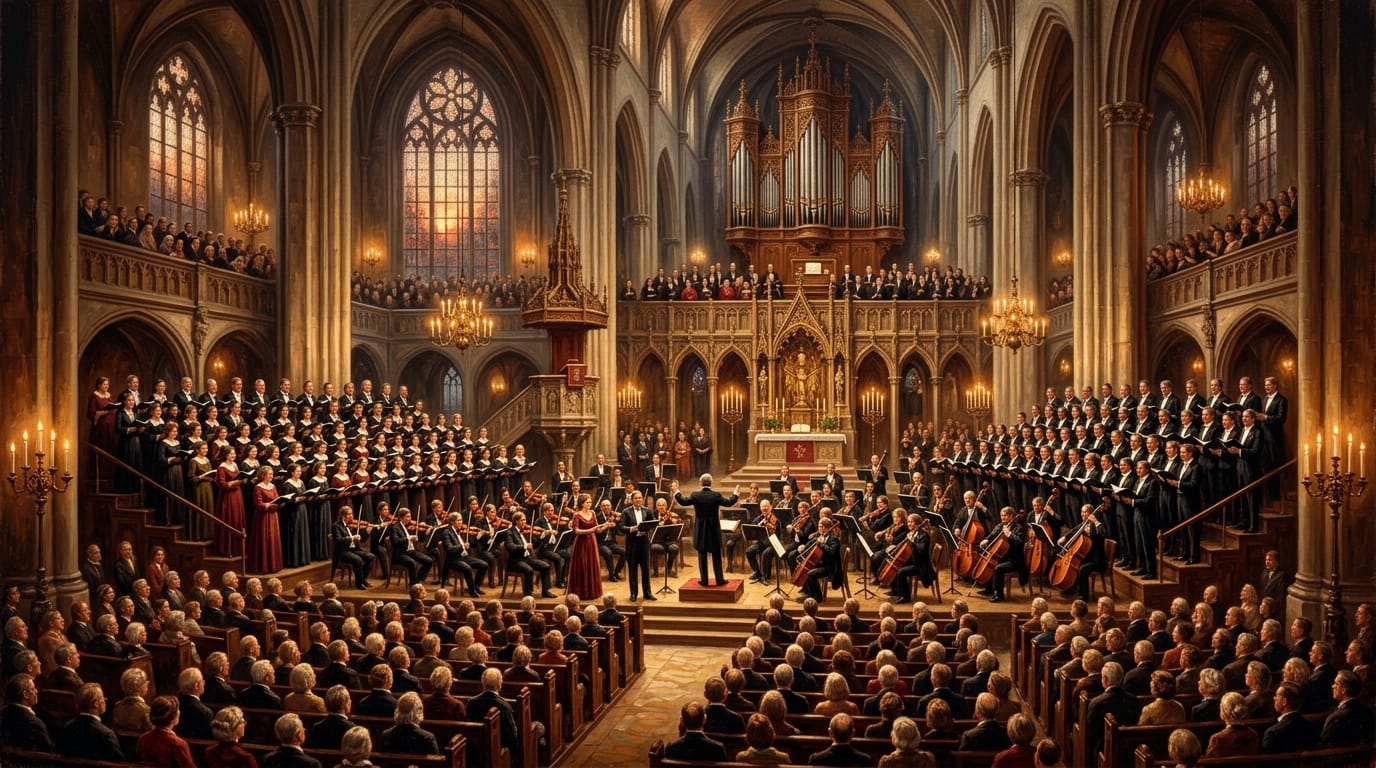
Bach's St John Passion premiered on Good Friday, 1724, followed a few years later by the still more monumental St Matthew Passion, BWV 244, generally dated to a Good Friday premiere in 1727 (with a well-documented revised performance in 1729 and further revisions later still). Scored for two separate choirs and orchestras, vocal soloists, and a boys' choir, the St Matthew Passion sets the Passion narrative from the Gospel of Matthew alongside poetic reflections and chorale melodies familiar to the congregation, and it stands today as one of the most revered works in the entire history of Western sacred music.
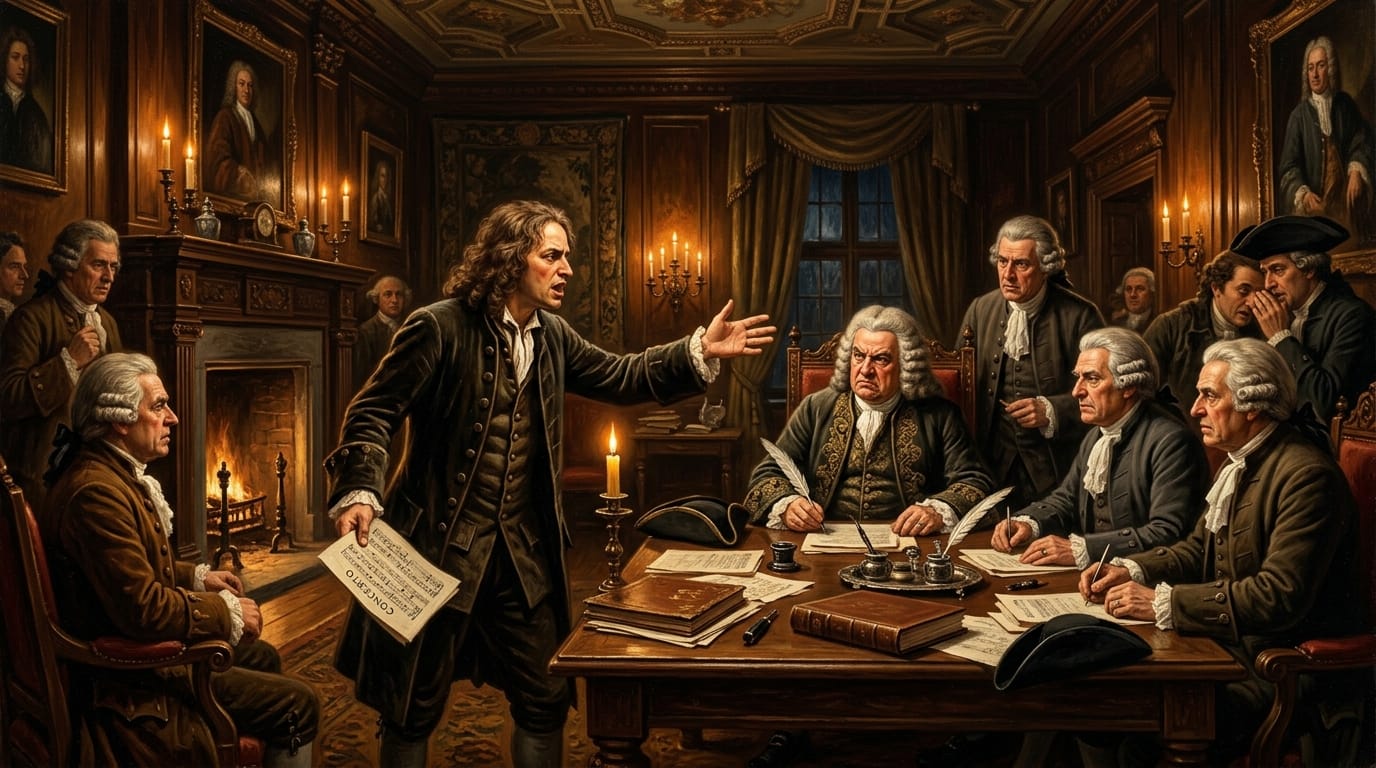
Throughout the 1730s, Bach's relationship with the Leipzig town council and the rectors of the St. Thomas School grew increasingly strained, as the council criticized him for neglecting some of his non-musical teaching duties (which he often delegated to paid substitutes) and disputed his authority to select student choir prefects, a conflict that came to a head in a bitter dispute with the rationalist-minded rector Johann August Ernesti around 1736. In 1730, frustrated by chronic underfunding of Leipzig's church music, Bach submitted a pointed memorandum to the council detailing exactly what an adequately staffed musical establishment would require, a document that reveals just how constrained his resources actually were even at the height of his creative powers.
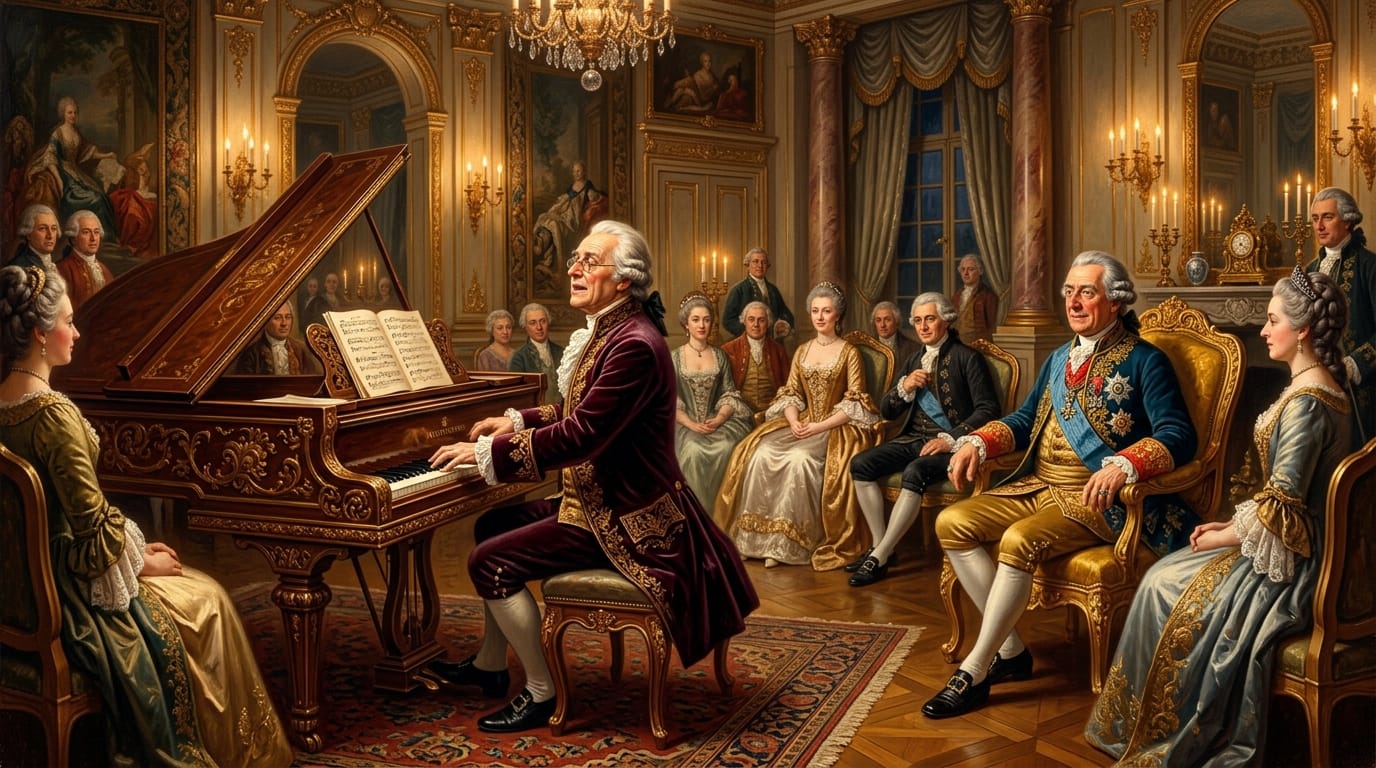
In May 1747, Bach traveled to Potsdam to visit the court of King Frederick the Great of Prussia, where his son Carl Philipp Emanuel served as a court musician. Frederick presented Bach with a difficult chromatic theme and challenged him to improvise a fugue on it, which Bach did immediately to great acclaim, later fulfilling a request for an even more elaborate six-part fugue. Within weeks of returning to Leipzig, Bach composed and published an entire collection of canons, fugues, and a trio sonata built on the king's theme, titled "A Musical Offering" and dedicated to Frederick.
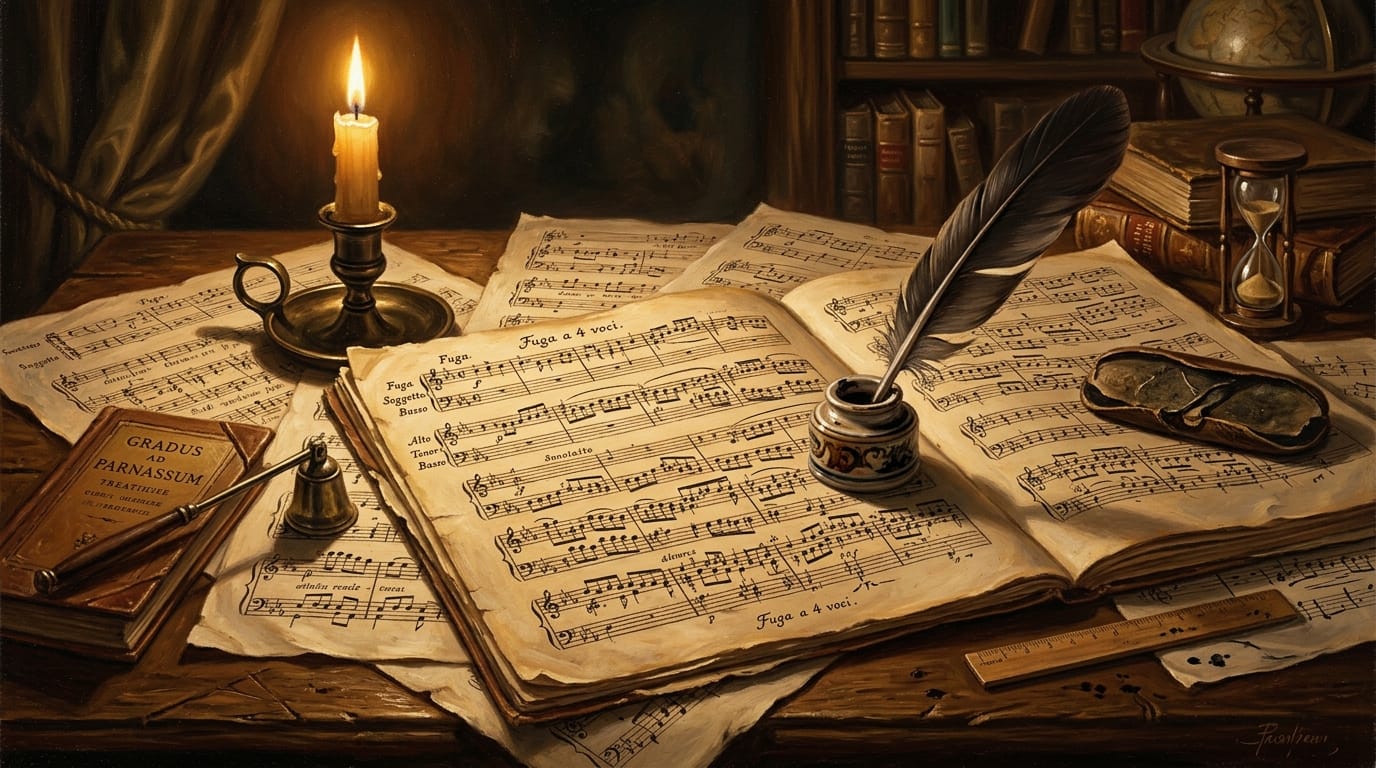
During his final decade, roughly from the early 1740s until his death, Bach worked on The Art of Fugue, BWV 1080, an encyclopedic set of fugues and canons all built from a single musical theme, exploring an almost exhaustive range of contrapuntal techniques as a kind of summation of everything he had learned about the art of fugue-writing. The final, most complex fugue breaks off unfinished partway through, shortly after introducing a new subject spelling out the notes B-A-C-H in German musical notation; Bach's son Carl Philipp Emanuel later added a note to the published score stating that the composer died while working on this very fugue, though modern scholars debate how literally that famous account should be taken.
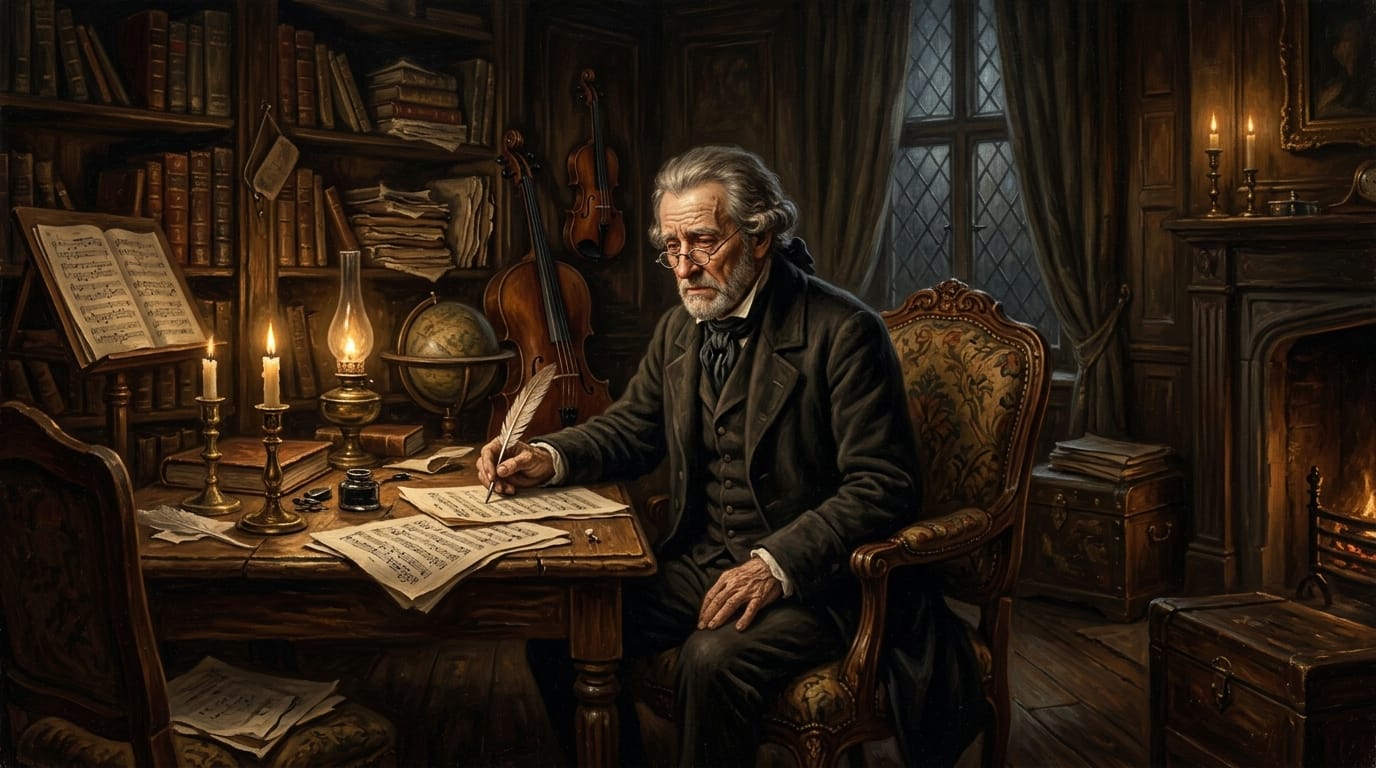
By 1749, Bach's eyesight had deteriorated seriously, likely worsened by decades of close work copying music by candlelight, though the exact underlying cause (possibly cataracts, and possibly complicated by diabetes) is not known for certain. In March and again in April 1750, the celebrity oculist John Taylor, an English eye surgeon touring Europe who would later also operate unsuccessfully on Handel, performed operations on Bach's eyes in Leipzig; neither procedure restored his sight, and Bach's general health declined sharply in the weeks that followed, though historians disagree about how directly Taylor's crude surgical methods contributed to his death.
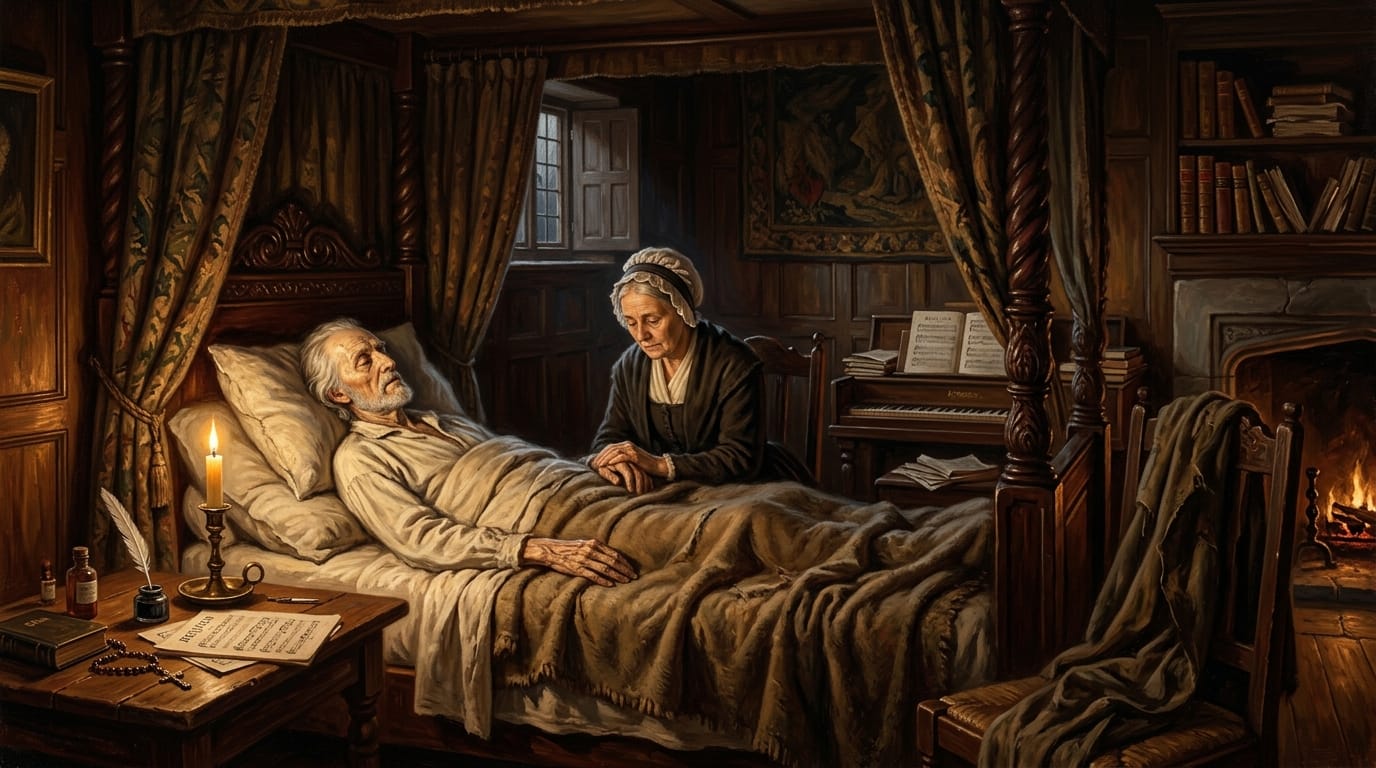
Bach died in Leipzig on July 28, 1750, at age sixty-five, having suffered a stroke in his final days following the failed eye operations earlier that year. He was buried without a marked grave at Old St. John's Cemetery, and it was not until 1894 that remains believed to be his were exhumed and identified, eventually being reinterred at St. Thomas Church in 1950, though some modern historians still note the identification cannot be regarded as entirely certain.
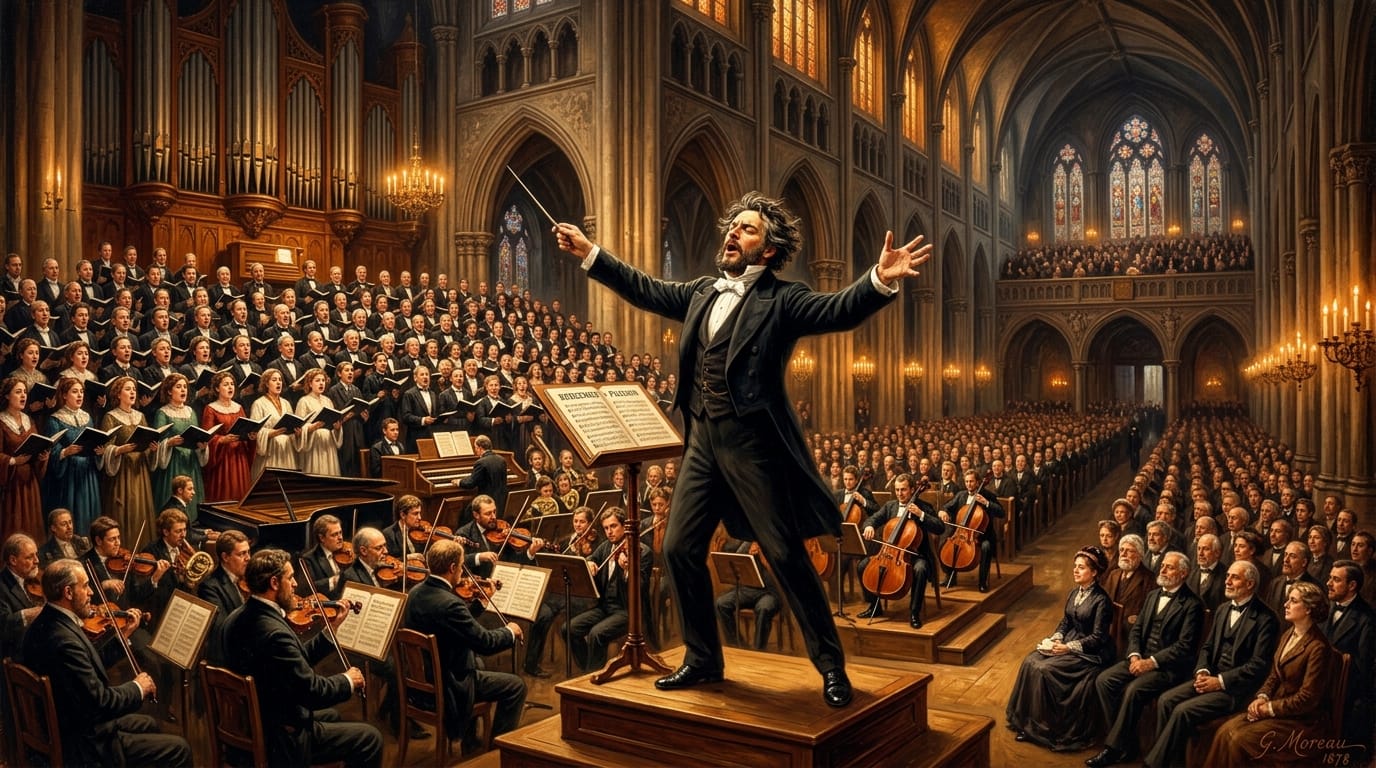
In the decades following his death, Bach's dense, contrapuntal style fell out of favor with a musical public increasingly drawn to the lighter, simpler "galant" style, and even his own composer sons, including Carl Philipp Emanuel, tended to regard their father's music as belonging to an older, superseded era; for a time he was remembered mainly as a legendary organist and teacher rather than a composer of central importance. That changed dramatically in 1829, when the twenty-year-old Felix Mendelssohn conducted a landmark, slightly abridged performance of the St Matthew Passion in Berlin, its first since Bach's death, igniting a wave of renewed public and scholarly enthusiasm across Europe known as the Bach Revival, which eventually led to a complete critical edition of his works and cemented his standing as one of the towering figures in Western music.
Curated Collections
The Masterpieces
Explore Bach's greatest works, categorized by genre.
Orchestral Suites & Brandenburg Concertos
The Well-Tempered Clavier & Goldberg Variations
Keyboard Suites & Partitas
Organ Works
Violin & Solo String Works
Concertos
Sacred Cantatas
The Great Passions & Oratorios
Mass in B Minor & Motets
Late Contrapuntal Summations
Every Known Work
The Complete Catalog
Every one of Bach's 171 known compositions, organized by type. Tap a category to open it, or search for a piece by name.