The Complete Collection & Life Timeline
Ludwig van Beethoven
Journey through the life and masterpieces of the composer who bridged the Classical and Romantic eras. Discover the stories behind music written even after he lost his hearing entirely.
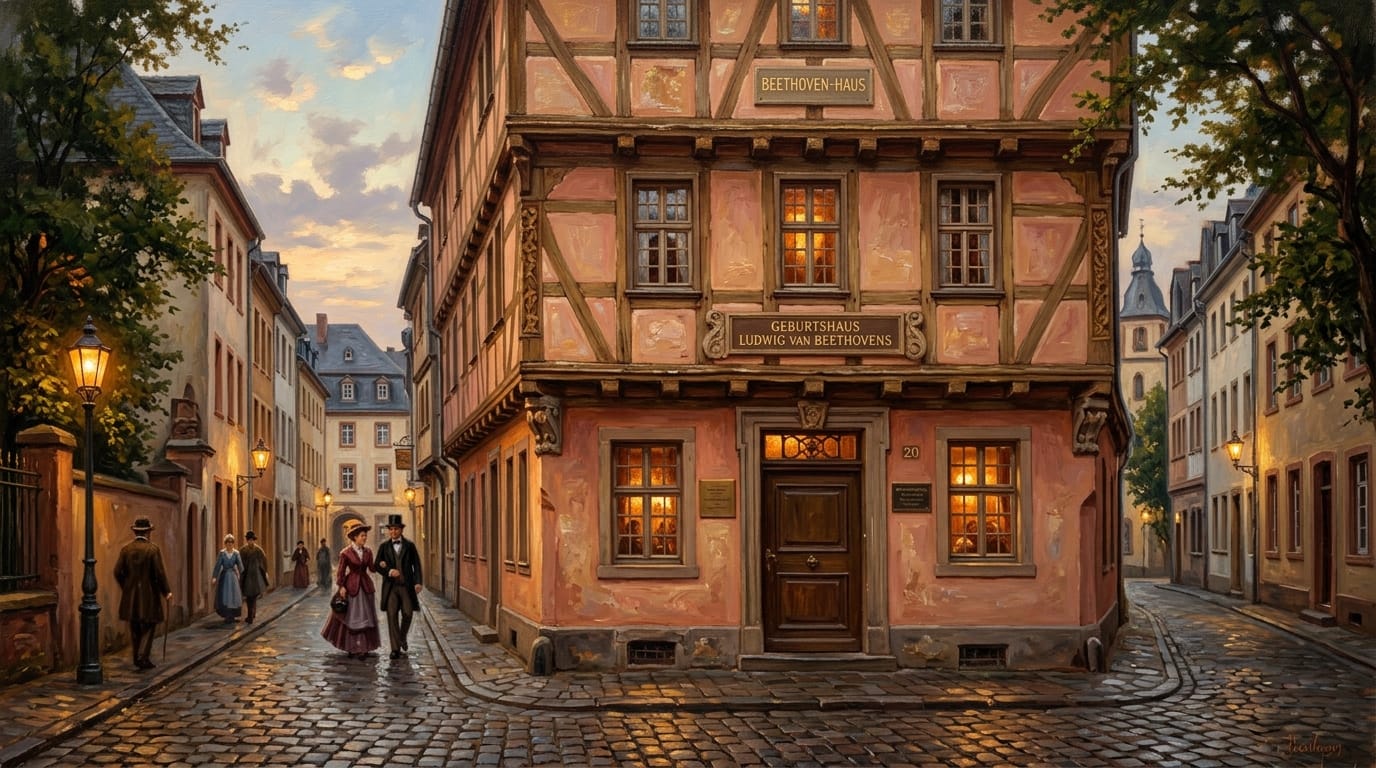
Ludwig van Beethoven was born in Bonn, in the German Electorate of Cologne, most likely on December 16, 1770 (he was baptized on December 17, which is the one certain date we have). His grandfather, also named Ludwig, had been the esteemed director of music at the Bonn court, and his father Johann was a court singer who recognized his son's early talent and was determined to make something of it.
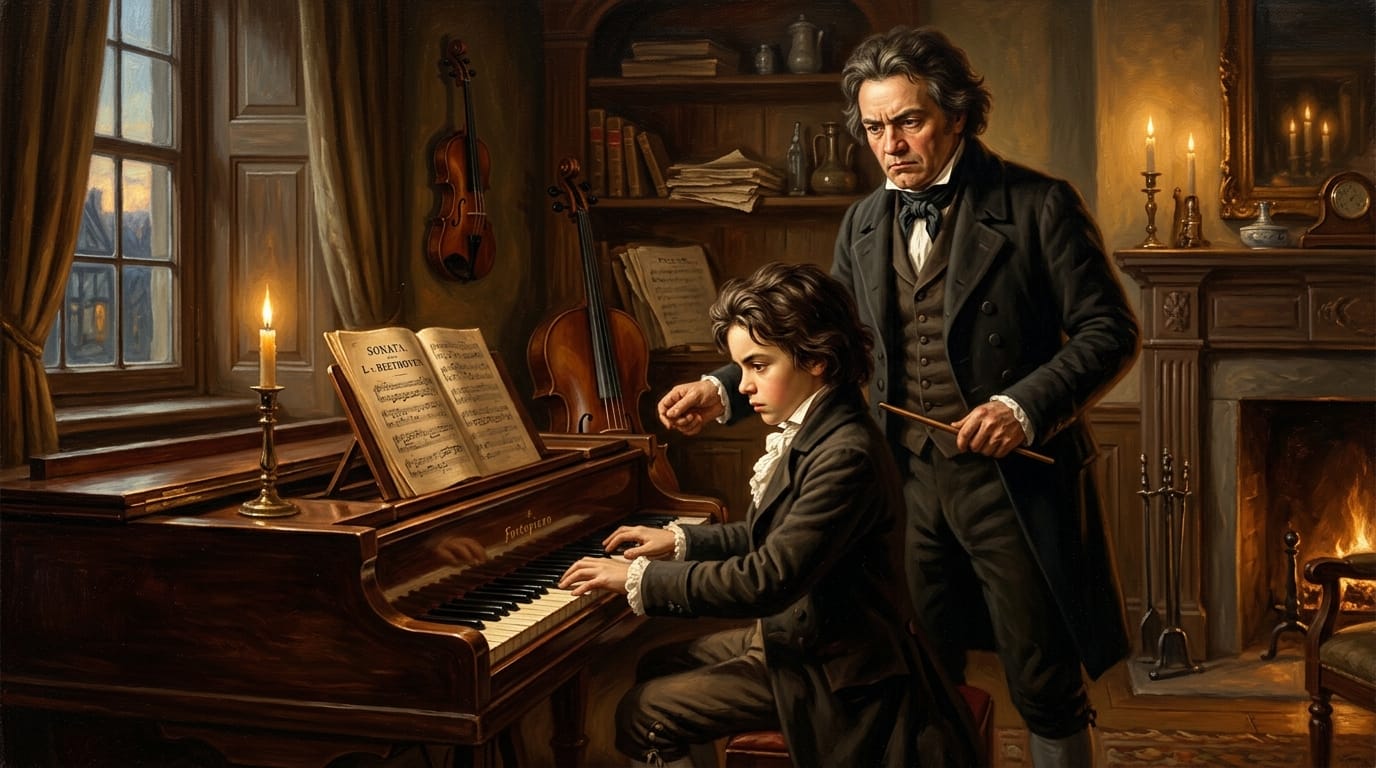
Beethoven's father Johann, hoping to market his son as a prodigy in the mold of Mozart, trained him with extreme severity — sometimes waking him after midnight to drill scales at the keyboard. For the boy's first public concert in Cologne in 1778, Johann even advertised Ludwig's age as younger than he really was, to make his talent seem more astonishing. The harsh training left scars, but it also built the technical foundation of a future master.
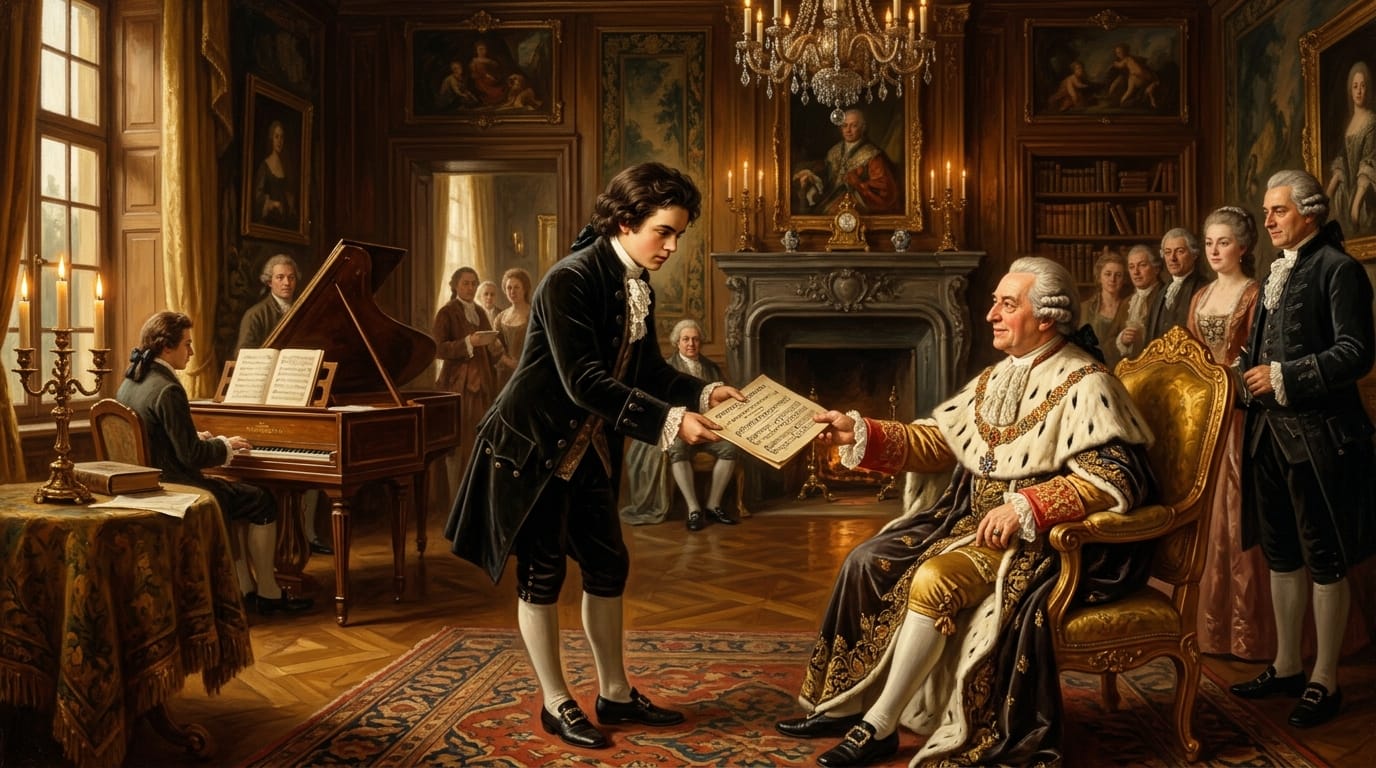
At twelve, Beethoven composed and published his first major works: three piano sonatas dedicated to Maximilian Friedrich, the Elector of Cologne, who employed his father at court. Known today as the 'Elector Sonatas,' they already show flashes of the boldness and structural ambition that would define his mature style, far beyond typical juvenilia.
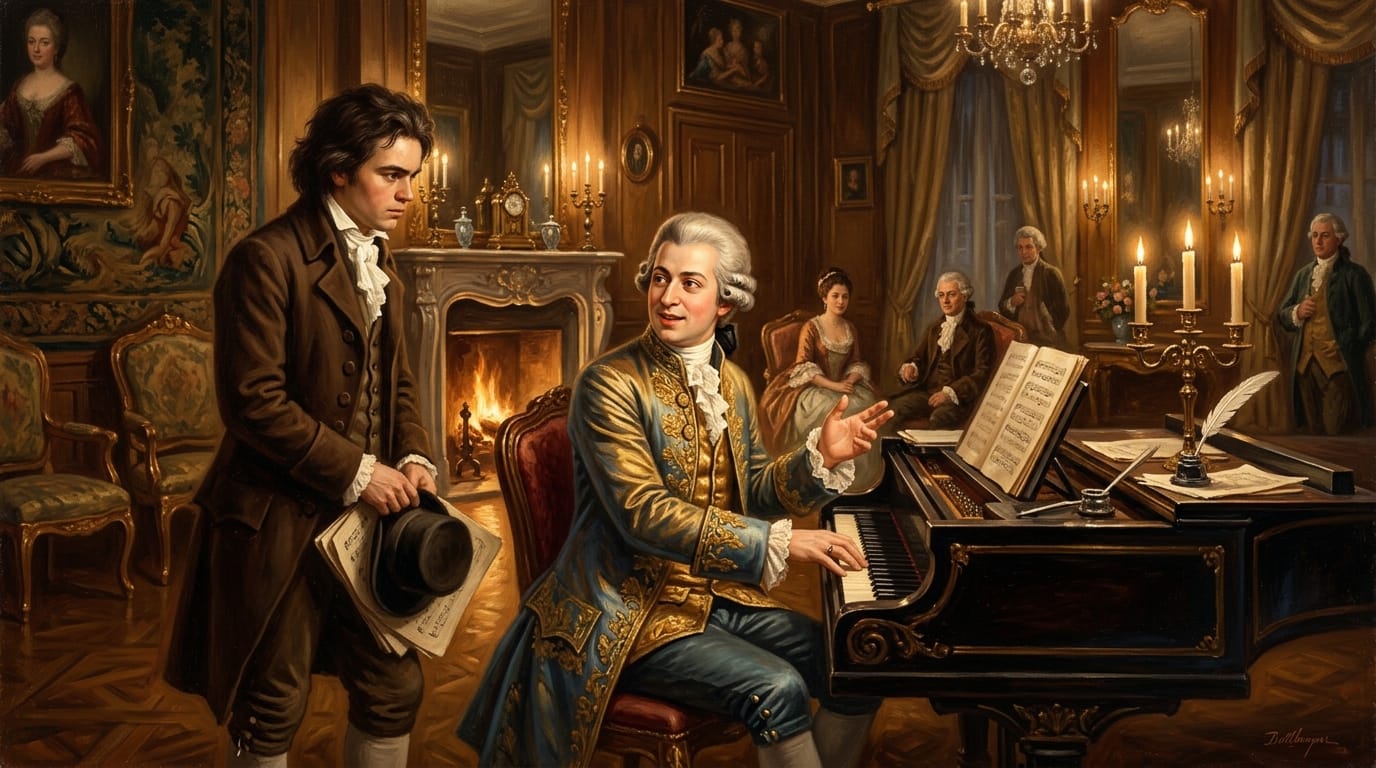
In the spring of 1787, sixteen-year-old Beethoven journeyed to Vienna, reportedly playing for Mozart, who — according to a story told for generations afterward — was struck by the teenager's gift for improvisation. The visit was cut short after only about two weeks when word arrived that his mother was gravely ill; he hurried home to Bonn, where she died of tuberculosis that July, leaving him, at sixteen, effectively responsible for his two younger brothers and an increasingly unstable father.

In November 1792, Beethoven left Bonn for Vienna to study composition with Joseph Haydn, then the most celebrated composer in Europe. His patron and friend Count Ferdinand von Waldstein wrote a famous inscription in his farewell album predicting he would receive 'Mozart's spirit from Haydn's hands.' Beethoven would never again live in his hometown; within weeks of his departure, his father died in Bonn.
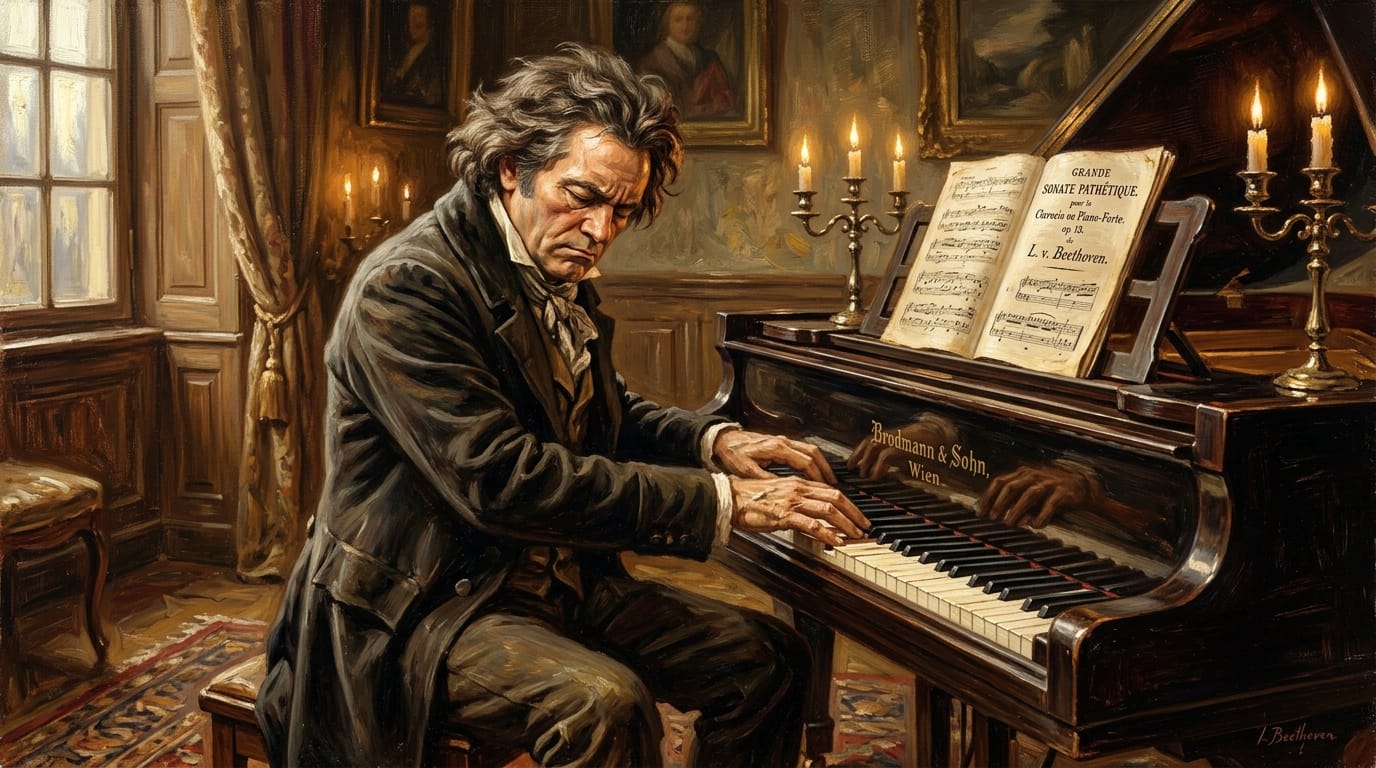
Through the 1790s, Beethoven built a reputation in Vienna as a fearsome piano virtuoso, famous for his stormy improvisations and for winning head-to-head keyboard 'duels' against rival pianists, including a decisive victory over Daniel Steibelt in 1800 that reportedly ended their rivalry for good. The Pathétique Sonata, published in 1799, showed the public that this same dramatic intensity could be channeled into composition, becoming an instant bestseller.
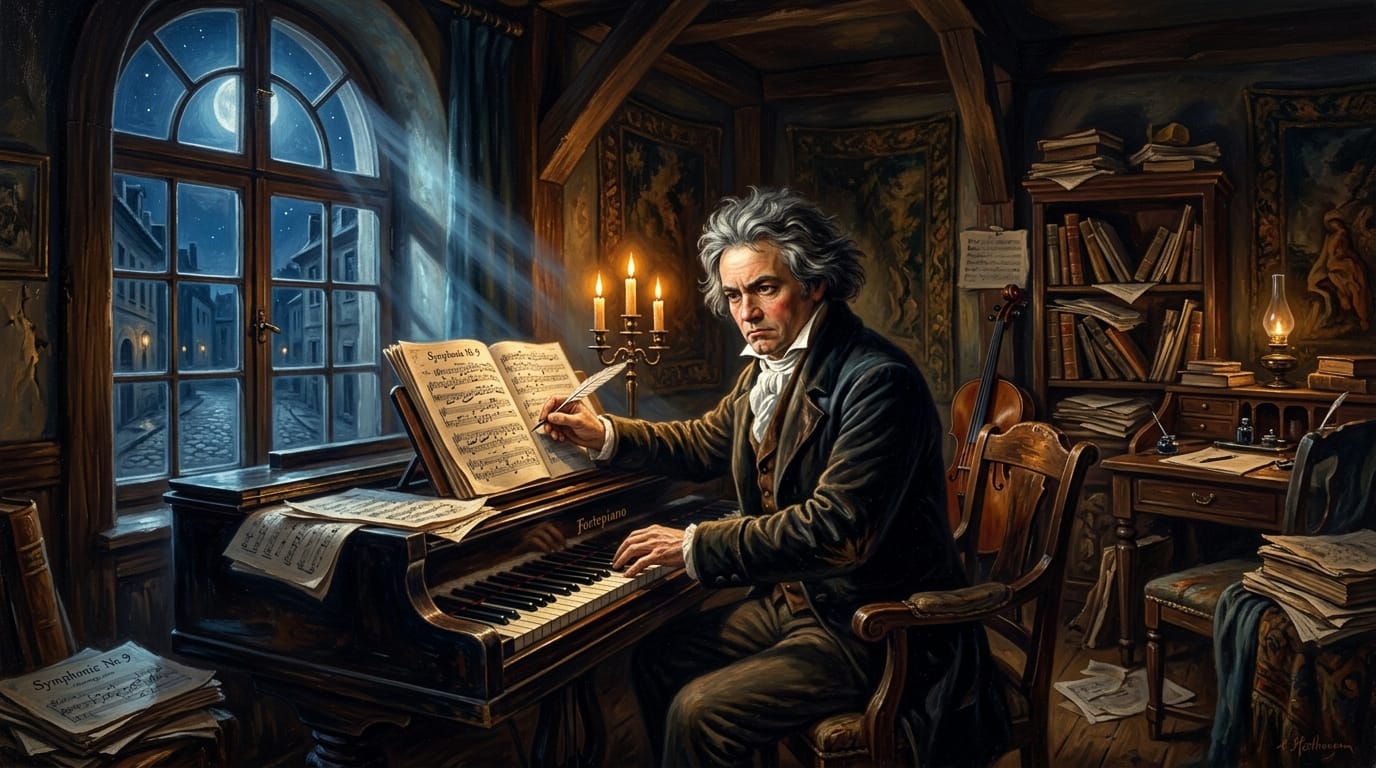
Around 1801, Beethoven began confiding to a few close friends, in letters marked 'secret,' that his hearing was fading — a ringing and buzzing in his ears made conversation and music increasingly difficult to follow. Terrified of what this could mean for his career, he hid the problem from the public. That same year he composed the Sonata quasi una fantasia in C-sharp minor, dedicated to his young pupil Countess Giulietta Guicciardi; the piece only acquired its famous 'Moonlight' nickname decades later, from a critic who likened its opening to moonlight over a lake.
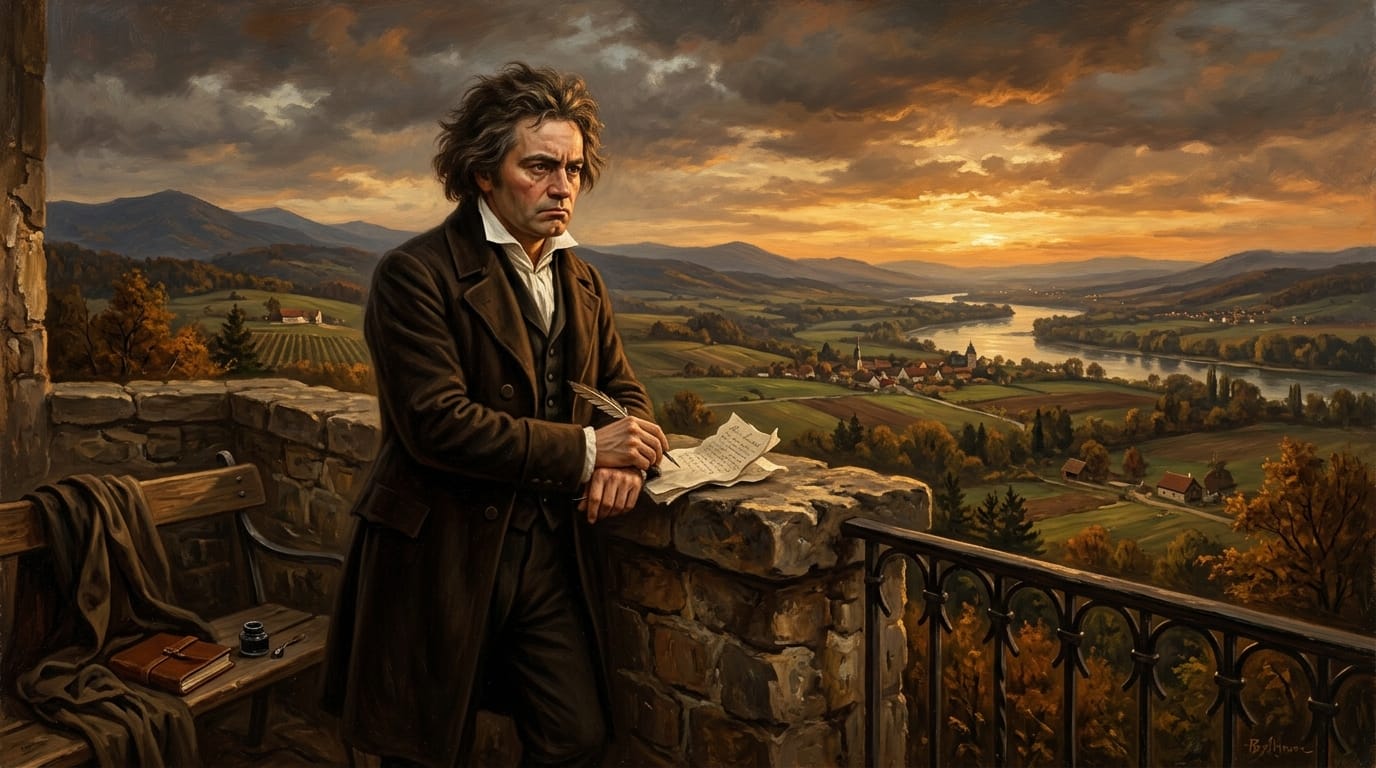
In October 1802, while staying in the village of Heiligenstadt outside Vienna, Beethoven wrote an anguished letter to his brothers describing his despair over his incurable deafness and his isolation from society, admitting he had considered suicide. He never sent it; it was discovered among his papers only after his death. The document, now called the Heiligenstadt Testament, ends with Beethoven resolving to keep living and composing, writing that it seemed impossible to leave the world before he had brought forth everything he felt within him.
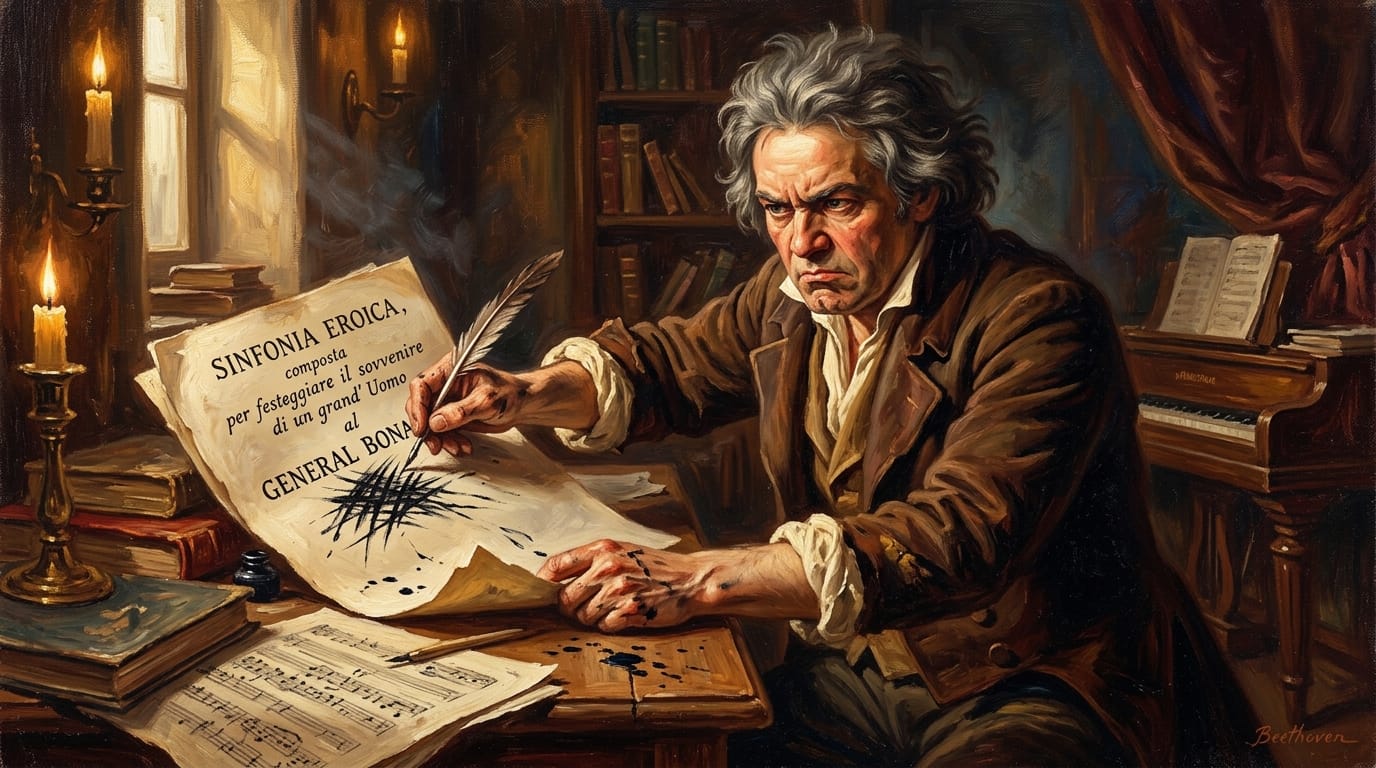
Emerging from the crisis of the Heiligenstadt Testament, Beethoven poured his defiance into the Symphony No. 3, a work nearly twice the length of any symphony written before it. He originally planned to title it 'Bonaparte,' admiring Napoleon as a champion of revolutionary ideals, but upon learning in 1804 that Napoleon had declared himself Emperor, Beethoven furiously scratched out the dedication, reportedly declaring that Napoleon would now trample the rights of man like any other tyrant. It was published as the 'Sinfonia Eroica... composed to celebrate the memory of a great man.'
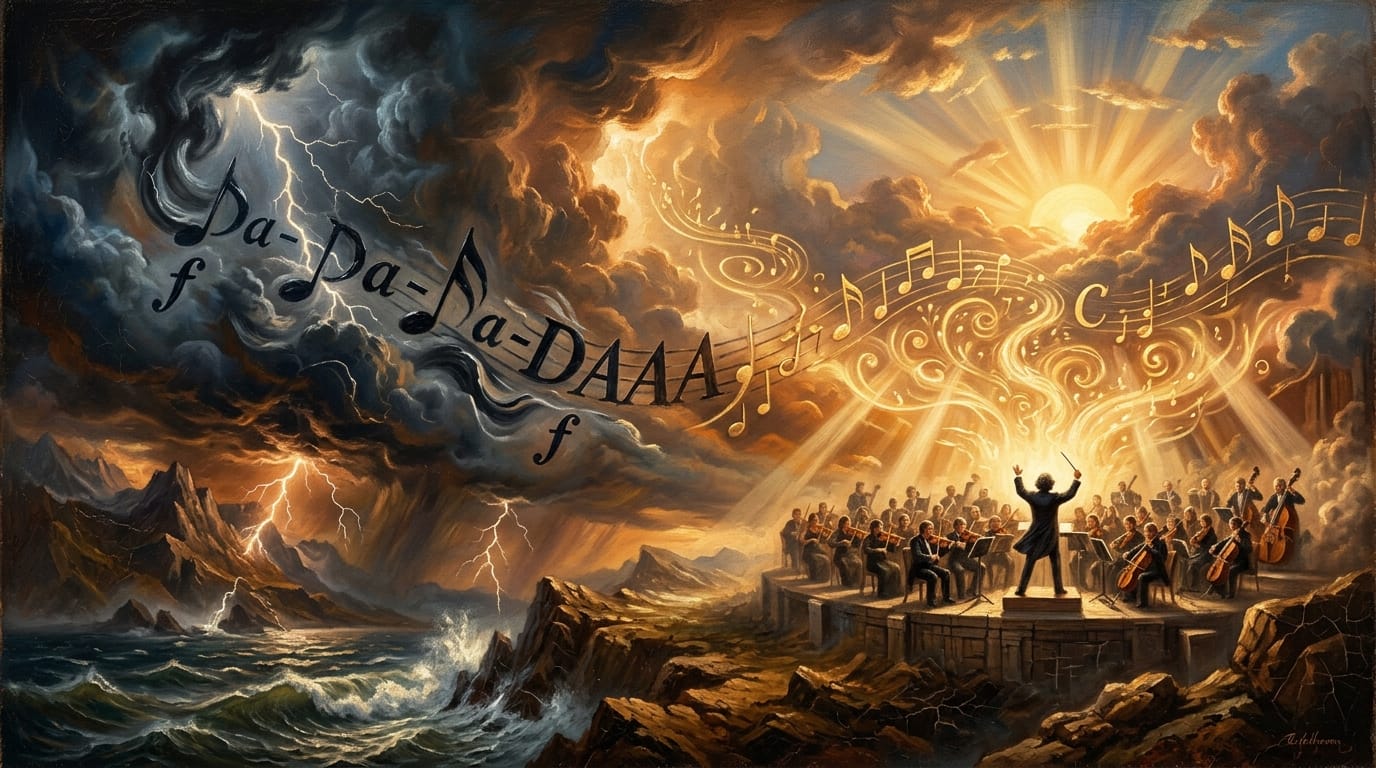
The Fifth Symphony's famous opening motif — three short notes and a longer fourth — is one of the most recognizable gestures in all of music; Beethoven's secretary later claimed the composer described it as 'fate knocking at the door,' though the story is widely doubted by scholars. It premiered on December 22, 1808, at a marathon four-hour concert in an unheated Theater an der Wien that also debuted the Sixth Symphony and the Fourth Piano Concerto, performed by a freezing, under-rehearsed orchestra.
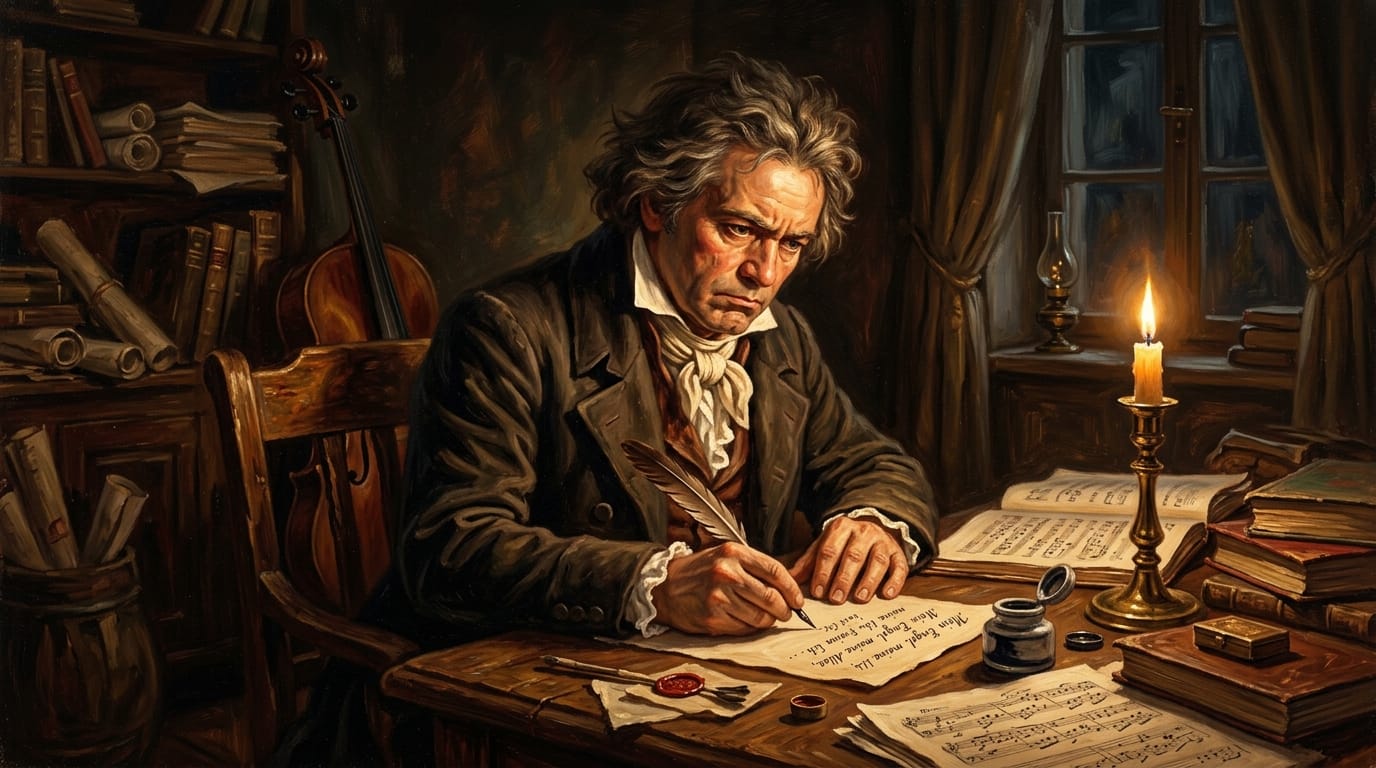
In July 1812, Beethoven wrote a passionate, unsent letter to a woman he addressed only as his 'Immortal Beloved,' expressing overwhelming love alongside pain that circumstances kept them apart. He never named her, and the letter was found among his possessions only after his death. Historians have debated her identity for two centuries, with candidates including Antonie Brentano and Josephine Brunsvik among the most widely supported guesses, but no proof has ever settled the question.
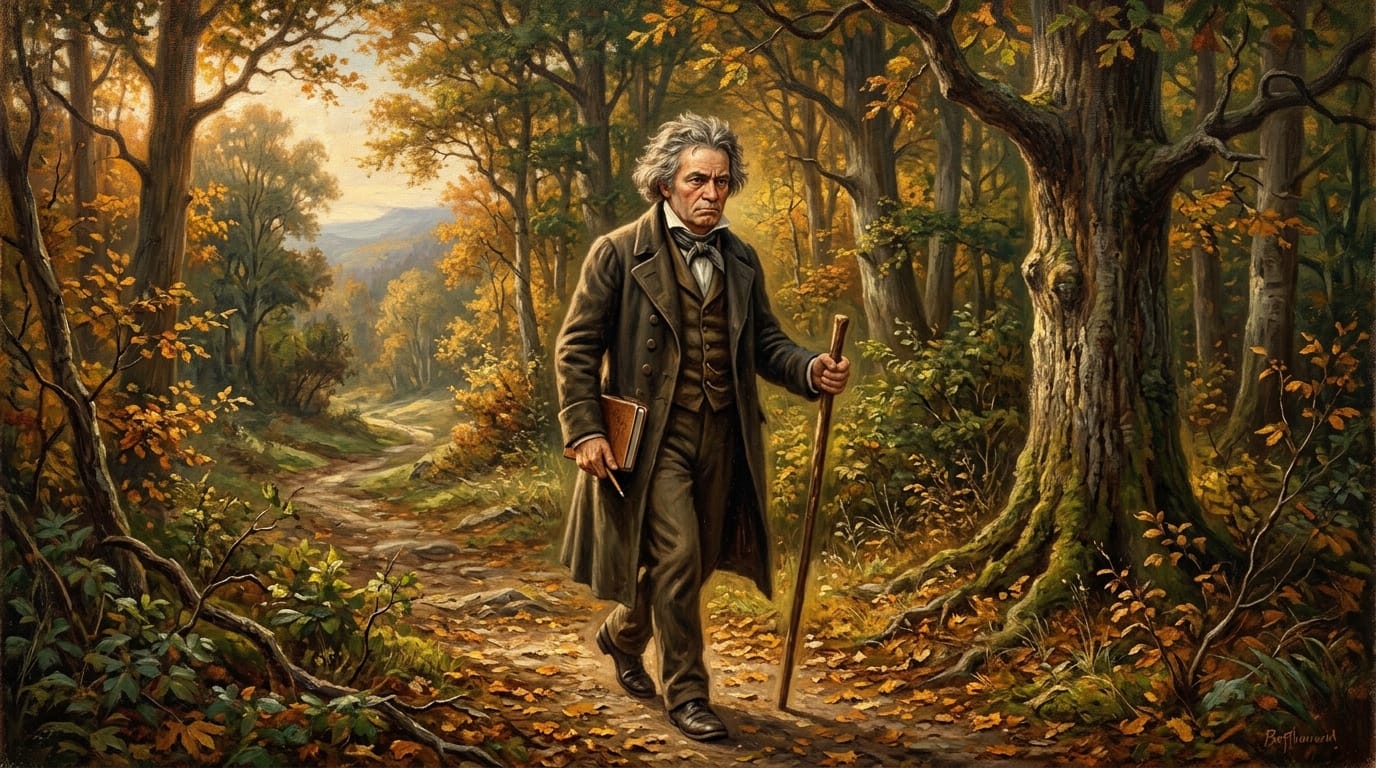
When Beethoven's brother Kaspar Karl died in 1815, Beethoven entered a prolonged, emotionally brutal custody battle with his sister-in-law Johanna over his nephew Karl, whom he believed — largely unfairly — to be an unfit mother. The struggle dragged through Vienna's courts for years and consumed his time and health. By around 1818 his deafness was total, and visitors had to communicate with him by writing in small notebooks — the surviving 'conversation books' are now a strange, poignant historical record. Composition slowed to a trickle during this difficult stretch.
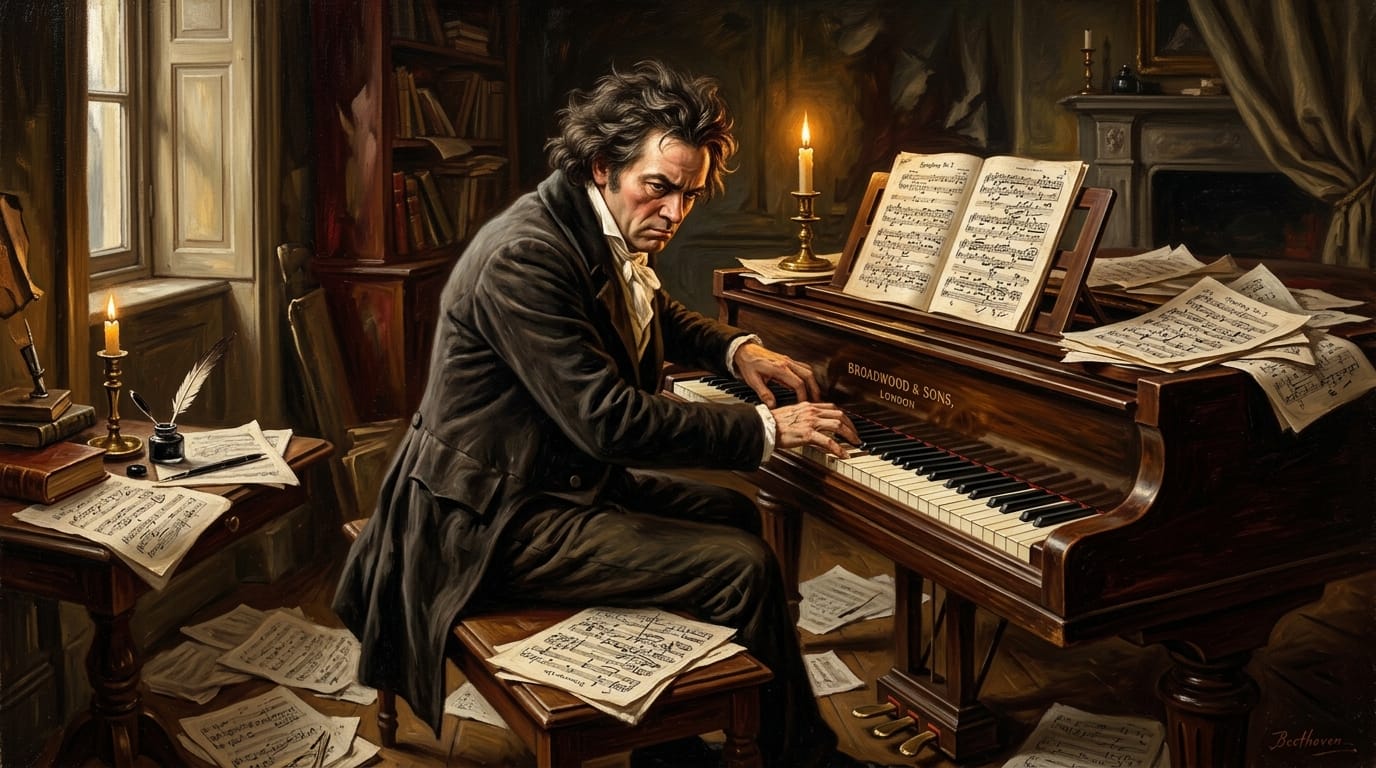
Around 1818, Beethoven began climbing out of his fallow years with a burst of renewed ambition, starting with the Piano Sonata No. 29, Op. 106. Nicknamed 'Hammerklavier' after Beethoven's own preferred German term for the piano, it is enormous by any standard — nearly twice as long as a typical sonata of the era and so demanding that Beethoven reportedly told his publisher it would keep pianists busy for fifty years. It opened what is now called his 'late period,' marked by increasingly personal and structurally daring music.
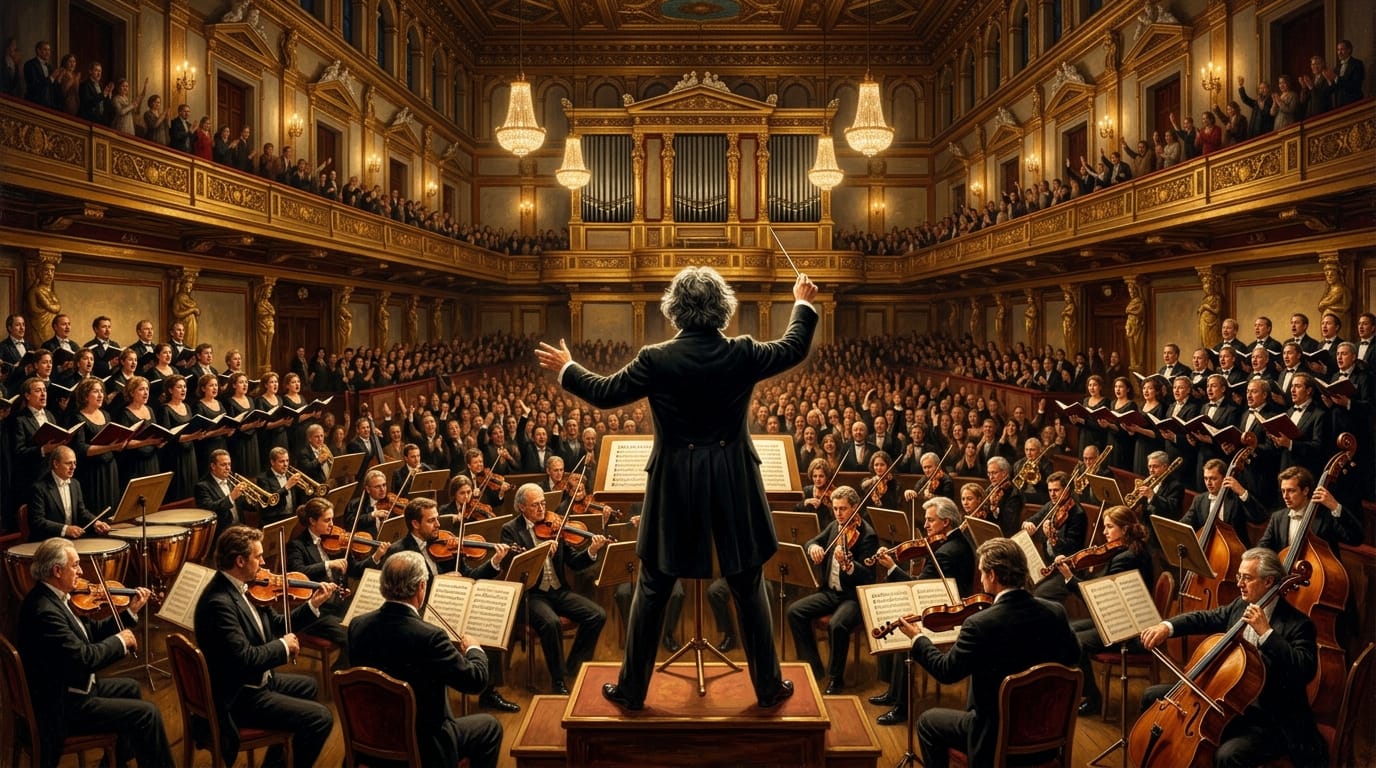
Premiered in Vienna on May 7, 1824, the Ninth Symphony broke new ground by adding vocal soloists and a full chorus to the final movement, setting Friedrich Schiller's poem 'An die Freude' ('Ode to Joy') as a hymn to universal brotherhood. By this point Beethoven was completely deaf and, though present on stage helping to lead the performance, could not hear the thunderous ovation that followed; the contralto soloist, Caroline Unger, reportedly had to turn him around to face the cheering audience so he could see what he could not hear.
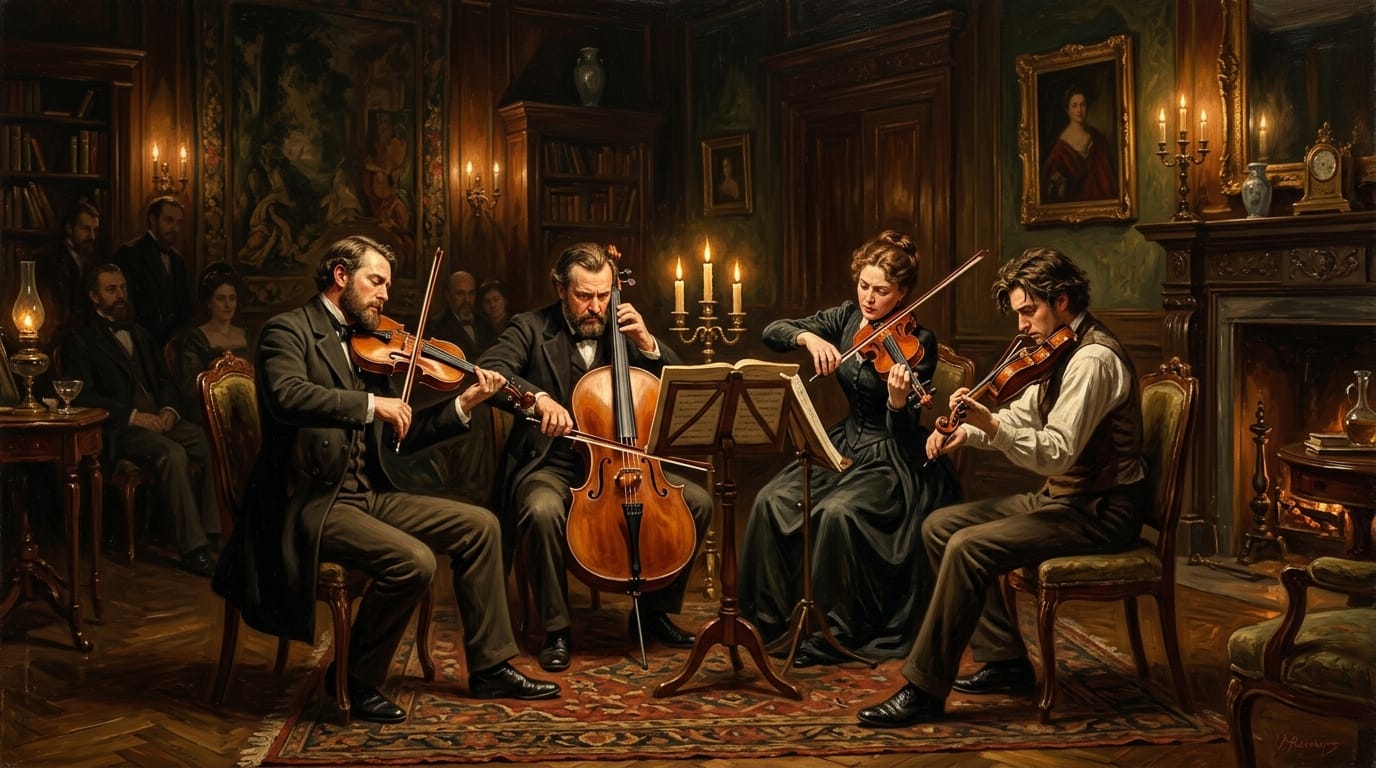
In his final years, Beethoven composed a set of string quartets so radical in structure and emotional depth that audiences of the time found them baffling. The String Quartet No. 14, Op. 131, unfolds across seven connected movements played without pause, breaking entirely from convention. Franz Schubert, on his deathbed in 1828, reportedly asked to hear this very quartet performed for him just days before he died.
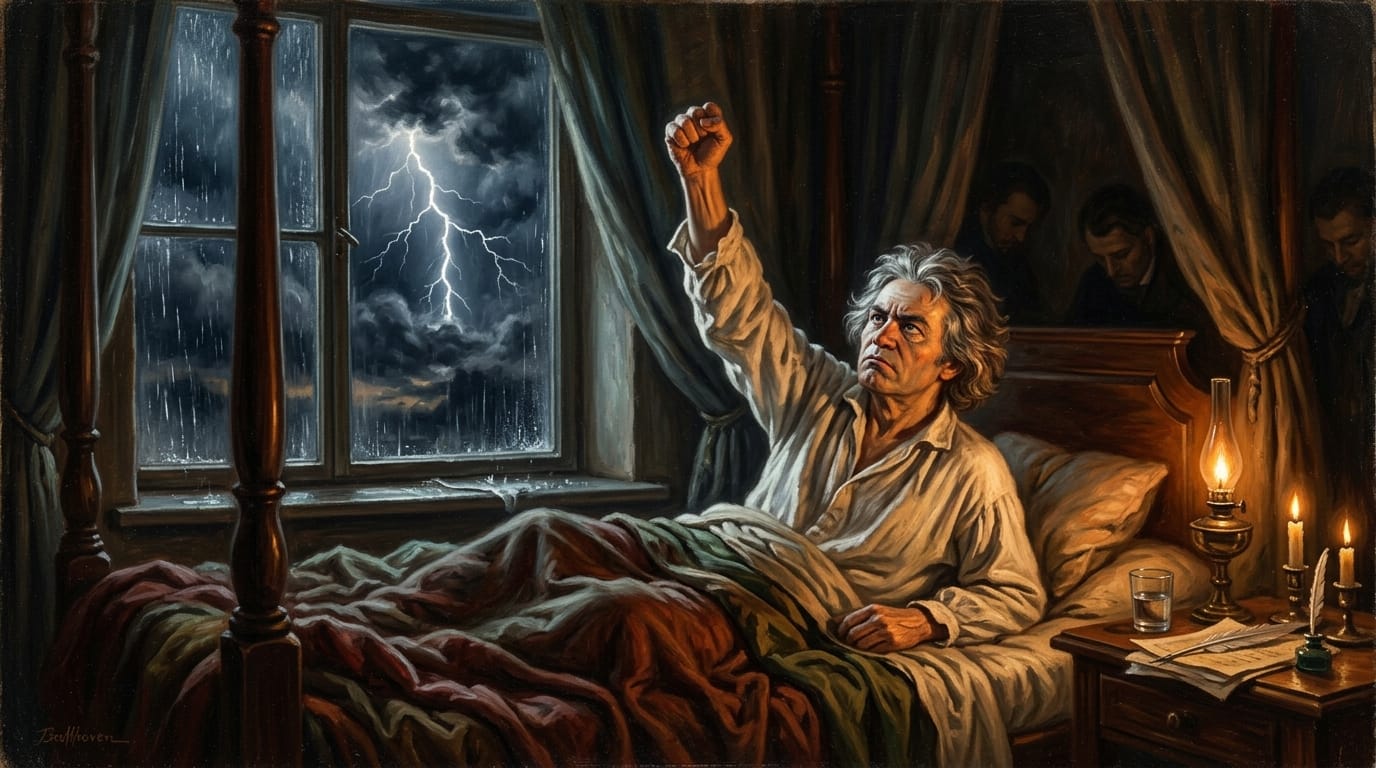
Beethoven died in Vienna on March 26, 1827, amid a sudden thunderstorm. According to his friend Anselm Hüttenbrenner, who was in the room, a flash of lightning and crack of thunder startled the unconscious composer awake; he opened his eyes, raised a clenched fist, and then fell back, dead. An estimated crowd of thousands attended his funeral three days later, with the young composer Franz Schubert, who would die the following year, serving as one of the torchbearers.
Curated Collections
The Masterpieces
Explore Beethoven's greatest works, categorized by genre.
Symphonies
Piano Sonatas
Piano Concertos
String Quartets
Violin Sonatas
Cello Sonatas
Overtures
Choral & Vocal Works
Piano Variations & Bagatelles
Chamber Music: Trios & Ensembles
Every Known Work
The Complete Catalog
Every one of Beethoven's 164 known compositions, organized by type. Tap a category to open it, or search for a piece by name.