The Complete Collection & Life Timeline
Franz Liszt
Journey through the life and masterpieces of the piano's greatest virtuoso. Discover the stories behind music written across a life of dazzling showmanship, restless reinvention, and radical late-life experimentation.
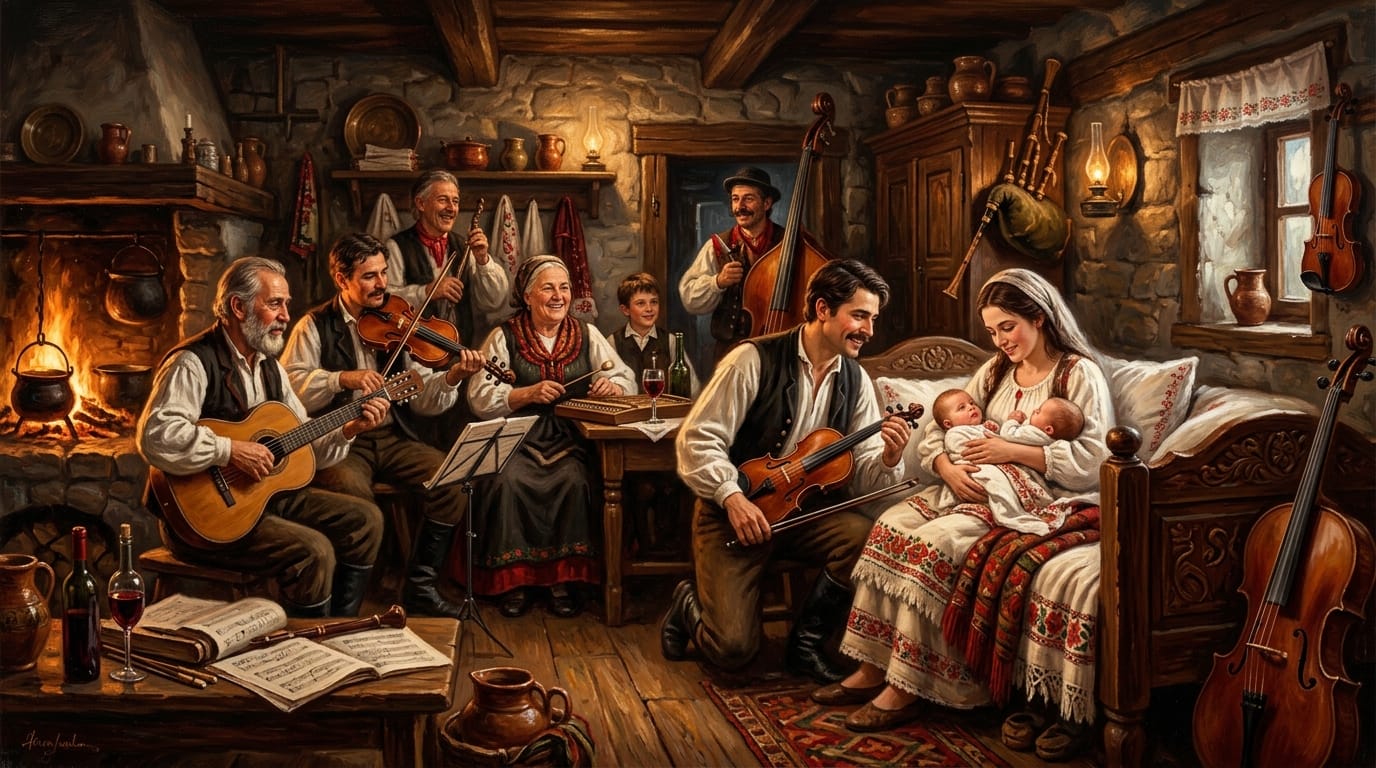
Franz Liszt was born on October 22, 1811, in Doborján, a small village in Sopron County in the Kingdom of Hungary (today Raiding, in the Austrian province of Burgenland). His father, Adam Liszt, was a steward on the estates of Prince Nikolaus II Esterházy — the same fabulously wealthy family that had employed Joseph Haydn for decades — and was himself a capable amateur musician who played piano, violin, cello, and guitar and had performed in the Esterházy orchestra. His mother, Anna (née Lager), came from Lower Austria. By the age of six Franz was reportedly reproducing themes he had heard his father play, and Adam began giving him piano lessons soon after, quickly recognizing that his son's gift was of an entirely different order from his own.
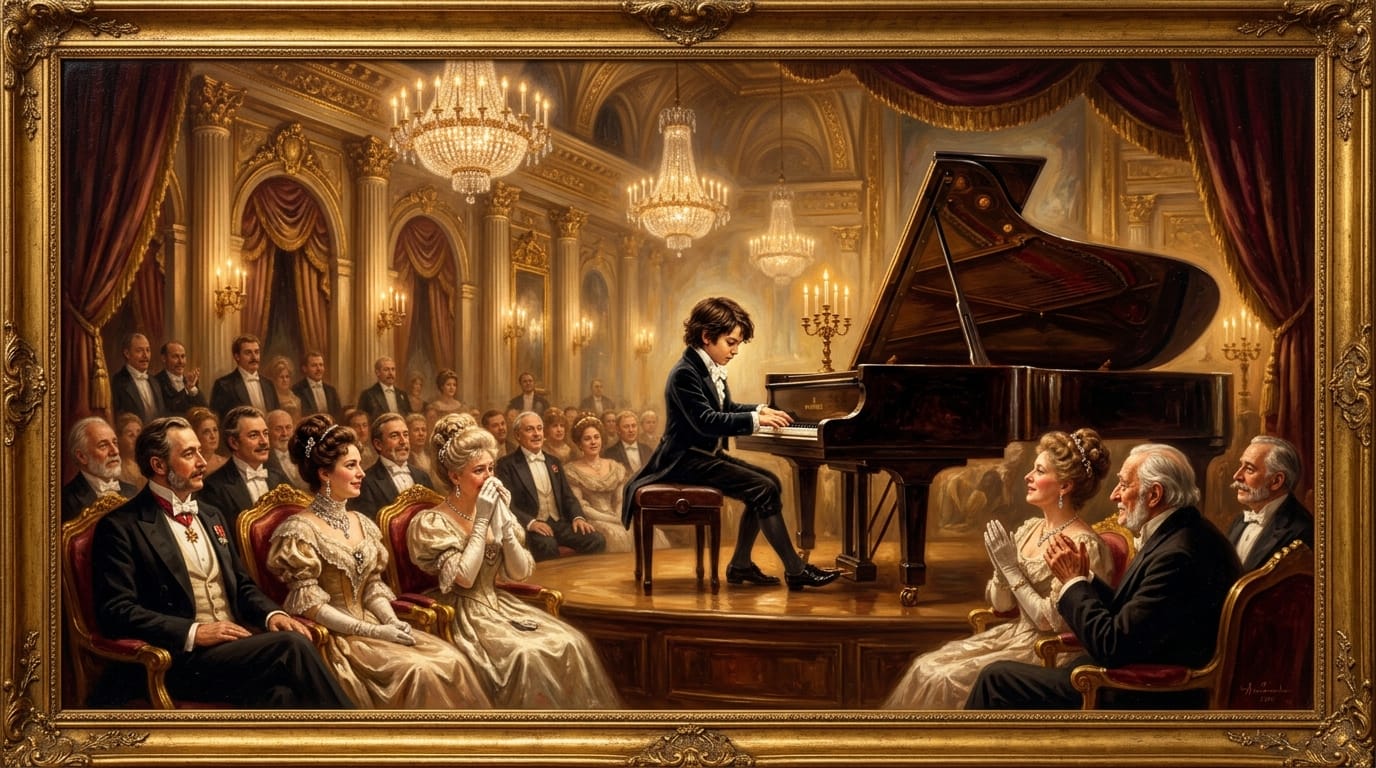
Liszt gave his first documented public performances in 1820, aged nine, in Sopron and then in Pressburg (Bratislava), where on November 26 he played at the palace of Count Michael Esterházy before an audience of Hungarian magnates. They were impressed enough that a group of them — including Counts Amadé, Apponyi, Szapáry, and Erdődy — pledged a stipend of 600 gulden a year for six years to fund his education. Adam Liszt took leave from his post and moved the family to Vienna, where Franz studied piano with Carl Czerny, a former pupil of Beethoven who was so struck by the boy's sight-reading and improvisation that he refused payment for the eighteen months he taught him, and composition with Antonio Salieri, music director at the imperial court. Liszt's Vienna debut on December 1, 1822, was a triumph, and in 1823 the eleven-year-old contributed a variation to Anton Diabelli's collective waltz project alongside Schubert, Czerny, and (separately) Beethoven.
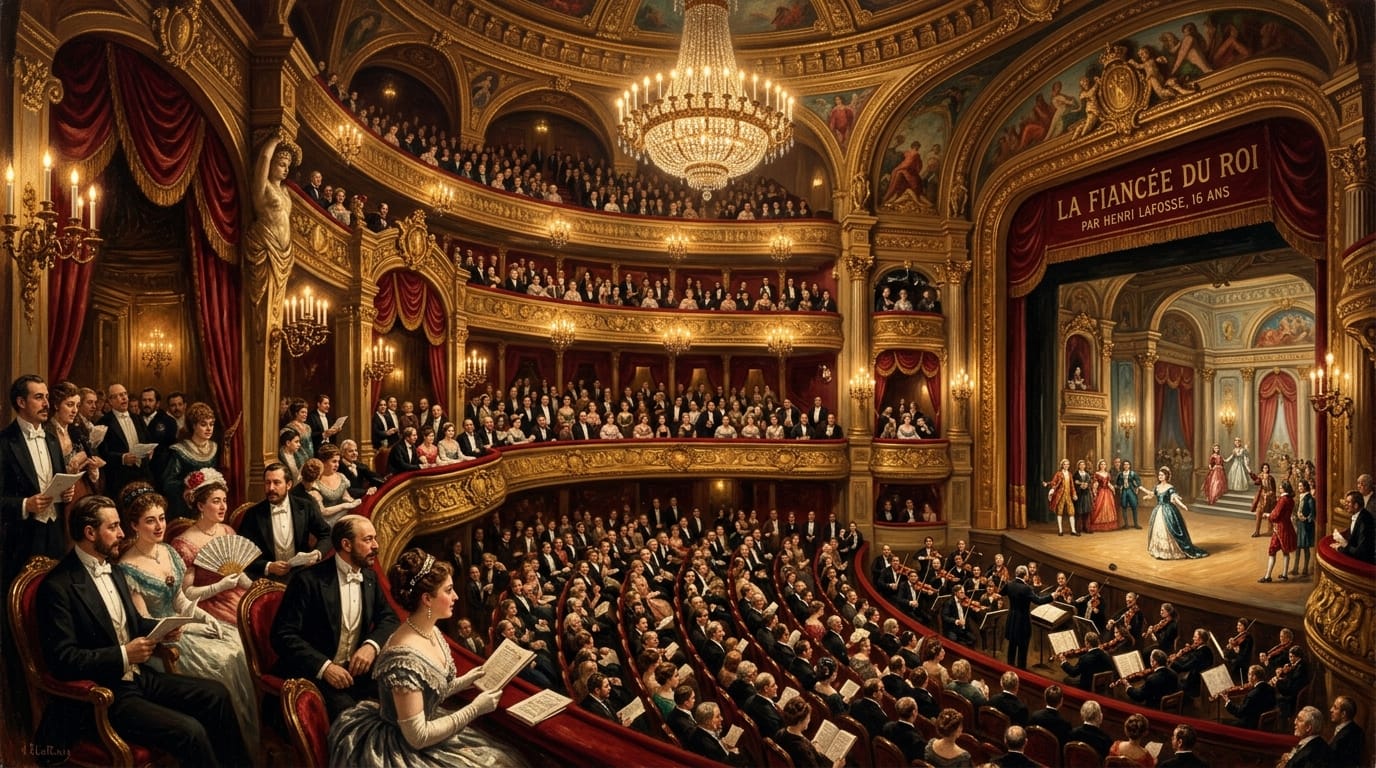
In the autumn of 1823 the family moved to Paris, hoping Franz could enter the Conservatoire, but its director Luigi Cherubini rejected him on the grounds that he was a foreigner — a rule Cherubini enforced strictly. Liszt instead studied composition privately with Anton Reicha and Ferdinando Paer, and made his Paris debut on March 8, 1824, to enormous acclaim; the French press dubbed him "le petit Litz" and compared him to the young Mozart. Between 1824 and 1827 he toured intensively, giving concerts in Paris, in the French provinces, and in England, where he played three times before George IV. Through Paer's theatrical connections he composed a one-act opera, Don Sanche, ou Le château d'amour, staged at the Paris Opéra on October 17, 1825, shortly before his fourteenth birthday; it survived only four performances, and Liszt never attempted another opera.
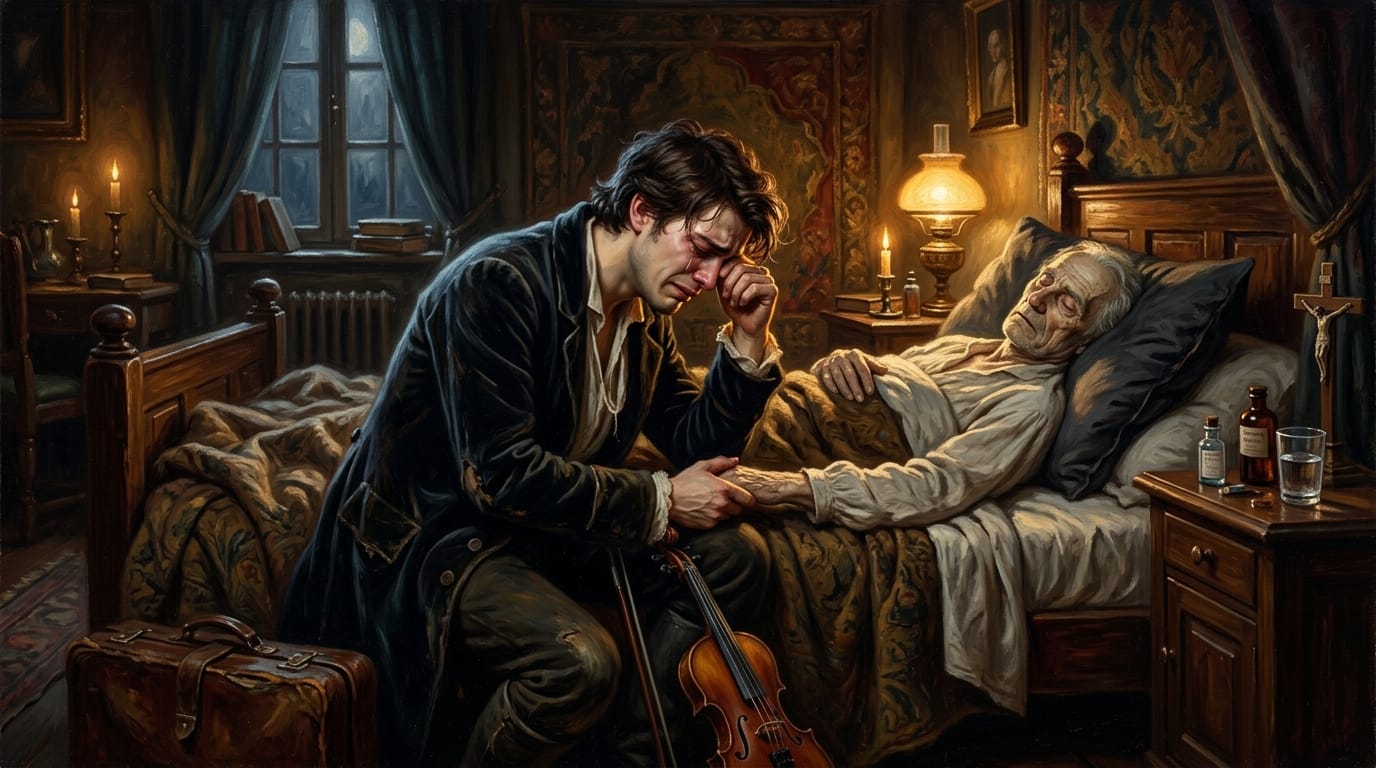
By 1827 the relentless touring had exhausted the fifteen-year-old Liszt, and Adam took him to Boulogne-sur-Mer on the Channel coast for sea bathing and rest. There Adam contracted typhoid fever and died on August 28, 1827, aged fifty. It was a shattering loss and a total reversal of circumstances: the father who had staked his career on his son's talent, managed every engagement, and directed every decision was simply gone, and Franz at fifteen became responsible for supporting his mother, Anna, whom he brought to Paris to live with him. He gave up the concert circuit almost entirely and turned to teaching, working long hours as a piano tutor to the daughters of the Parisian aristocracy and haute bourgeoisie — the trade that would sustain him for the next several years and shape his lifelong instincts as a teacher.
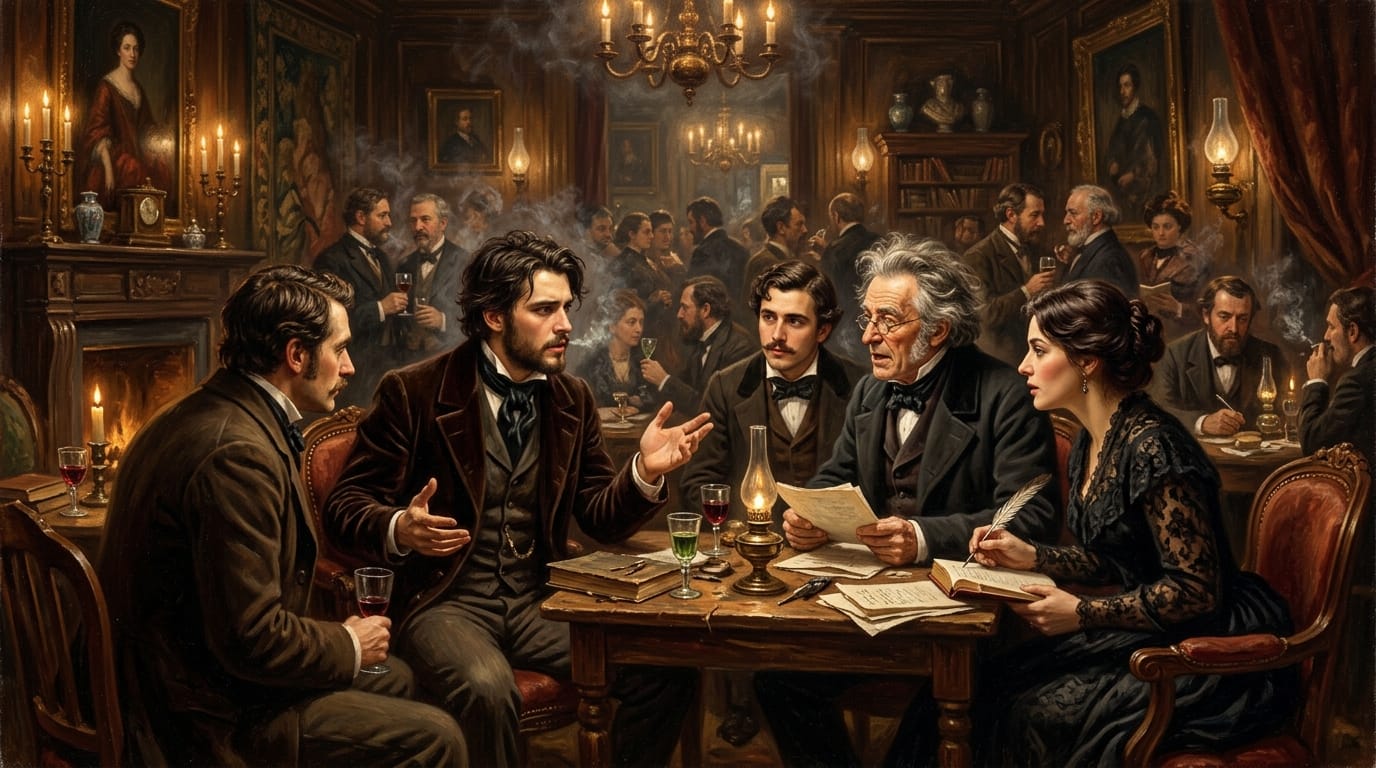
In 1828 Liszt fell in love with Caroline de Saint-Cricq, a seventeen-year-old pupil and the daughter of Charles X's minister of commerce, who ended the relationship as soon as he learned of it. Liszt collapsed into a prolonged depression and illness so severe that a Paris newspaper printed his obituary in October 1828. He withdrew from public performance almost completely, was drawn deeply into religious questioning, and seriously considered entering the priesthood; the radical priest Félicité de Lamennais talked him out of it, while the violinist Chrétien Urhan introduced him to the utopian socialism of the Saint-Simonians. He read voraciously and unsystematically — theology, Byron, Chateaubriand, Hugo — and composed almost nothing until the July Revolution of 1830 galvanized him into sketching a "Revolutionary Symphony" (material later reworked into the symphonic poem Héroïde funèbre). On December 4, 1830, the day before the premiere of the Symphonie fantastique, he met Hector Berlioz, and soon afterward Frédéric Chopin; together with Hugo, Heine, Delacroix, and George Sand, they formed the circle in which Liszt found his artistic identity.
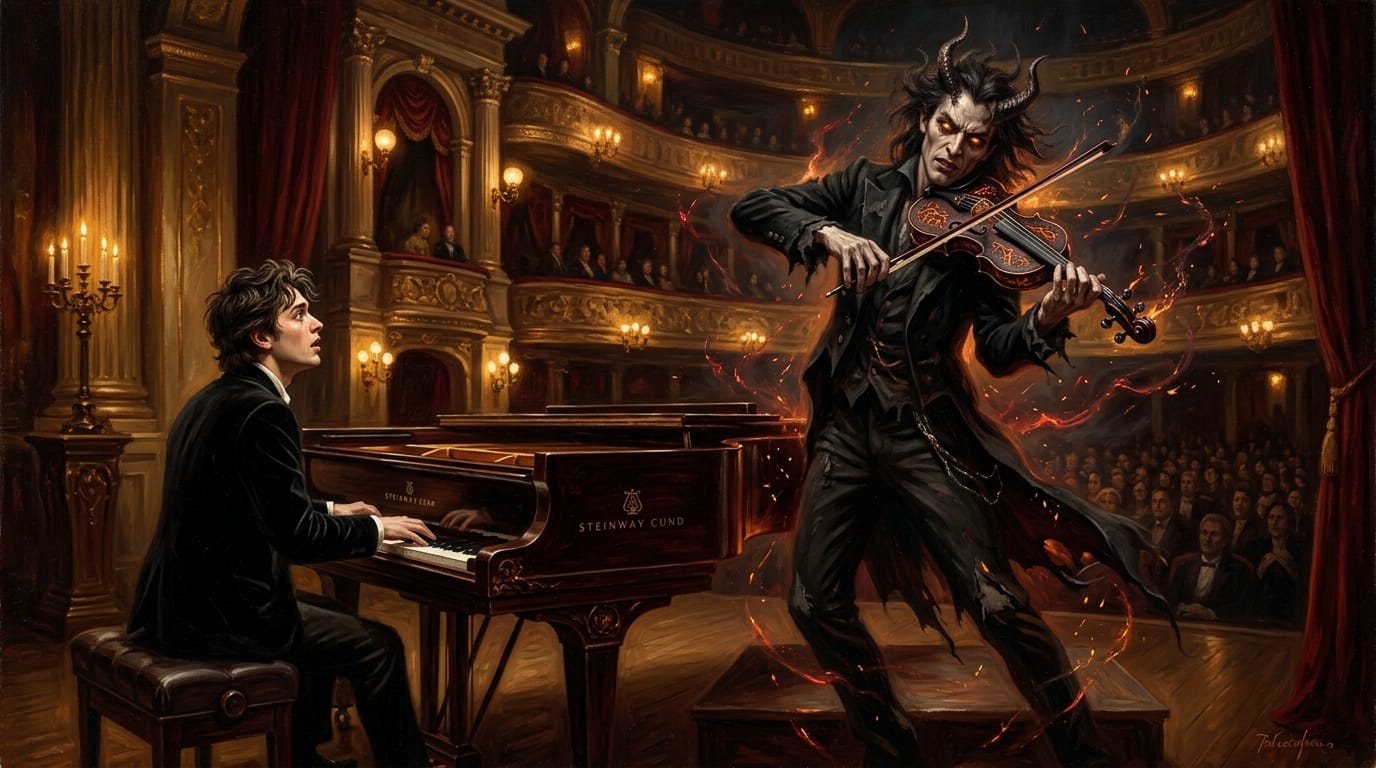
Paganini came to Paris in the spring of 1832, and the concert Liszt attended in April changed the direction of his career. In a famous letter he wrote: "What a man, what a violin, what an artist! O God, what suffering, what misery, what torture in those four strings!" — and then resolved to become the Paganini of the piano. He threw himself into a regime of practice that reportedly ran to fourteen hours a day, drilling scales, arpeggios, repeated notes, trills, and octaves, and simultaneously rebuilt his conception of what the instrument could do. The first fruit was the ferociously difficult Études d'exécution transcendante d'après Paganini, S. 140, published in 1838 and later eased into the more playable Grandes études de Paganini, S. 141, of 1851 — the set that contains La campanella. The Paganini model was as much about theatre as technique: Paganini showed Liszt that a solo performer could hold a hall by sheer presence.
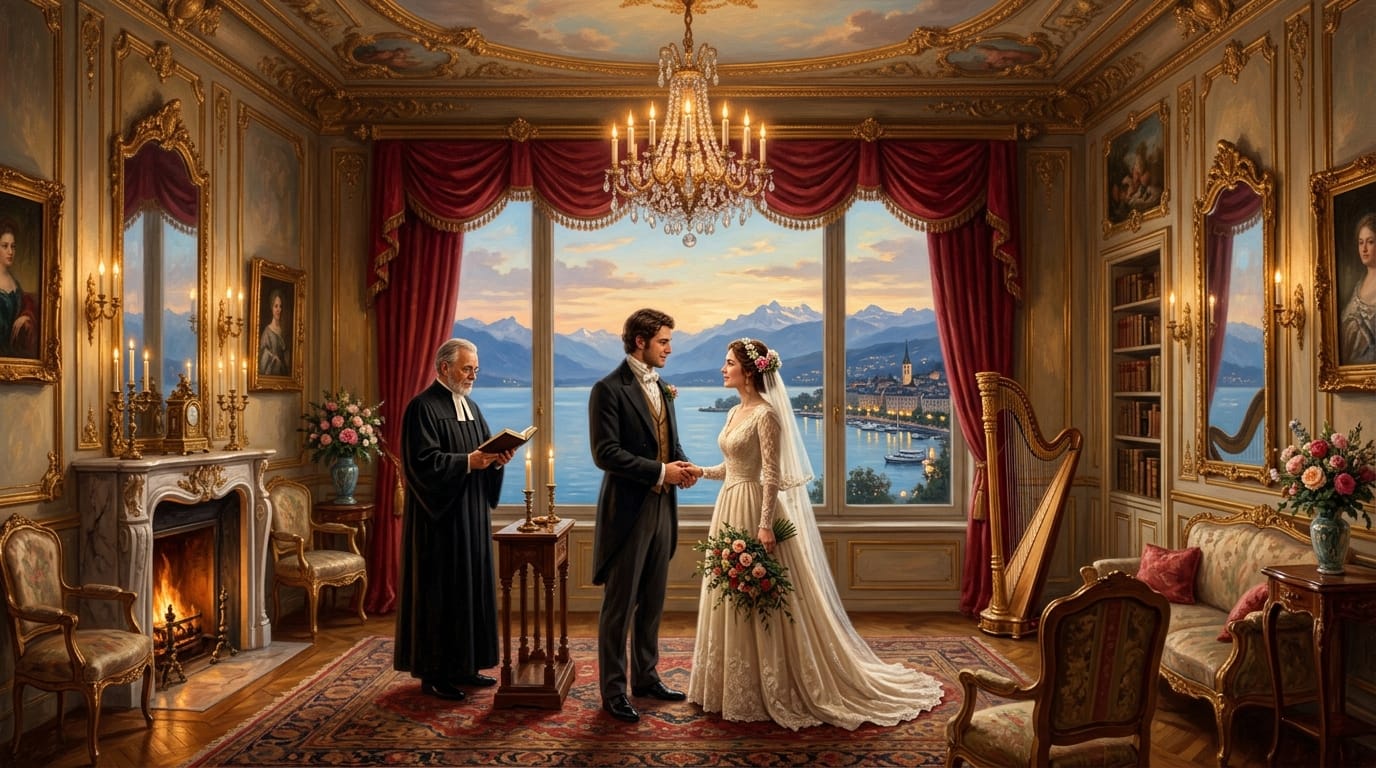
Liszt met the Countess Marie d'Agoult in 1833 at a Paris salon. Six years his senior, married to Count Charles d'Agoult, and a writer of real ability who would later publish under the pen name Daniel Stern, she was his intellectual equal and, for the next decade, the central relationship of his life. Their affair was impossible to conduct openly in Paris, and in 1835 Marie left her husband and joined Liszt in Geneva, where their daughter Blandine was born on December 18, 1835. Liszt taught at the newly founded Geneva Conservatoire, wrote essays for L'Artiste and the Revue et gazette musicale de Paris — including the polemical "On the Situation of Artists," arguing that musicians were treated as servants rather than as artists — and began composing the pieces that would become the first book of the Années de pèlerinage. The scandal was substantial: Marie surrendered her position in French society, and much of the cost of the relationship fell on her rather than on him.

Liszt and Marie d'Agoult travelled in Switzerland from 1835 to 1836 and in Italy from August 1837 to November 1839, and the journey produced the Années de pèlerinage — a piano cycle in which specific places, paintings, and poems become music. Their second daughter, Cosima, was born at Como on December 24, 1837, and their son Daniel in Rome on May 9, 1839. In Italy, Liszt responded to Raphael's Sposalizio, Michelangelo's Il penseroso, three sonnets of Petrarch, and Dante's Inferno, producing the Deuxième année: Italie, S. 161, including the vast fantasia quasi sonata Après une lecture du Dante. This is also the period in which he invented the modern solo recital: in Rome in 1839 he gave concerts entirely alone, without other performers, which contemporaries found startling — his own half-joking name for them was "musical soliloquies."
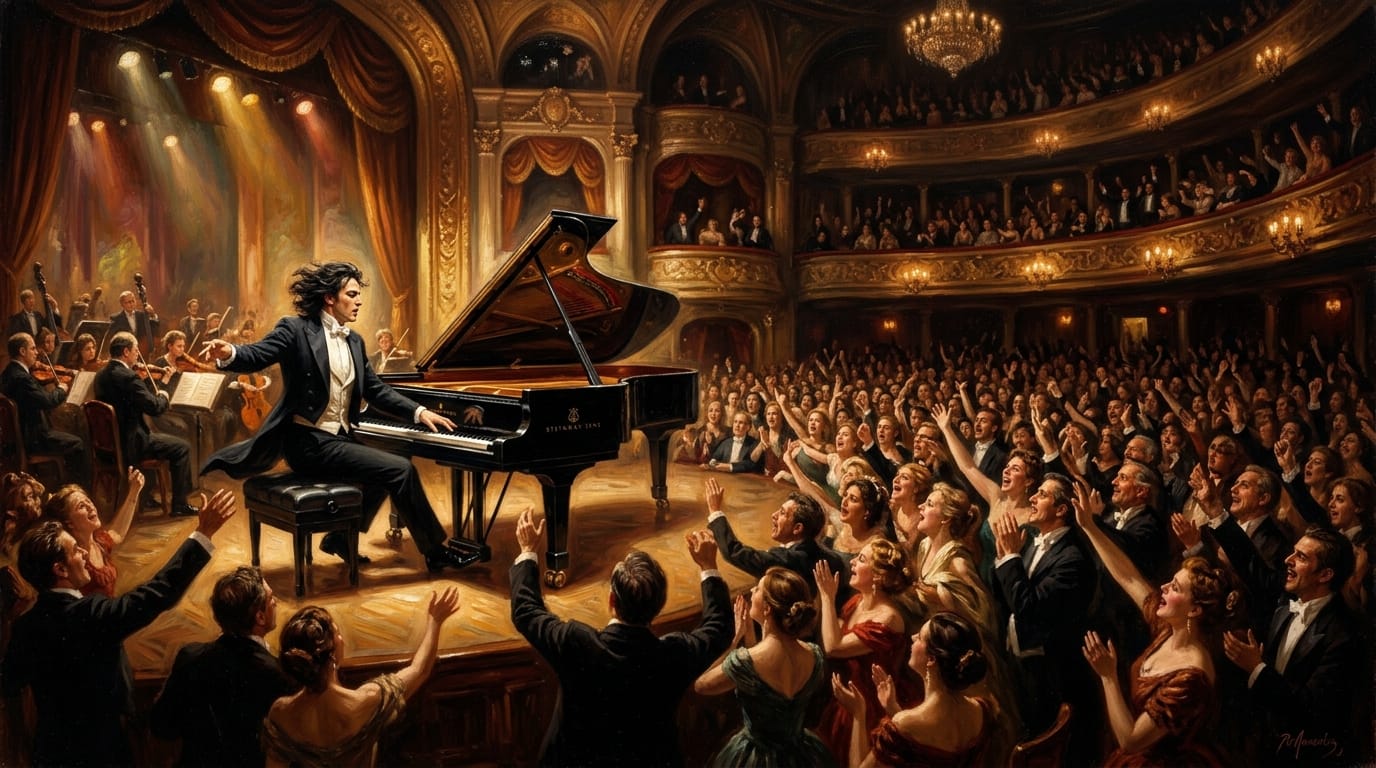
Between 1839 and 1847 Liszt toured almost continuously, appearing more than a thousand times across Europe — Britain, Ireland, Portugal, Spain, Denmark, Russia, Poland, Hungary, Turkey. His Berlin concerts in the winter of 1841–42 triggered a level of public frenzy for which Heinrich Heine coined the term "Lisztomania" in 1844, describing the "magnetism and electricity" of the halls; audiences mobbed him, women competed for his gloves, handkerchiefs, cigar ends, and coffee dregs. He also settled his one great rivalry in this period, the celebrated 1837 "duel" with Sigismond Thalberg at the Princess Belgiojoso's salon, which she famously adjudicated: "Thalberg is the first pianist in the world — Liszt is unique." What the mania obscures is how much of the money he gave away: when the Beethoven Monument fund at Bonn collapsed, Liszt underwrote the shortfall himself and the statue was unveiled in 1845; he gave benefit concerts after the Great Fire of Hamburg in 1842 and donated to Cologne Cathedral, to St Stephen's Basilica in Pest, to hospitals, schools, and pension funds.
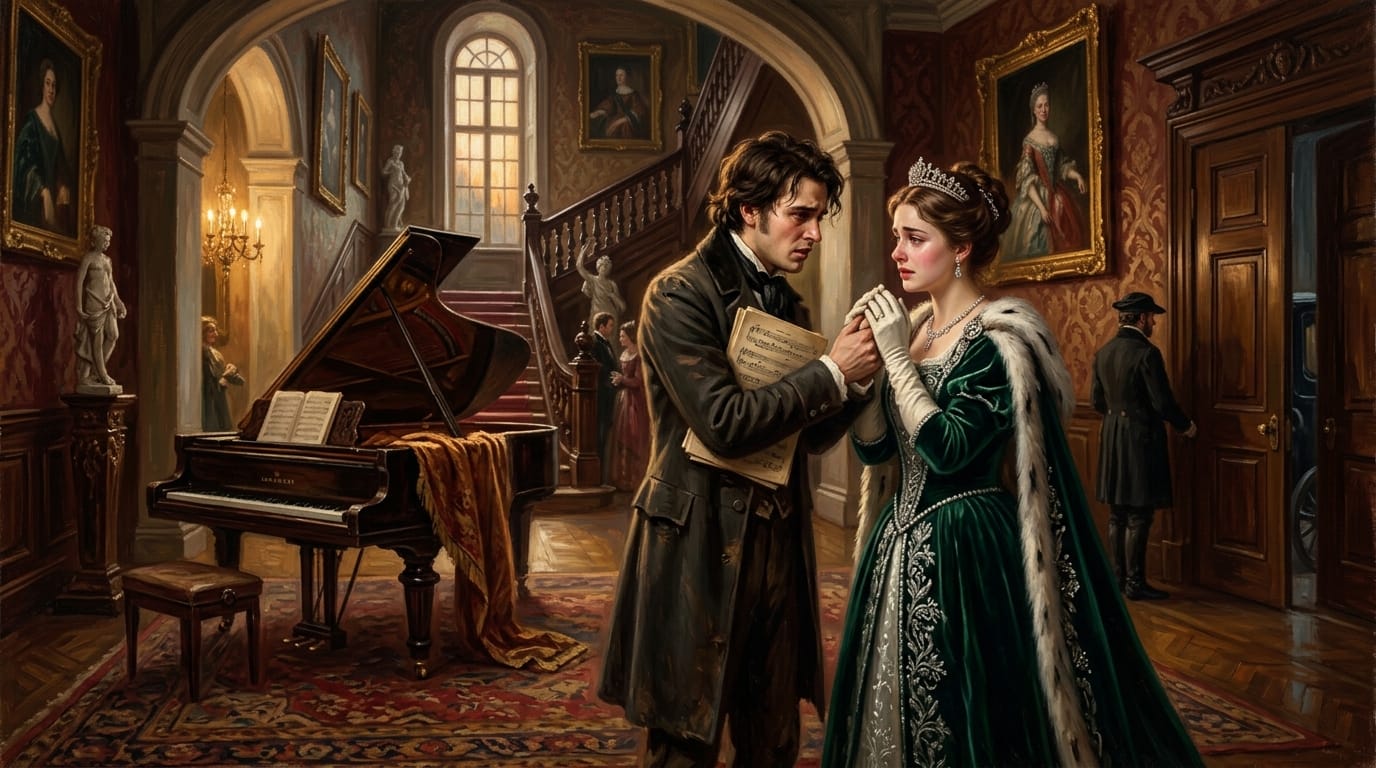
During his 1847 tour of the Russian Empire, Liszt met Princess Carolyne zu Sayn-Wittgenstein in Kiev. Polish-born, immensely wealthy from her Ukrainian estates, unhappily married to a Russian prince, and intellectually formidable, she pressed him to give up the touring life and dedicate himself to composition — an argument he was already half-persuaded of. He accepted the standing offer of a court appointment at Weimar, toured Turkey and southern Russia that summer, and gave his final paid public concert at Yelisavetgrad (Elisabetgrad) in September 1847. He was thirty-five and unquestionably the most famous performer alive. He would play in public many times again, but almost always for charity or privately, and never for a fee. As Alan Walker observes, by retiring at his peak Liszt kept the legend of his playing permanently untarnished.
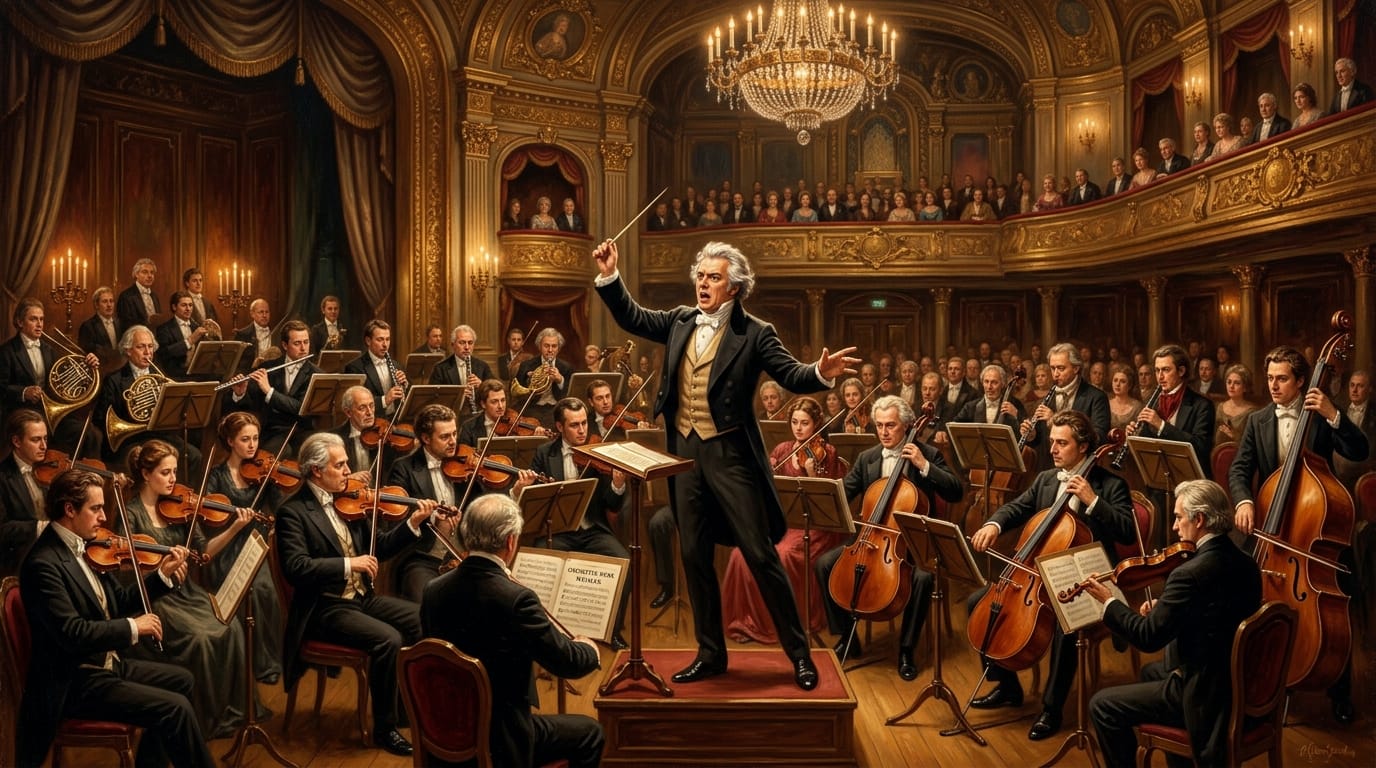
In July 1848 Liszt took up residence in Weimar as court Kapellmeister, a post funded by the Grand Duchess Maria Pavlovna, and held it until 1858. He conducted the court orchestra and opera, mounted festivals devoted to Berlioz and Wagner, and premiered a remarkable quantity of new music — most famously Wagner's Lohengrin on August 28, 1850, given while Wagner was a political exile in Switzerland with a warrant out for his arrest and unable to attend his own premiere. He also conducted Schumann's Manfred and Genoveva, works by Berlioz, Schubert's Alfonso und Estrella, and Peter Cornelius's Der Barbier von Bagdad. Around him formed what Franz Brendel in 1859 labelled the "New German School" — Liszt, Wagner, Berlioz, Cornelius, Hans von Bülow, Joachim Raff — whose programmatic and harmonically adventurous music was pitted against the more conservative camp of Brahms, Joachim, and the critic Eduard Hanslick in the long polemic known as the War of the Romantics. Friction with the theatre intendant Franz von Dingelstedt and a hostile demonstration at the Barbier premiere in 1858 led Liszt to resign.

Between 1848 and 1858 Liszt created a new orchestral genre: the symphonic poem, a single-movement work whose form is shaped by an extra-musical subject rather than by classical sonata design. He wrote twelve at Weimar and a thirteenth, Von der Wiege bis zum Grabe, in 1882. The technique that holds them together is thematic transformation — a small number of motifs are continually rewritten in rhythm, harmony, tempo, and character, so that one idea can be heroic in one passage and grotesque in another. Les préludes, S. 97, premiered under Liszt on February 23, 1854, and published in 1856, was the first orchestral score actually to carry the label "symphonic poem." The two large choral symphonies belong to the same project: A Faust Symphony, S. 108, three character portraits of Faust, Gretchen, and Mephistopheles, premiered on September 5, 1857, and dedicated to Berlioz; and the Dante Symphony, S. 109, premiered at Dresden on November 7, 1857, and dedicated to Wagner. The genre had enormous consequences — Smetana, Saint-Saëns, Tchaikovsky, Sibelius, Richard Strauss, and Debussy all built on it.
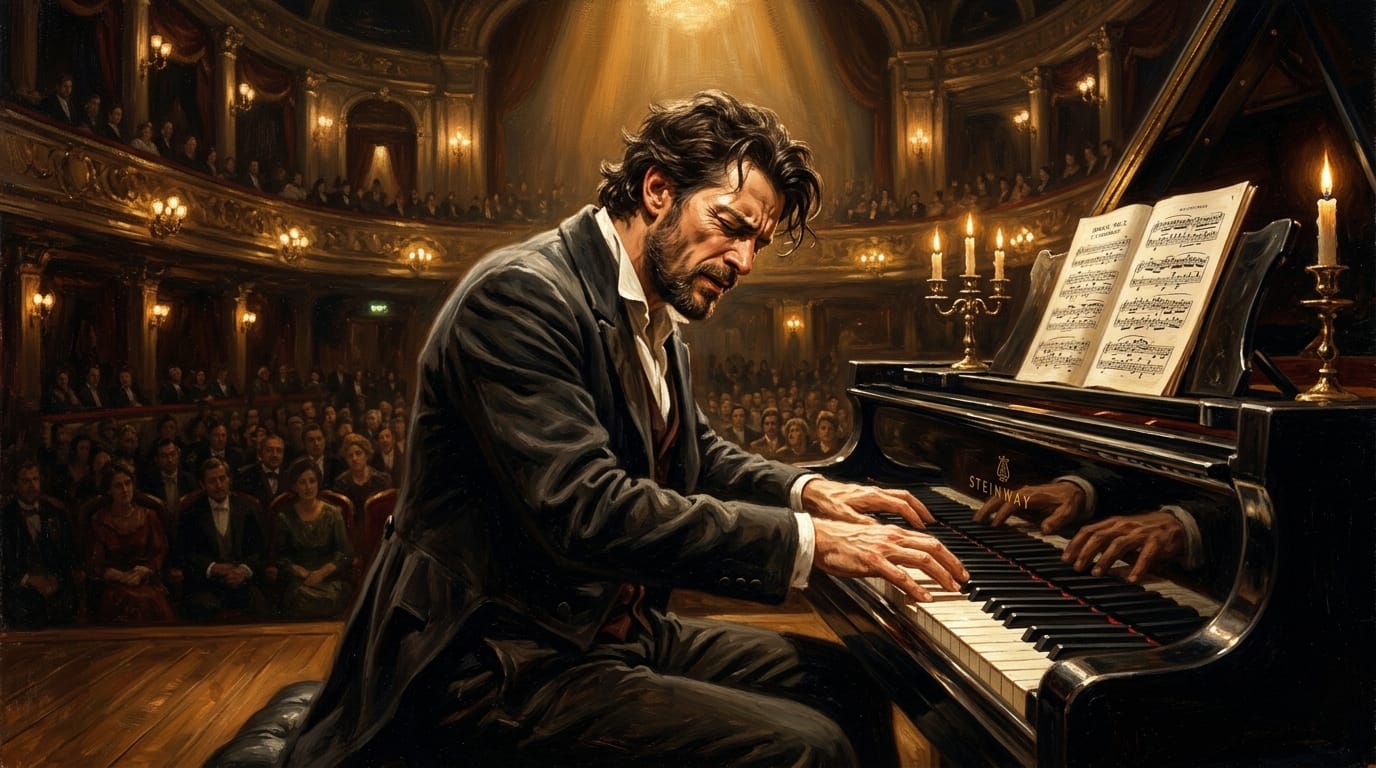
Liszt completed the Piano Sonata in B minor, S. 178, at Weimar in February 1853 and published it in 1854 with a dedication to Robert Schumann, repaying Schumann's dedication of the Fantasie in C major to him fifteen years earlier. It is a single unbroken span of roughly thirty minutes that operates on two levels at once — a full sonata-form structure and, simultaneously, the four movements of a classical sonata compressed inside it, an arrangement analysts call double-function form. Nearly all the material derives from three motifs stated on the first page. Reception was violently split: Hans von Bülow gave the premiere in Berlin on January 27, 1857; Wagner was enthusiastic after a private hearing in 1855; Brahms reportedly fell asleep while Liszt played it to him in 1853; and Eduard Hanslick delivered the verdict that "anyone who has heard it and finds it beautiful is beyond help." By the early twentieth century it was secure as one of the central works of the piano repertoire.
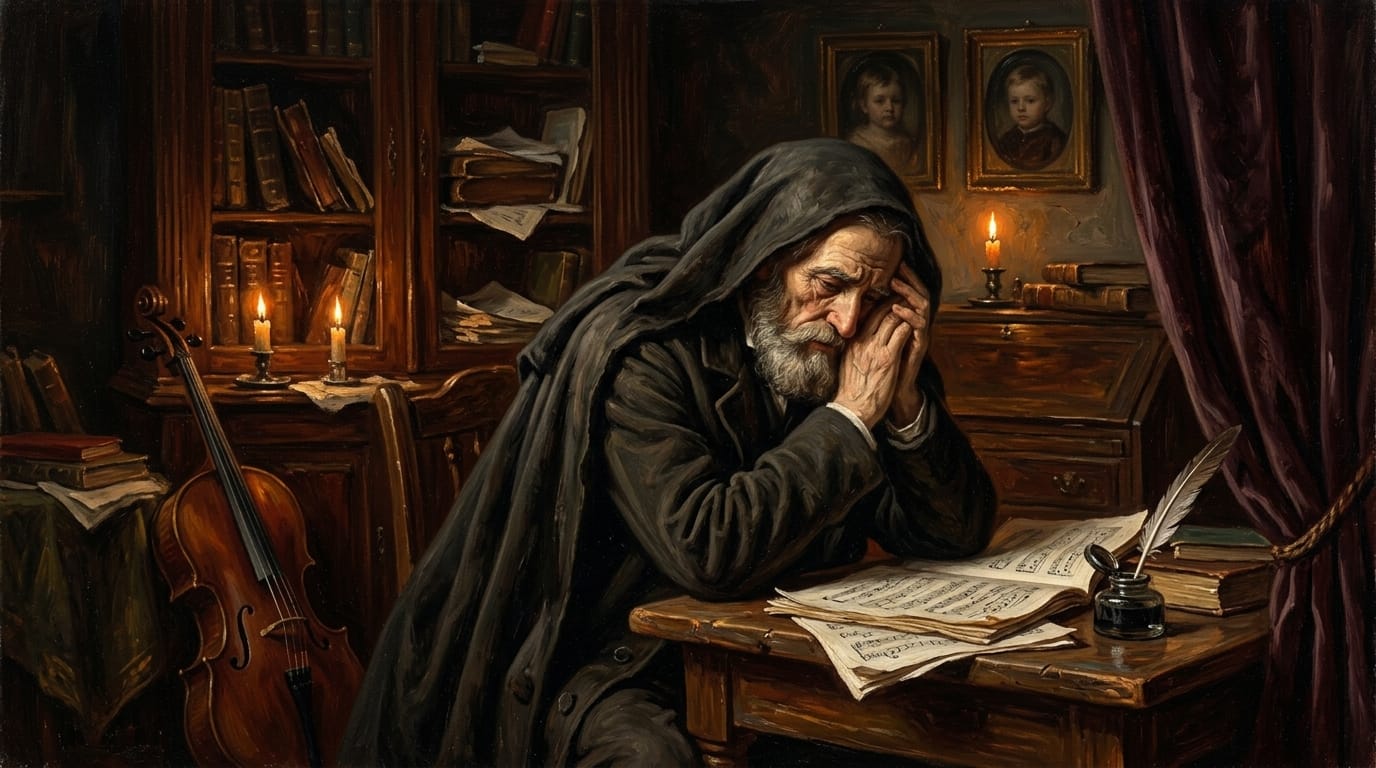
Liszt's son Daniel died in Berlin on December 13, 1859, aged twenty, of a lung ailment. Meanwhile Carolyne had spent more than a decade pursuing an annulment of her Russian marriage through ecclesiastical courts; after an audience with Pope Pius IX in 1860 it was finally granted, and the wedding was fixed for October 22, 1861 — Liszt's fiftieth birthday — at the church of San Carlo al Corso in Rome. On the evening of October 21 a Vatican official arrived to halt the ceremony, the result of manoeuvring by Carolyne's relatives (and Cardinal Gustav von Hohenlohe) over an inheritance settlement backed by Tsar Alexander II. The marriage never took place, and Carolyne abandoned the attempt even after her husband's death in 1864, retreating into seclusion to write a vast, unfinished critique of the Catholic Church. On September 11, 1862, Blandine died at Saint-Tropez, aged twenty-six, of septicaemia following surgery, shortly after giving birth to a son she named Daniel after her brother. Liszt withdrew almost entirely from public life.
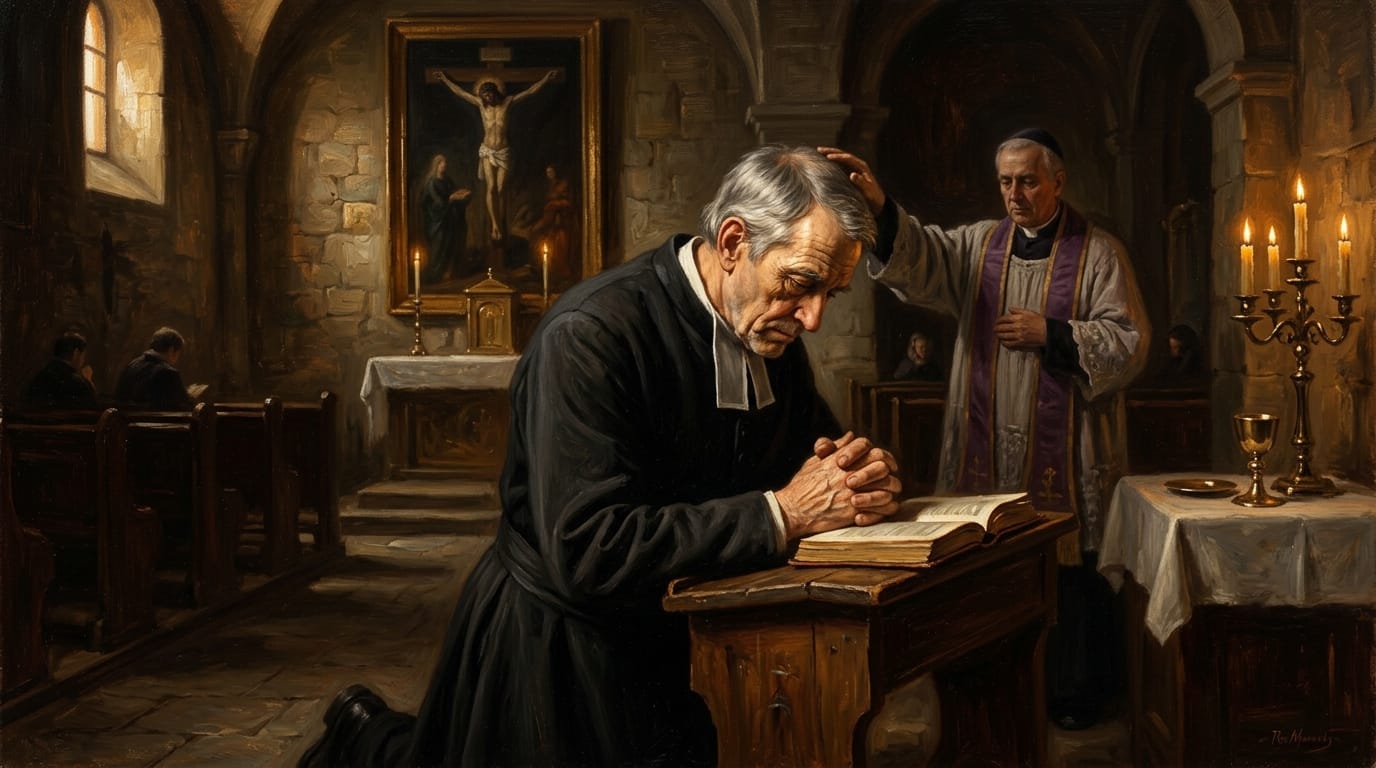
On June 20, 1863, Liszt moved into a spartan apartment at the Oratorio della Madonna del Rosario on Monte Mario outside Rome, keeping a piano in his cell and continuing to compose. He had already joined the Third Order of Saint Francis in 1857. On April 25, 1865, he received the tonsure from Cardinal Gustav von Hohenlohe, and on July 31, 1865, the four minor orders — porter, lector, exorcist, and acolyte — after which he was generally addressed as Abbé Liszt and wore a cassock for the rest of his life. It is important to be precise about what this did and did not mean: minor orders carried no vow of celibacy, did not make him a priest, and left him free to marry, travel, teach, and compose. Liszt said so himself, writing that he had no wish to be a monk "in the severe sense of the word" and that it was enough to belong to the hierarchy of the Church to the degree the minor orders allowed. In 1867 the Hungarian government commissioned him to write the Mass for the coronation of Franz Joseph and Elisabeth as King and Queen of Hungary; the Hungarian Coronation Mass, S. 11, was performed at the Matthias Church in Buda on June 8, 1867.
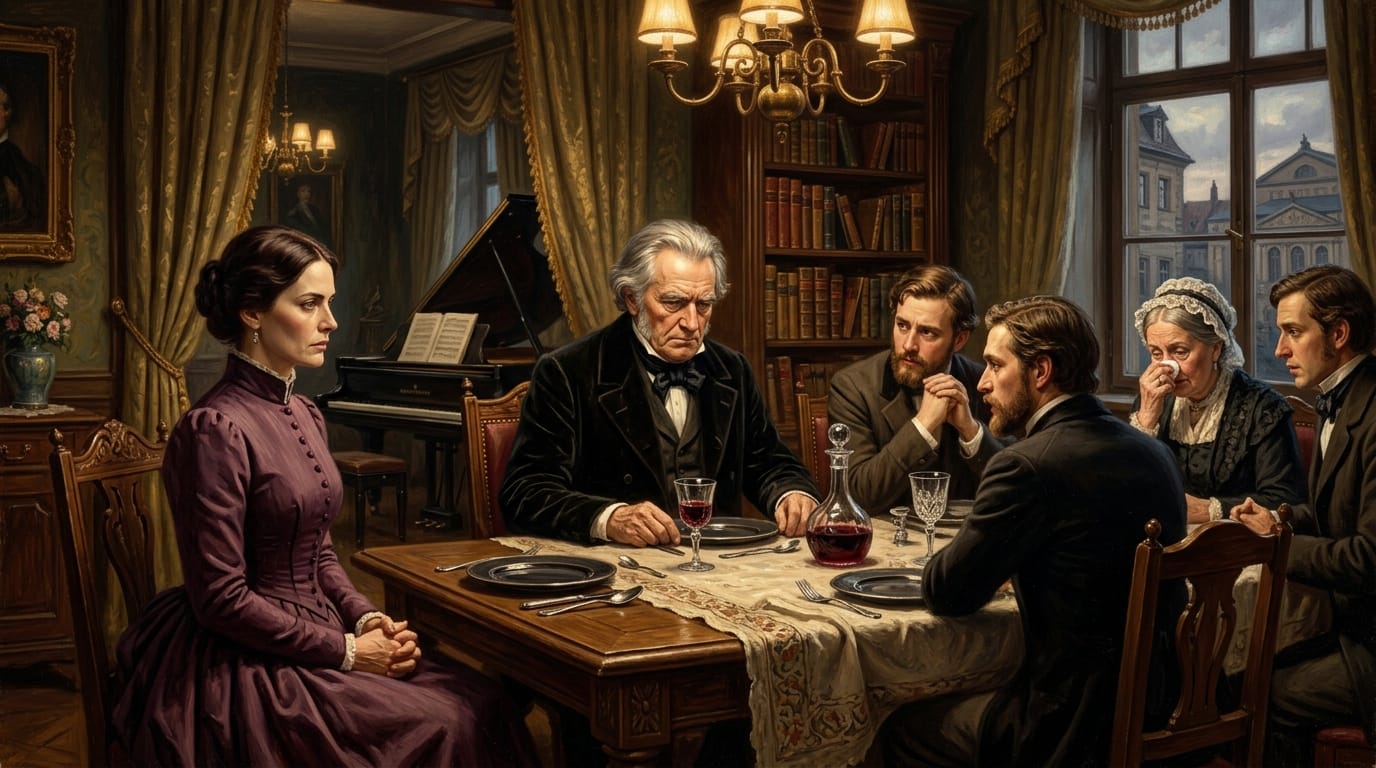
Cosima Liszt married Hans von Bülow — Liszt's outstanding pupil and the future conductor of the Tristan and Meistersinger premieres — in Berlin on August 18, 1857. By the mid-1860s she was in a relationship with Richard Wagner, twenty-four years her senior and Liszt's near-exact contemporary; she bore Wagner three children before leaving Bülow, and married Wagner on August 25, 1870, converting to Protestantism to do so. Liszt was deeply distressed on several counts at once — loyalty to Bülow, his Catholicism, and the humiliation of a friend and pupil — and he and Cosima were estranged for roughly three years; he did not attend the wedding. Reconciliation came gradually from 1872, and Liszt attended the laying of the Bayreuth foundation stone that May and the first festival in 1876. Throughout, he never wavered in championing Wagner's music publicly, even as the private relationship remained unequal: Wagner had depended on Liszt for money, advocacy, and premieres for two decades, and rarely reciprocated.
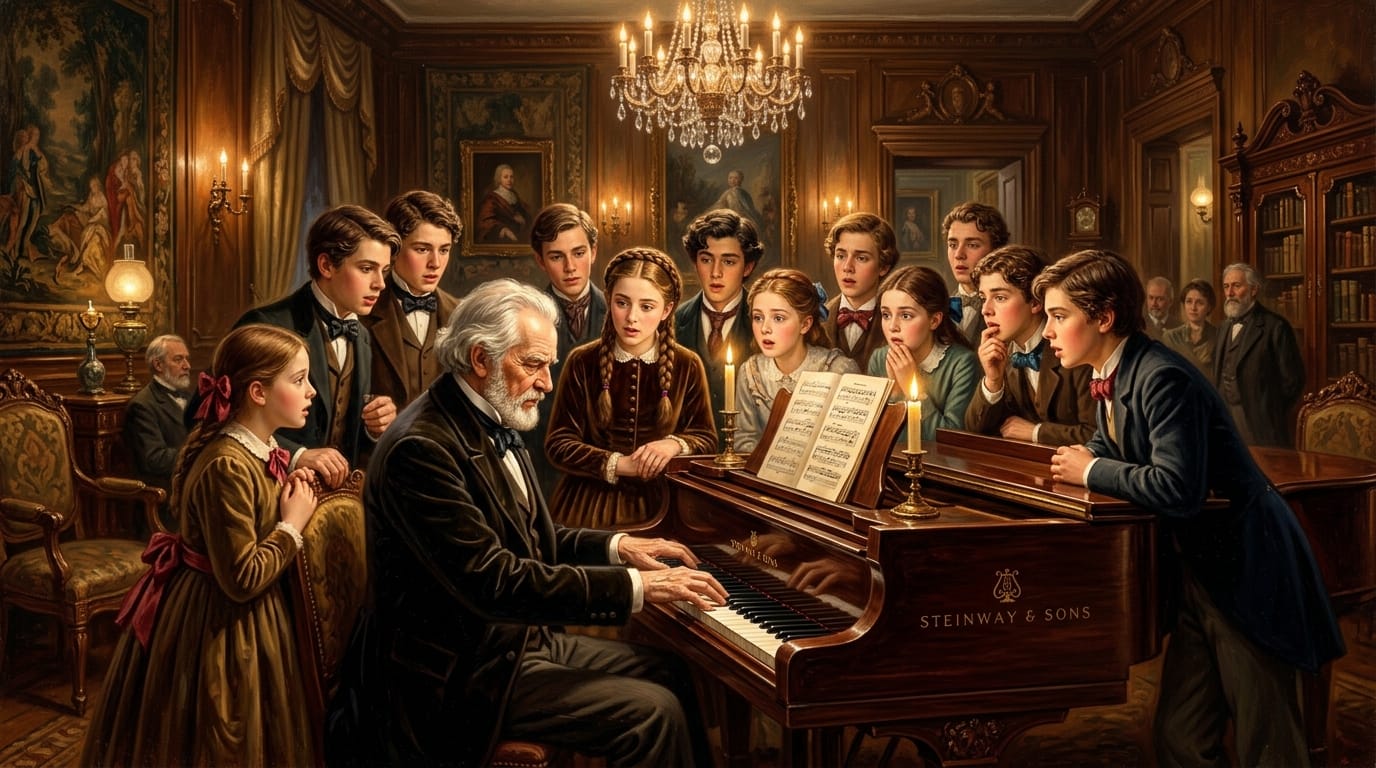
In January 1869 Liszt accepted Grand Duke Carl Alexander's long-standing invitation to return to Weimar, not as Kapellmeister but as a teacher, based at the Hofgärtnerei, the court gardener's house, where he taught for seventeen years. From 1872 he settled into what he called his vie trifurquée — a tripartite existence circulating between Rome, Weimar, and Budapest, covering at least 6,400 kilometres a year at an age when such travel was punishing. The Hungarian Parliament agreed to found a Royal Academy of Music in 1873 and named Liszt its president in March 1875; it opened on November 14, 1875, with Ferenc Erkel as director, and from 1881 Liszt kept an apartment there. In all three cities he taught the same way and on the same terms: in a group, several students at a time, taking turns at the piano while the others listened — and free of charge, as Czerny had once taught him. Among the pupils were Eugen d'Albert, Moriz Rosenthal, Emil von Sauer, Arthur Friedheim, Carl Tausig, and Sophie Menter; the modern piano masterclass is essentially his invention.
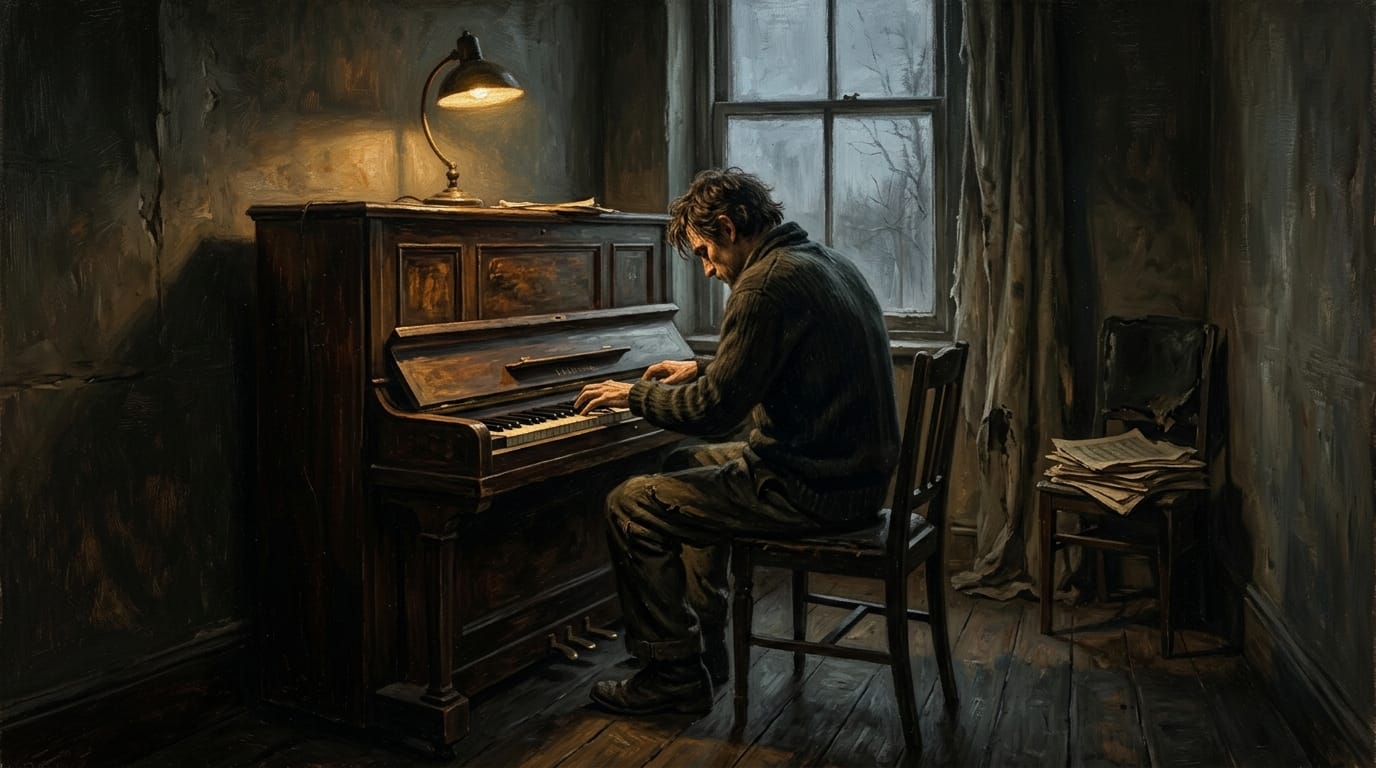
From around 1877, and intensively after a fall down the stairs at the Hofgärtnerei in July 1881 left him bedridden and permanently weakened, Liszt's piano writing became radically stripped down. Pieces like Nuages gris, S. 199 (August 24, 1881), Unstern! Sinistre, disastro, S. 208, Csárdás macabre, S. 224, La lugubre gondola, S. 200, and Bagatelle sans tonalité, S. 216a (1885) abandon virtuosity almost entirely in favour of bare textures, augmented triads, whole-tone and tritone-saturated harmony, parallel motion, and unresolved endings. Nuages gris avoids conventional cadence altogether; the Bagatelle, whose manuscript is subtitled "Bagatelle ohne Tonart" — bagatelle without key — has no stable tonal centre at all. Liszt told his biographer Lina Ramann: "I carry a deep sadness of the heart which must now and then break out in sound." Publishers were uninterested and most of these pieces appeared only in the twentieth century, when Bartók, Debussy, and later composers recognised them as a direct anticipation of modernist harmony.
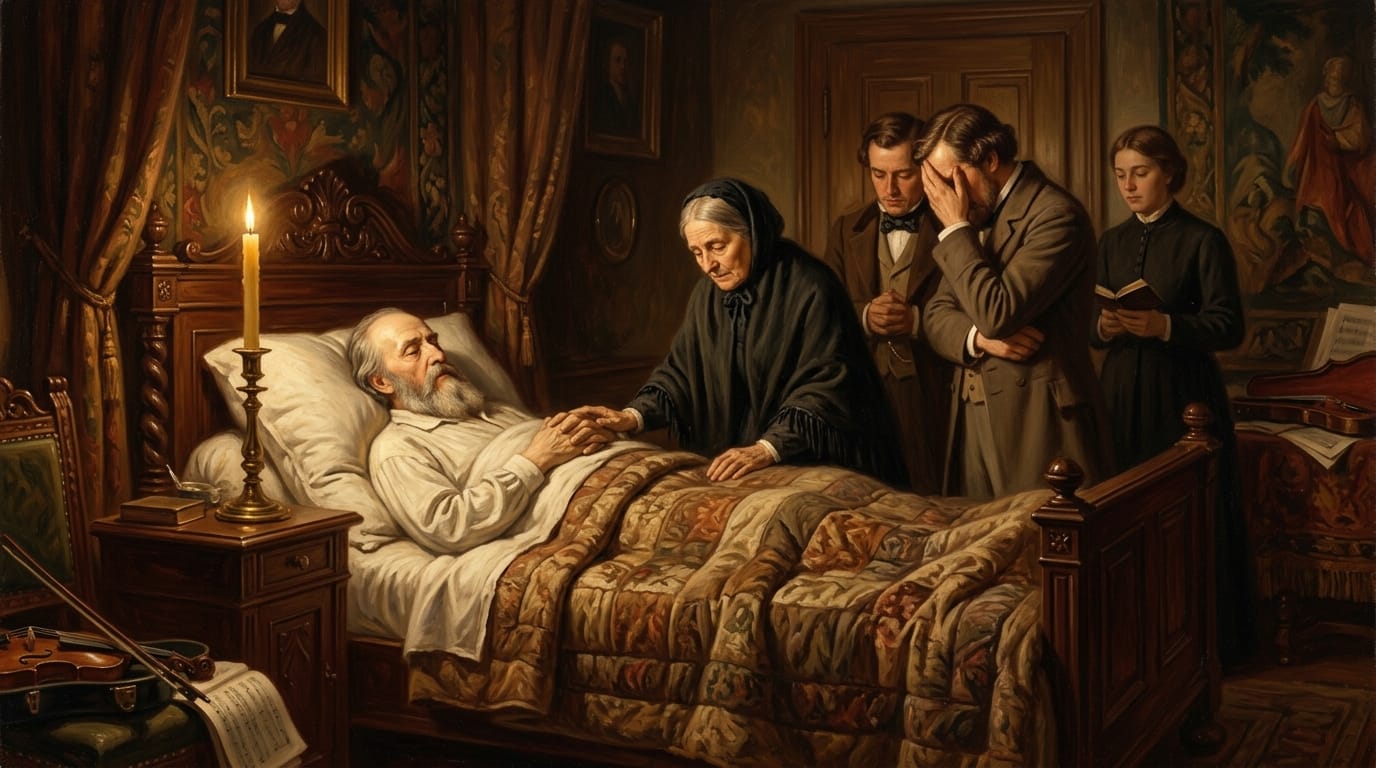
Liszt spent the first half of 1886 on a jubilee tour marking his seventy-fifth year, travelling to Paris, London (where he was received by Queen Victoria), Antwerp, and Luxembourg despite frail health. In July he went to Bayreuth to support Cosima, who had run the Wagner festival alone since her husband's death in 1883. He was already suffering from a chest infection contracted on the journey, and he attended performances of Parsifal and Tristan und Isolde in worsening condition. In his final week he developed high fever, a persistent cough, and delirium. He died shortly before midnight on July 31, 1886, aged seventy-four; the official cause was pneumonia, though a heart attack has also been suggested and the standard of care he received from Cosima's household physician has been questioned ever since. He was buried in Bayreuth's municipal cemetery on August 3. Hungary and Weimar both later sought his remains; Cosima refused, and the grave has never been moved.
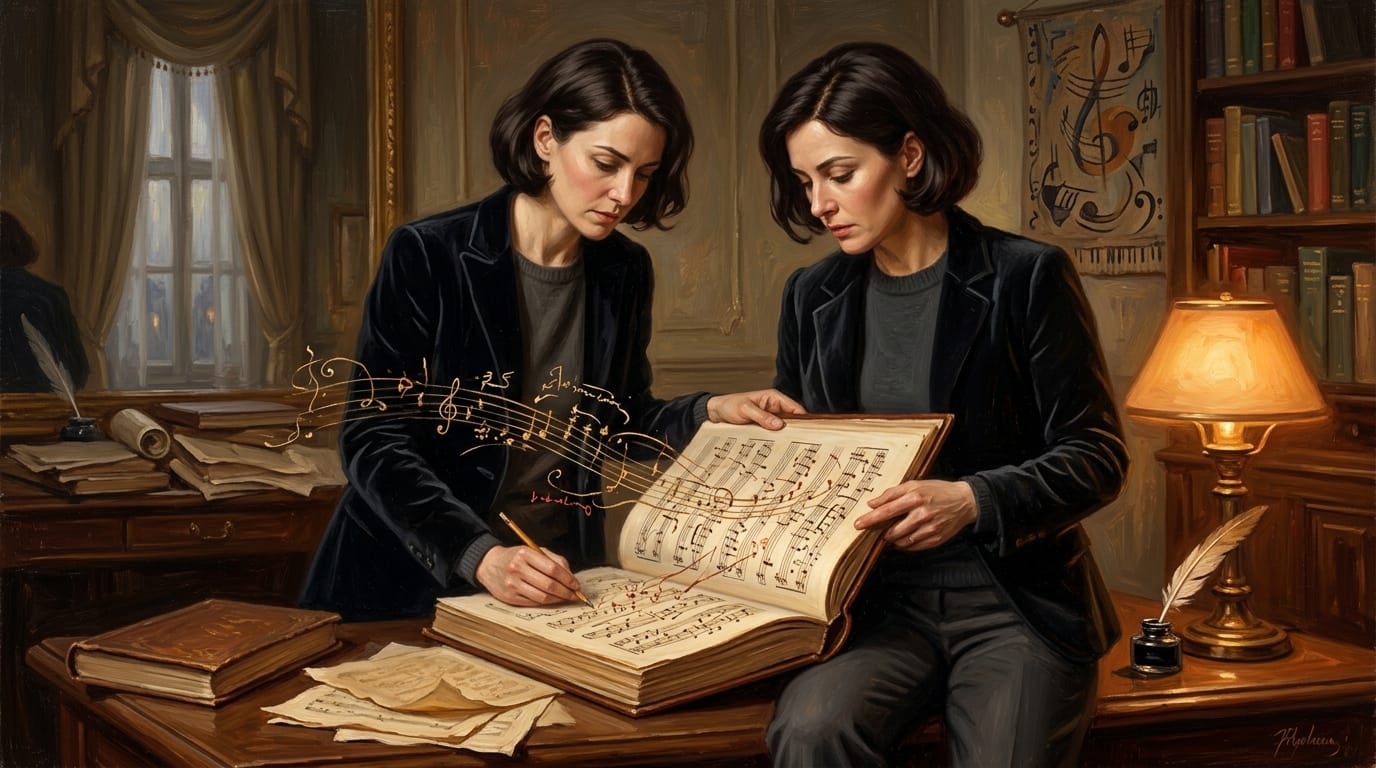
Liszt's posthumous reputation suffered from the very thing that made him famous. For decades after 1886 he was filed away as a showman — the Hungarian Rhapsodies and a handful of paraphrases in wide circulation, the symphonic poems dismissed as vulgar, the sacred music unperformed, the late works unpublished. Hanslick's judgements hardened into received opinion, and the triumph of Brahms's reputation in the Anglophone world did the rest. Serious reappraisal began in the twentieth century: Busoni and Bartók argued for him as a radical; the late pieces, once printed, were recognised as anticipating whole-tone, atonal, and impressionist practice; Humphrey Searle's catalogue of the 1960s gave scholars a map of the 700-odd works; and Leslie Howard's complete recording of the solo piano music, ninety-nine discs issued between 1985 and 1999, made the scale of what had been ignored impossible to overlook. Alan Walker's three-volume biography (1983–96) largely rewrote the popular picture of his character.
Curated Collections
The Masterpieces
Explore Liszt's greatest works, categorized by genre.
Virtuoso Studies & Showpieces
Hungarian Rhapsodies & National Works
Années de pèlerinage
The Sonata & Lyric Piano Works
Opera Paraphrases & Transcriptions
Symphonic Poems
Concertos & Symphonies
Songs & Lieder
Sacred, Choral & Organ Works
Late Experimental Works
Every Known Work
The Complete Catalog
Every one of Liszt's 216 known compositions, organized by type. Tap a category to open it, or search for a piece by name.