The Complete Collection & Life Timeline
Wolfgang Amadeus Mozart
Journey through the life and masterpieces of the child prodigy who became the Classical era's most astonishing composer. Discover the stories behind music written across just thirty-five years.
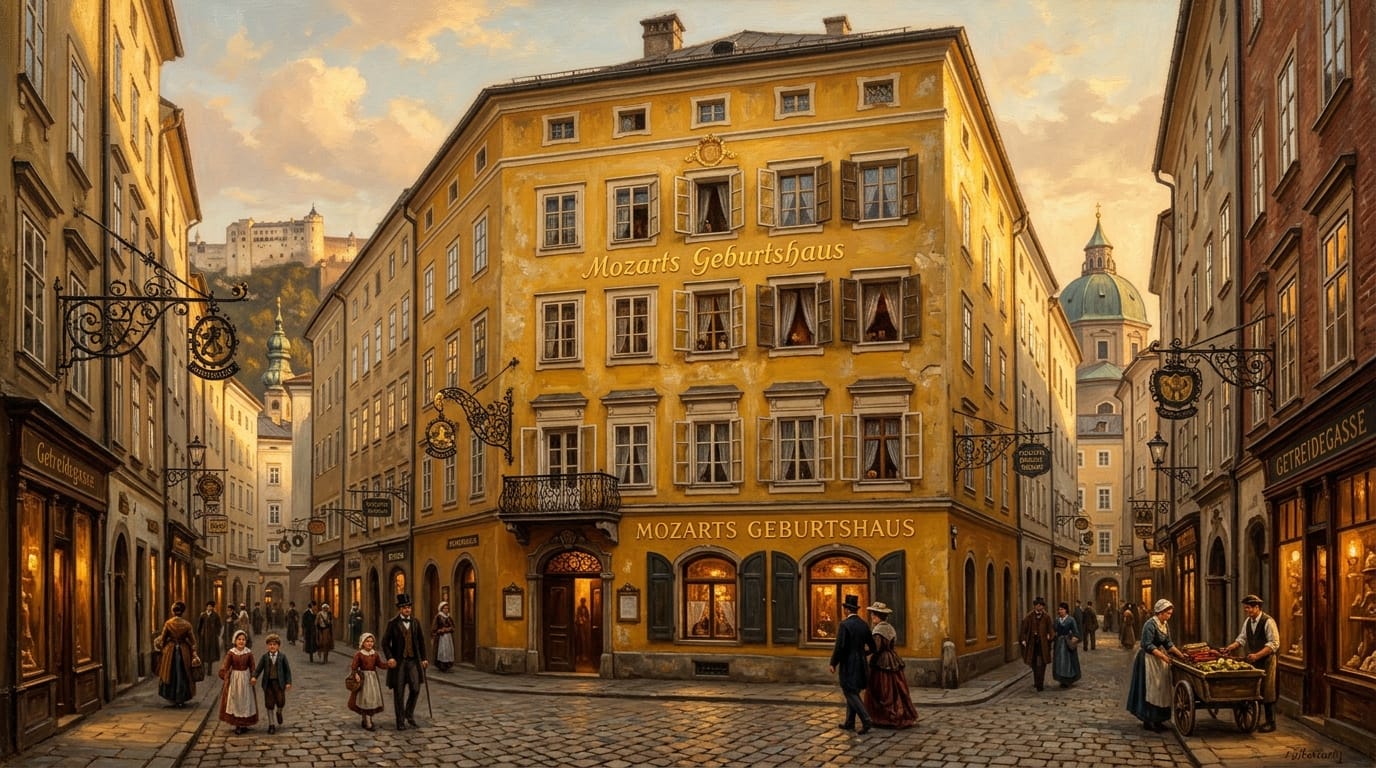
Wolfgang Amadeus Mozart was born on January 27, 1756, at Getreidegasse 9 in Salzburg, then the seat of an independent prince-archbishopric within the Holy Roman Empire. His father, Leopold Mozart, was a violinist and composer employed at the archbishop's court and the author of an influential violin-teaching method; his mother was Anna Maria Mozart, née Pertl. Of seven children born to the couple, only Wolfgang and his older sister Maria Anna, nicknamed 'Nannerl,' survived infancy, and Leopold soon recognized that both children were prodigiously gifted at the keyboard.
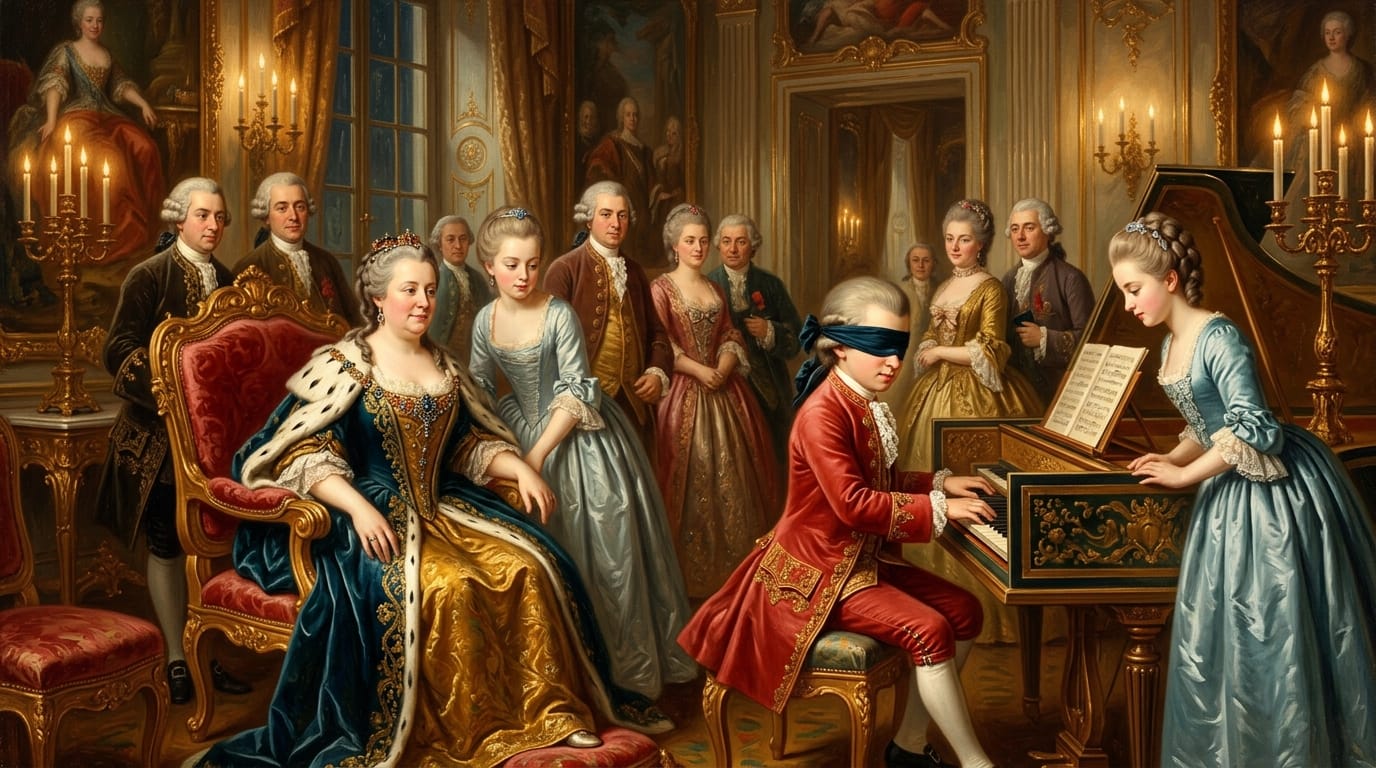
In 1762, Leopold Mozart began showing off his two musically gifted children, taking six-year-old Wolfgang and eleven-year-old Nannerl first to Munich and then to Vienna, where they performed for Empress Maria Theresa and the imperial family at Schönbrunn Palace. Audiences were astonished by Wolfgang's ability to play with a cloth covering the keyboard, identify pitches by ear, and improvise fluently, and his early fame as a keyboard prodigy quickly spread through aristocratic circles across the German-speaking lands.

From June 1763 to November 1766, the Mozart family undertook a sprawling 'grand tour,' traveling by carriage through Munich, Frankfurt, Brussels, Paris, London, The Hague, and Amsterdam, performing for royalty and nobility along the way. In London, young Wolfgang formed a close bond with Johann Christian Bach, the youngest son of Johann Sebastian Bach, whose elegant galant style left a lasting mark on Mozart's own; it was in London, at around age eight, that Mozart composed his first symphony.
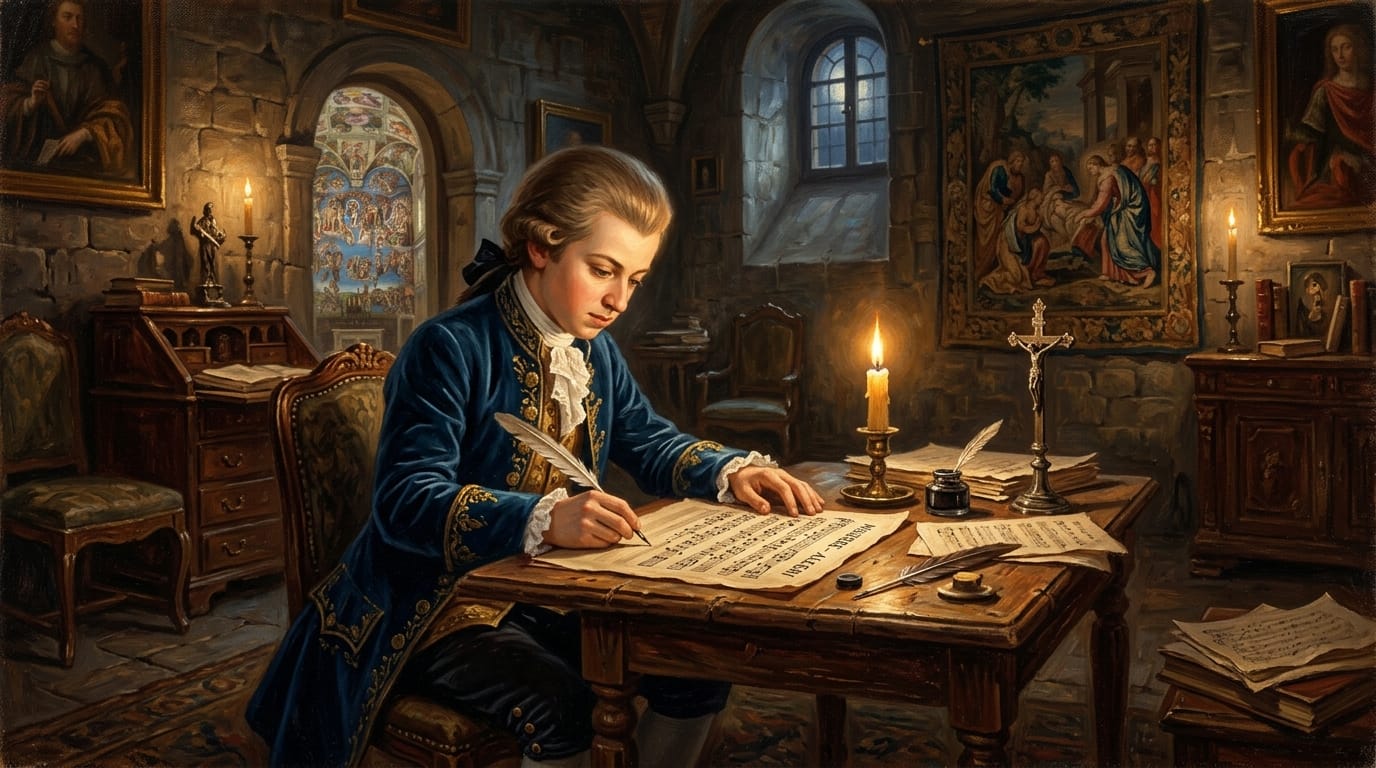
Leaving Nannerl and their mother behind, Leopold took thirteen-year-old Wolfgang on the first of three trips to Italy between 1769 and 1773, then the undisputed center of European opera. In Rome, Mozart famously heard Gregorio Allegri's closely guarded Miserere performed in the Sistine Chapel and transcribed it from memory afterward, and in Bologna he impressed the respected teacher Padre Martini enough to be admitted to the prestigious Accademia Filarmonica. The trip's centerpiece was the opera Mitridate, re di Ponto, composed for Milan and performed with considerable success in December 1770.
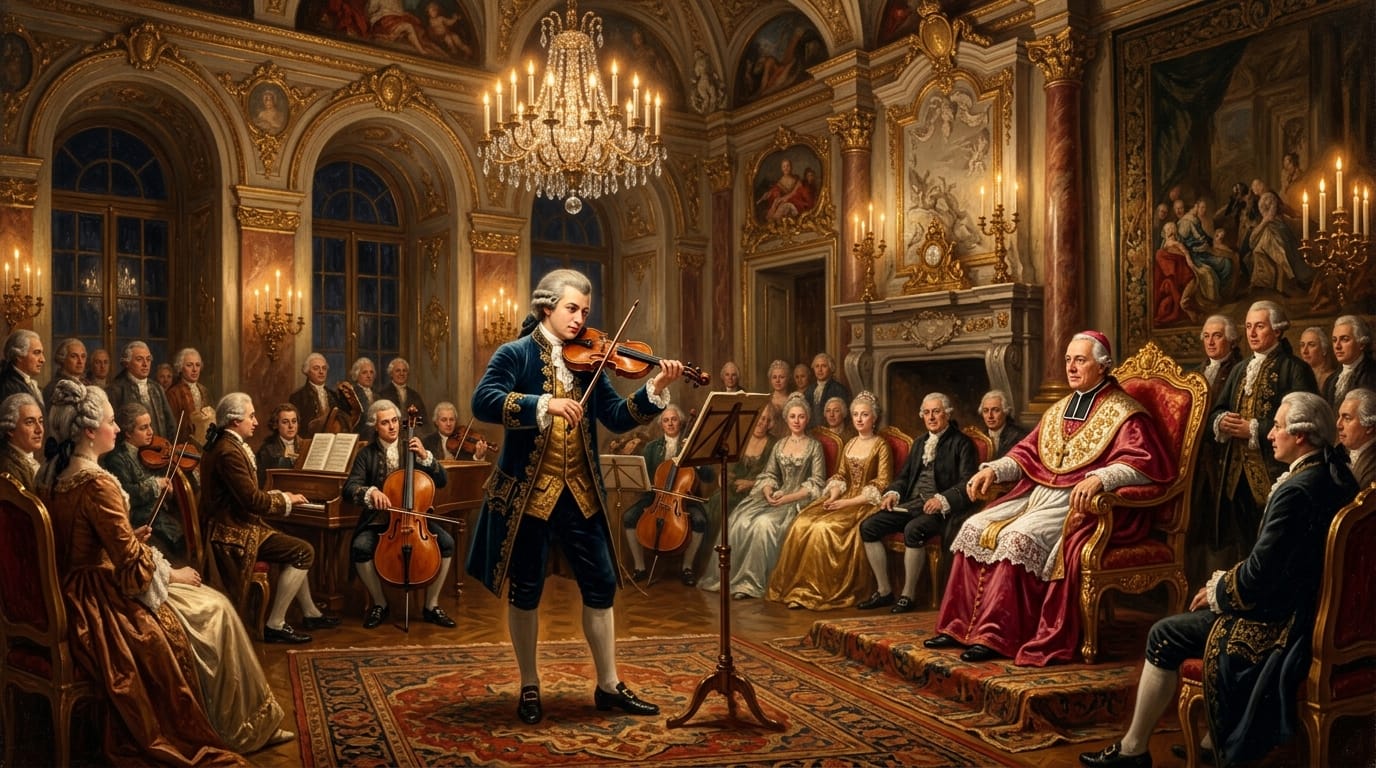
After the Italian journeys, Mozart settled into a paid position as a court musician for the Archbishop of Salzburg, Hieronymus Colloredo, composing symphonies, serenades, and concertos on demand. In 1775 alone, still only nineteen, he produced all five of his violin concertos in quick succession, culminating in the Violin Concerto No. 5 in A Major, K. 219, nicknamed 'Turkish' for a stomping, exotic-sounding episode in its finale that imitates janissary military bands then fashionable across Europe.
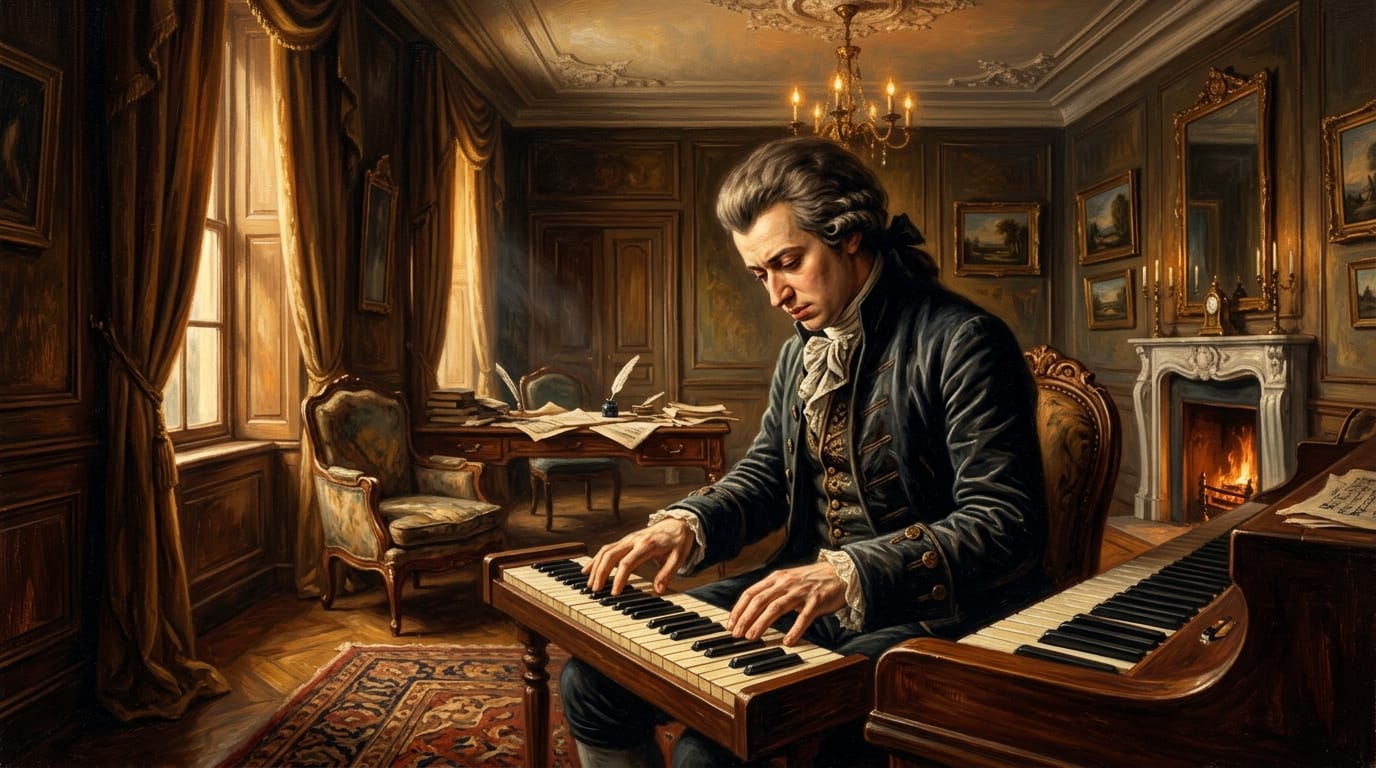
In 1777, frustrated with his limited prospects in Salzburg, Mozart resigned his court post and set out with his mother, Anna Maria, to find employment elsewhere, since Leopold could not leave his own job to accompany him. In Mannheim he fell for the young soprano Aloysia Weber, delaying his travels and testing his father's patience, before moving on to Paris, where, on July 3, 1778, his mother died of an illness worsened by inadequate medical care. Grief-stricken and far from home, Mozart composed the Piano Sonata No. 8 in A Minor, K. 310, one of only two Mozart piano sonatas in a minor key and by far his darkest and most turbulent to date.

Commissioned by the Elector of Bavaria, Mozart's opera seria Idomeneo, re di Creta premiered in Munich on January 29, 1781, to considerable acclaim. Based on the myth of the Cretan king Idomeneo, who vows to sacrifice the first person he meets after surviving a shipwreck — only to find it is his own son — the opera showed a new dramatic and orchestral sophistication that marked Mozart's arrival as a mature composer for the stage.
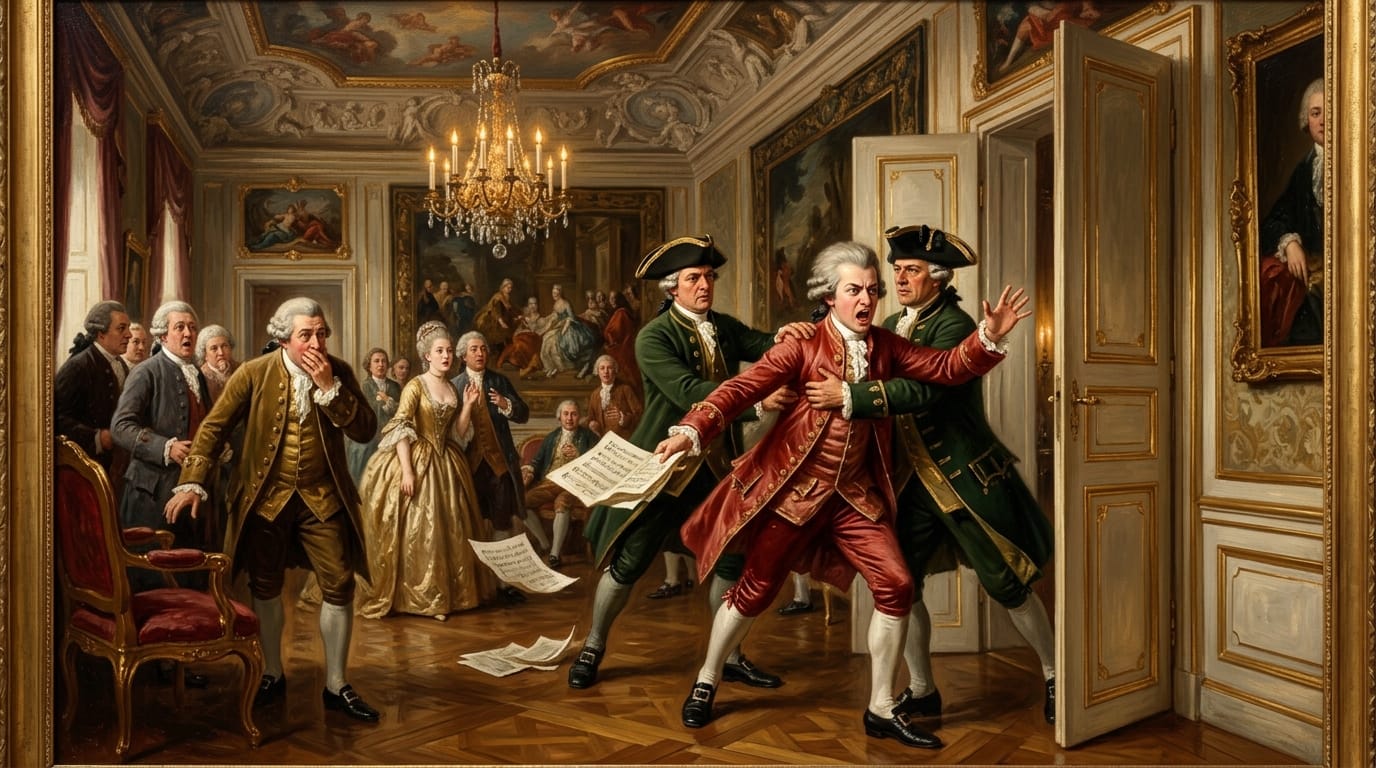
Summoned to Vienna in 1781 to attend Archbishop Colloredo during celebrations for Emperor Joseph II, Mozart found himself treated as a lowly servant, seated at table below the valets and forbidden from performing independently for Vienna's aristocracy, who were eager to hear him. Furious and freshly confident after Idomeneo's success, he repeatedly requested his release, until in June 1781 Colloredo's steward, Count Karl Arco, dismissed him with what Mozart described in a letter as a literal 'kick in the backside.' Rather than return to Salzburg, Mozart chose to remain in Vienna and build an independent career, an almost unprecedented act of defiance for a musician of his era.
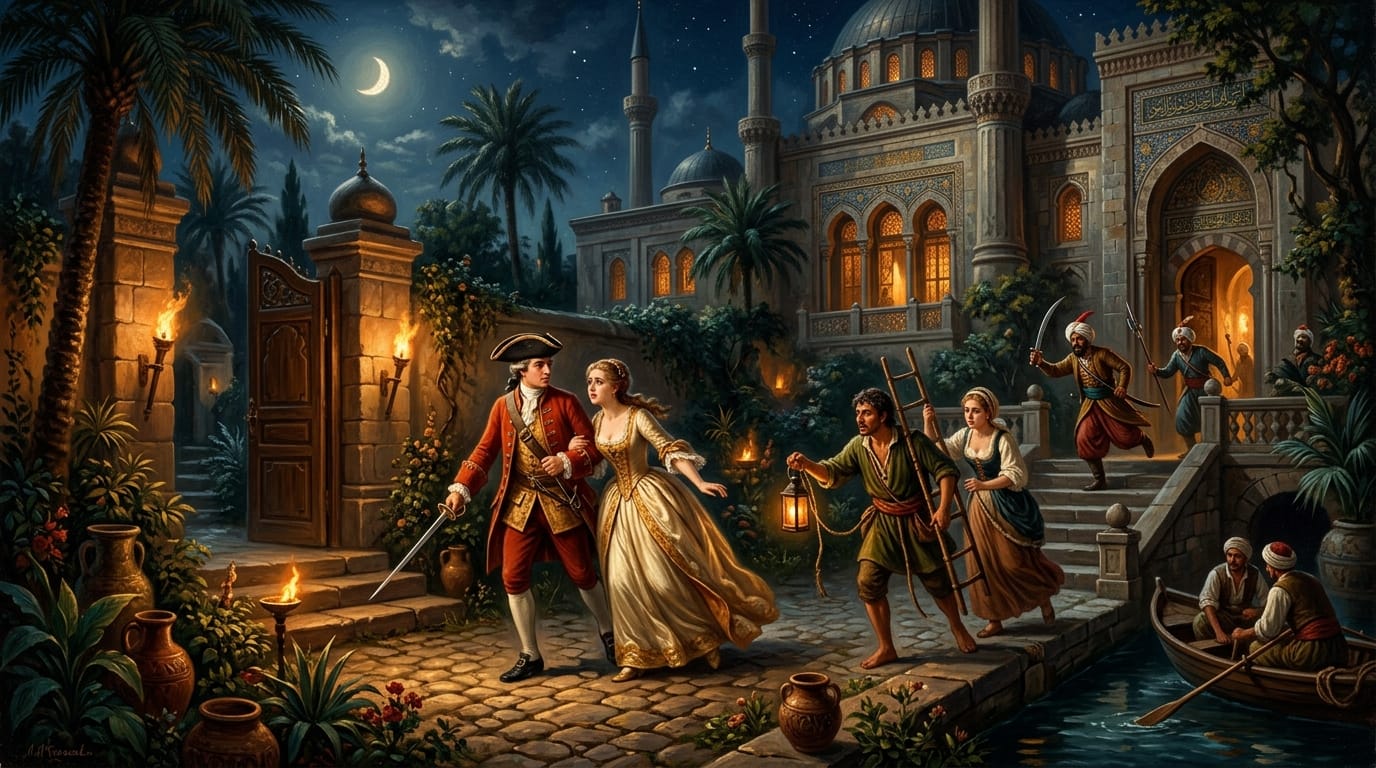
Die Entführung aus dem Serail (The Abduction from the Seraglio) premiered in Vienna on July 16, 1782, and was an immediate popular success, helping establish Mozart's reputation in his newly adopted city. Written in German rather than the customary Italian, as part of Emperor Joseph II's initiative to promote a national Singspiel tradition, the opera tells a comic tale of a rescue attempt from a Turkish pasha's harem. Joseph II reportedly told Mozart the opera had 'too many notes,' to which Mozart is said to have replied that it had exactly as many as necessary.
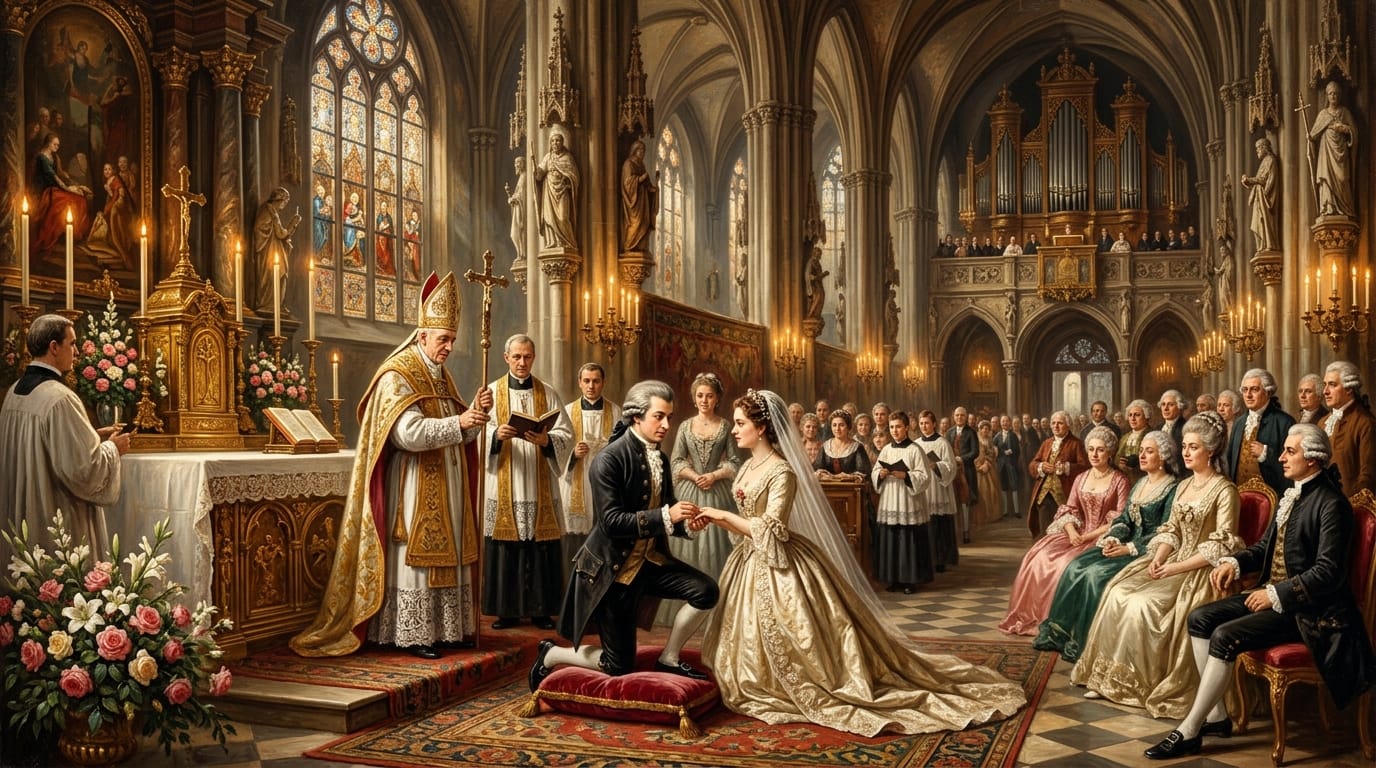
On August 4, 1782, Mozart married Constanze Weber at St. Stephen's Cathedral in Vienna — the younger sister of Aloysia, the singer he had once loved in Mannheim. Leopold Mozart disapproved of the match and was slow to give his blessing; his consenting letter arrived in Vienna only the day after the wedding had already taken place. Despite a rocky courtship and financial ups and downs, surviving letters suggest the marriage was a warm and often playful one.
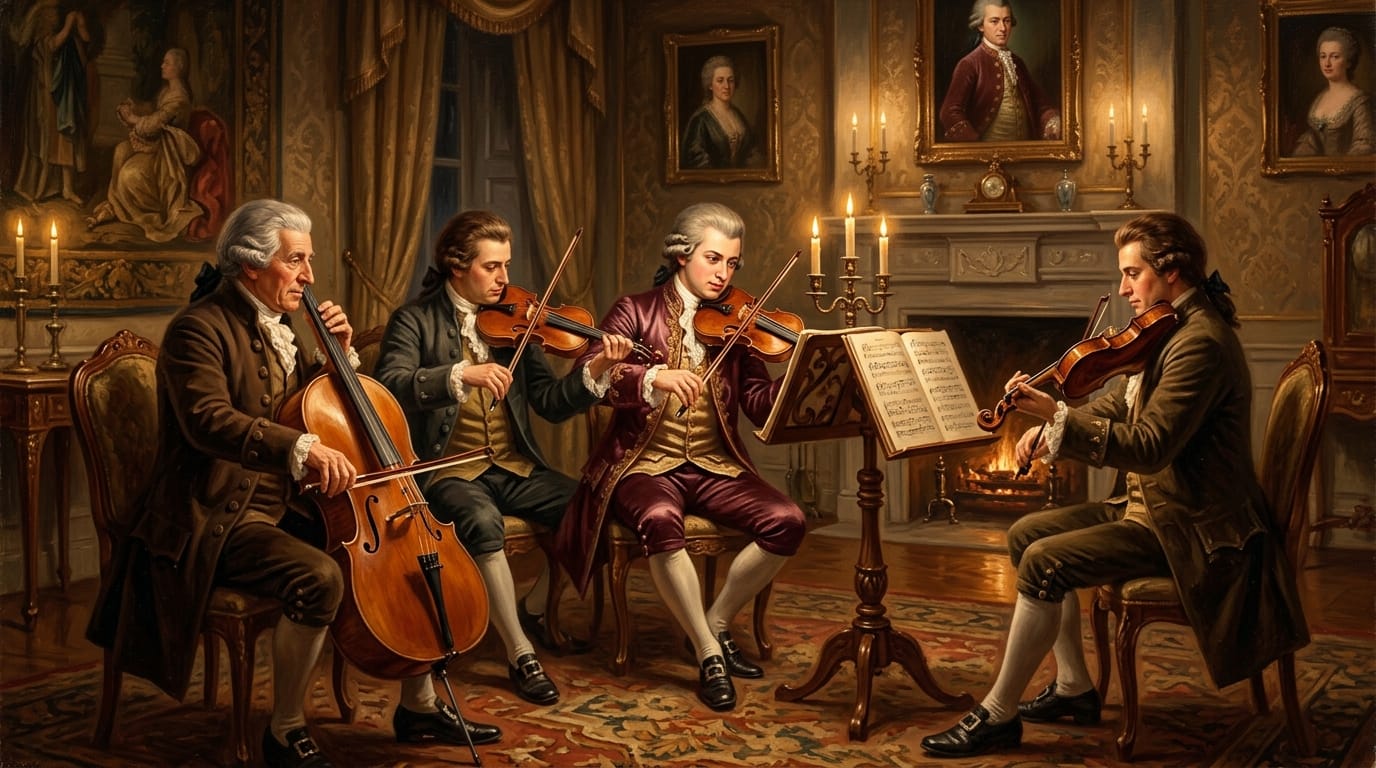
By the mid-1780s, Mozart was thriving in Vienna, giving subscription concerts, teaching piano, and forging a warm friendship with Joseph Haydn, twenty-four years his senior and already Europe's most celebrated living composer. Between 1782 and 1785, Mozart composed six string quartets that he dedicated to Haydn in gratitude and admiration, publishing them together as a set; Haydn, hearing some of them performed with Mozart's own father present, told Leopold that his son was 'the greatest composer known to me.' In December 1784, Mozart also joined a Masonic lodge, an affiliation that would shape both his social circle and several later compositions.
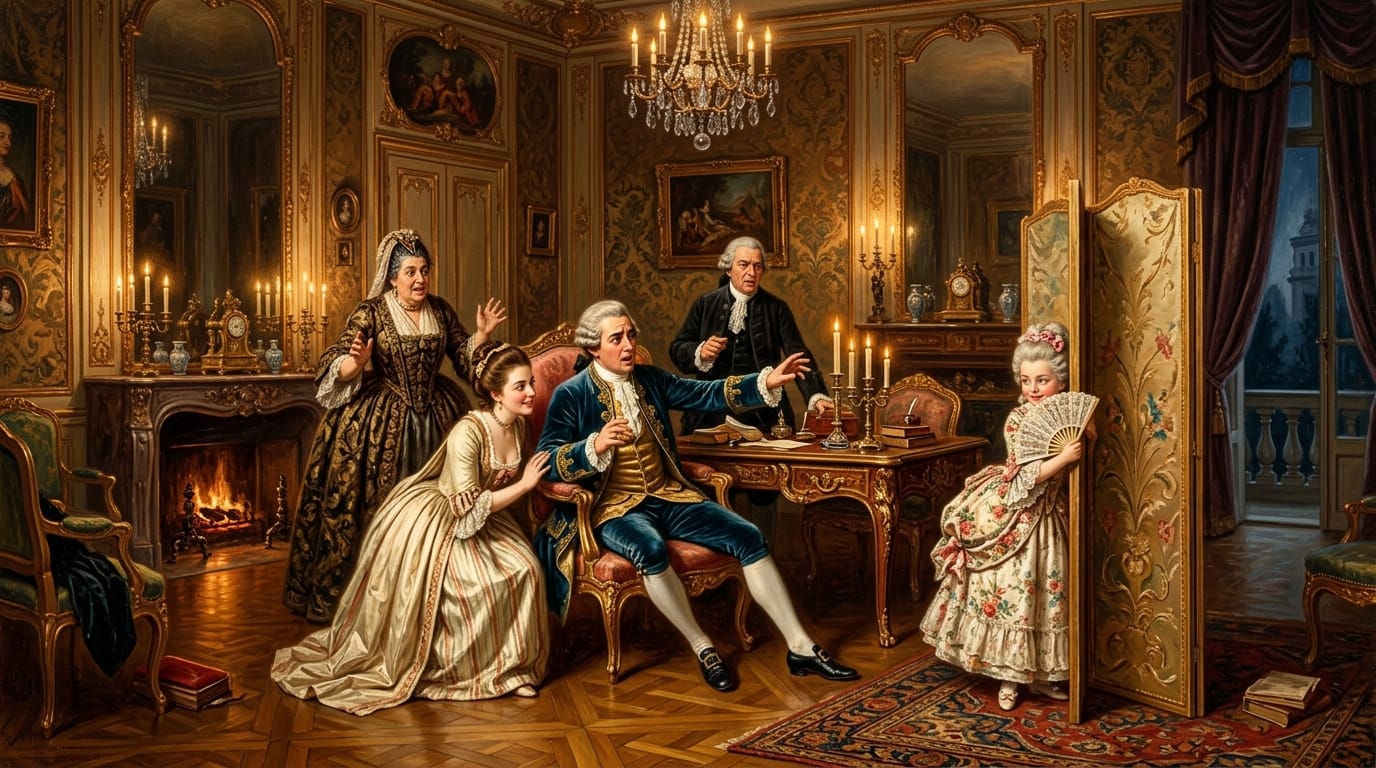
Le nozze di Figaro premiered in Vienna on May 1, 1786, the first of three operas Mozart wrote with the brilliant librettist Lorenzo Da Ponte. Based on a French play by Beaumarchais that was considered so politically provocative — mocking an aristocrat outwitted by his own servants — that it had been banned from the Viennese stage as a spoken play, the opera combined comedy, romance, and a subtly subversive social edge. It found an especially rapturous reception in Prague later that year, prompting Mozart to travel there in person to conduct.
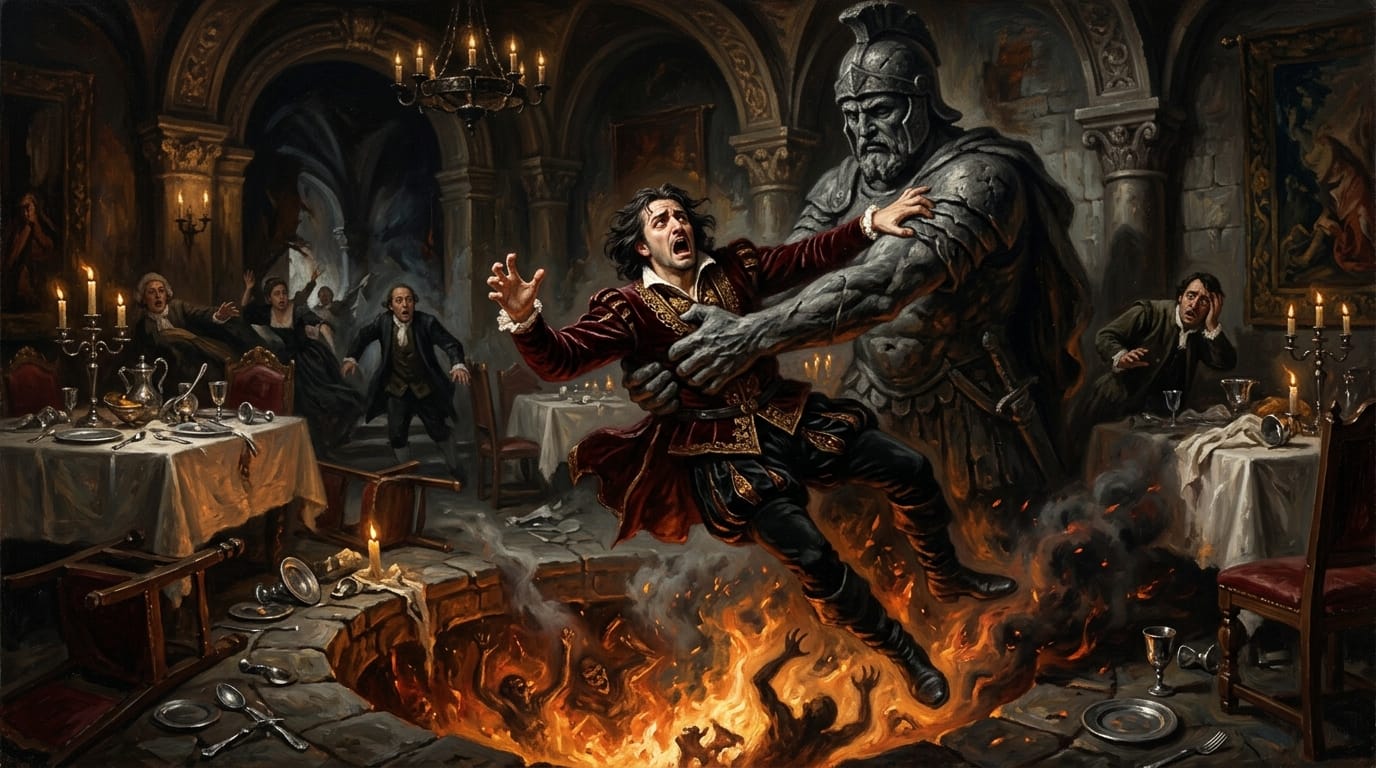
Don Giovanni, Mozart and Da Ponte's second collaboration, premiered in Prague on October 29, 1787, to great acclaim, blending comedy and supernatural horror in the story of a remorseless seducer finally dragged to hell by the animated statue of a man he had murdered. Just months earlier, on May 28, 1787, Mozart's father Leopold had died in Salzburg; the two had remained close correspondents throughout Wolfgang's adult life, and some scholars have heard an echo of that loss in the opera's unflinching confrontation with death and judgment.
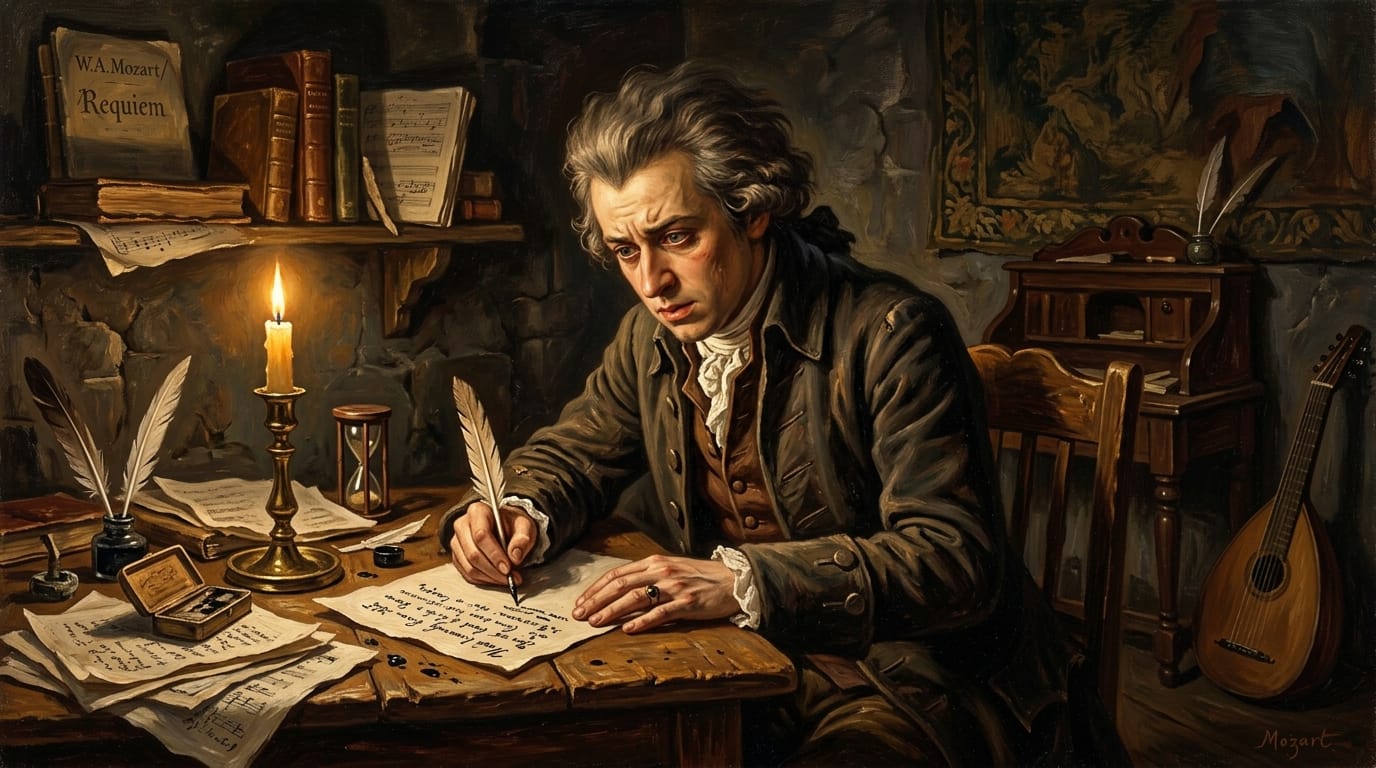
By 1788, Vienna's involvement in a costly war against the Ottoman Empire had drained the city's appetite for expensive concerts and lessons, and Mozart's income fell sharply; a painful series of surviving letters shows him repeatedly asking his friend and fellow Freemason Michael Puchberg for loans to cover rent and debts. Remarkably, this same difficult summer produced his final three symphonies — No. 39, No. 40, and No. 41 — composed in the space of roughly six weeks, with no evidence any of them were commissioned or even performed in his lifetime.
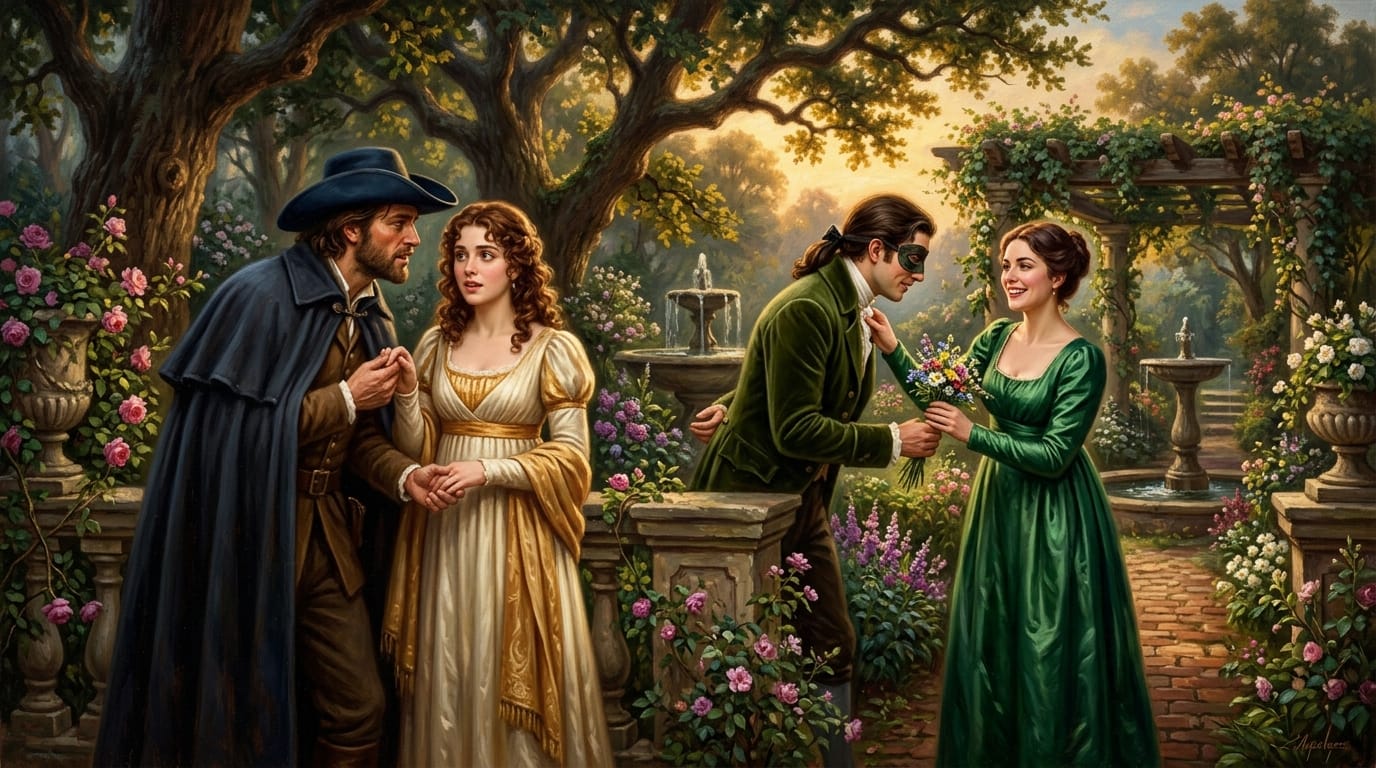
Così fan tutte, ossia La scuola degli amanti (roughly, 'Women Are Like That, or The School for Lovers'), the third and final Mozart–Da Ponte opera, premiered in Vienna on January 26, 1790. Its plot, in which two young officers disguise themselves to test their fiancées' fidelity, walks a knowing line between farce and genuine emotional discomfort, and some nineteenth-century audiences found its cynicism about romantic loyalty distasteful, even as its music remains some of Mozart's most exquisitely crafted.

Die Zauberflöte (The Magic Flute) premiered on September 30, 1791, at Emanuel Schikaneder's popular Theater auf der Wieden, just weeks before Mozart's death. Written in German for a broad, non-aristocratic audience rather than Vienna's fashionable court opera houses, it blends slapstick comedy, fairy-tale adventure, and earnest Masonic symbolism about the pursuit of wisdom and virtue. It became an immediate and lasting popular success, performed to full houses throughout the final weeks of Mozart's life.
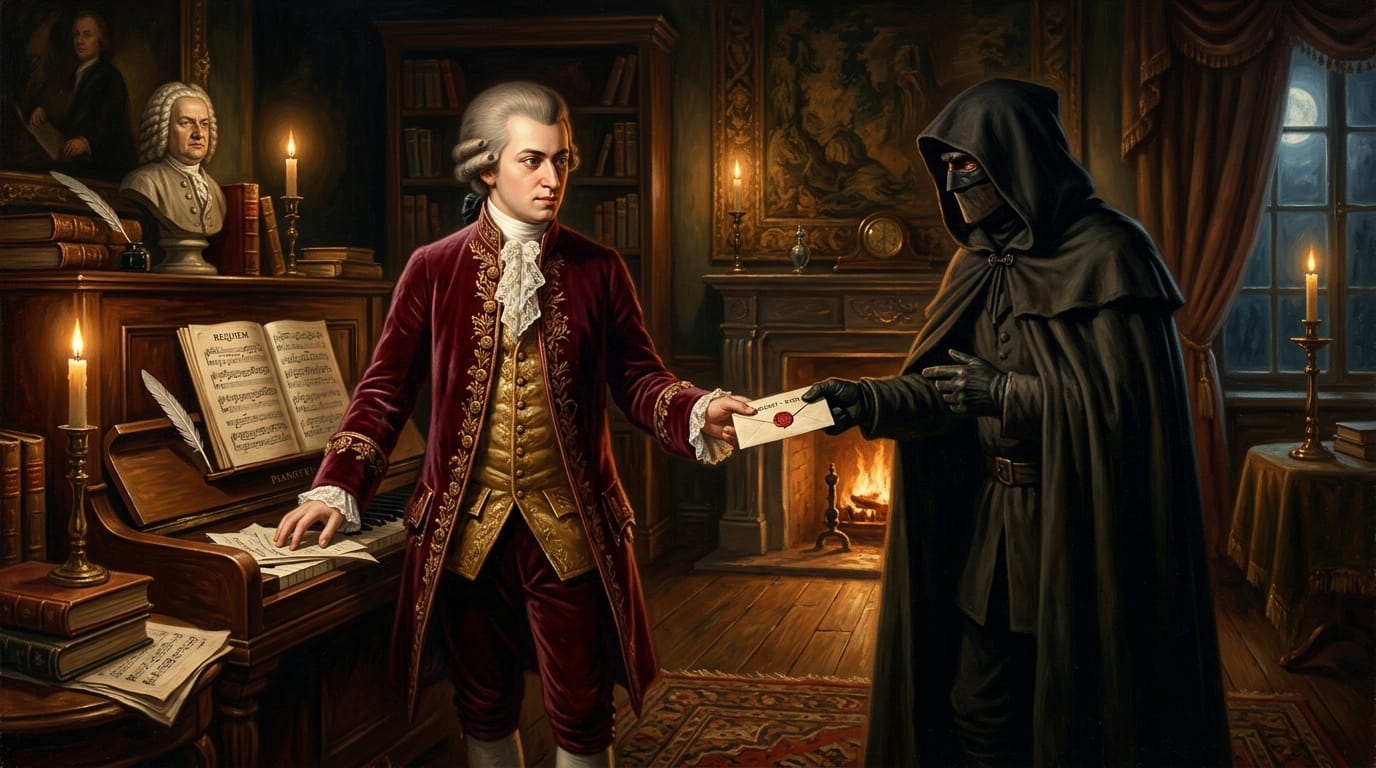
In the summer of 1791, an anonymous messenger approached Mozart on behalf of an unnamed nobleman, commissioning a Requiem Mass with unusual secrecy. The patron, later identified as Count Franz von Walsegg, wanted the piece to mourn his young wife and reportedly intended to pass it off as his own composition, a common practice among wealthy amateur patrons of the time. Mozart began work on the piece that fall, but grew increasingly ill before he could complete it, leaving the Requiem unfinished at his death.
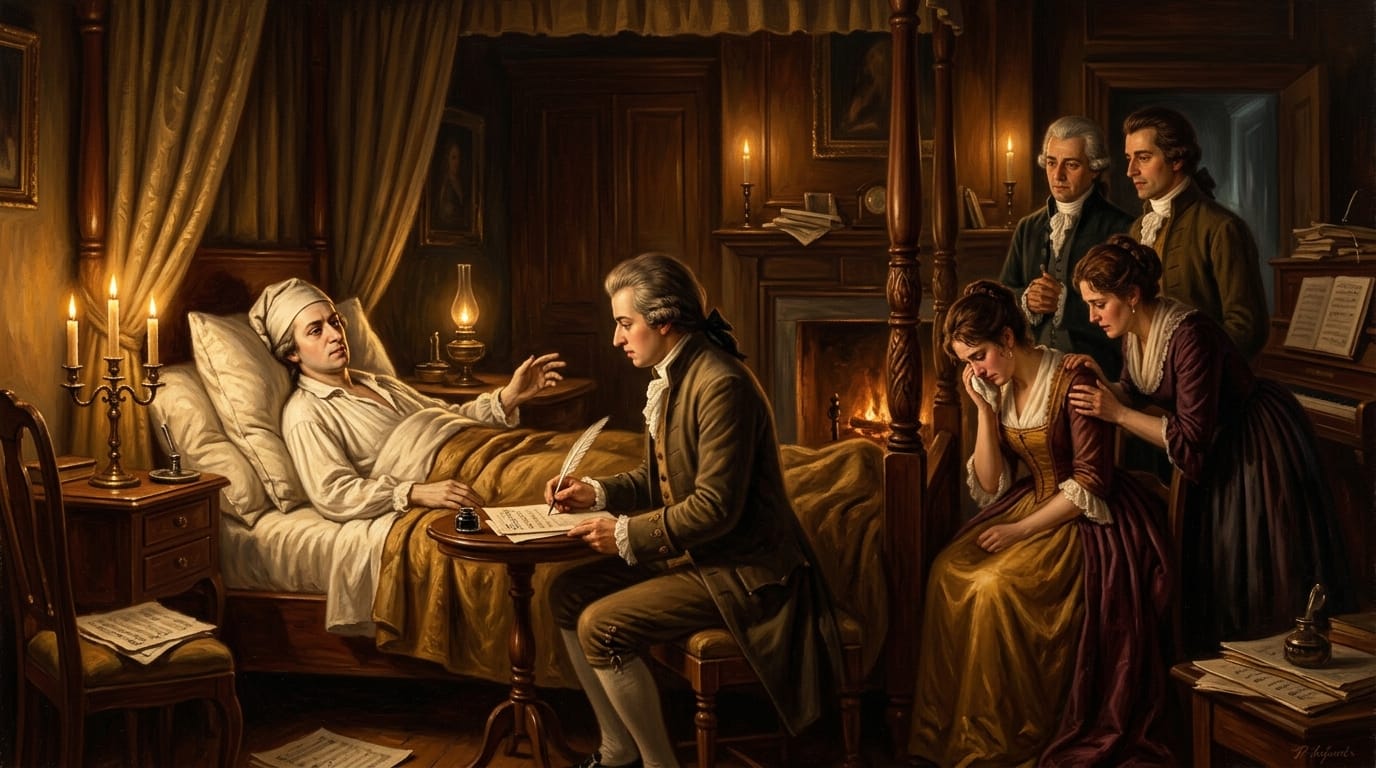
Mozart died in Vienna on December 5, 1791, after roughly two weeks of illness marked by fever, swelling, and pain, most likely from acute rheumatic fever, possibly compounded by other ailments; he was thirty-five. He was buried in a common grave at St. Marx Cemetery outside the city — standard practice under Viennese burial law at the time, not, as later legend held, a sign of poverty or neglect. The persistent story that his rival Antonio Salieri poisoned him has no credible historical evidence behind it and is now regarded by scholars as a myth that grew after Mozart's death and was later popularized by fiction and film.
Curated Collections
The Masterpieces
Explore Mozart's greatest works, categorized by genre.
Symphonies
Piano Concertos
Piano Sonatas
String Quartets
Violin Concertos
Operas
Serenades & Divertimenti
Sacred & Choral Works
Chamber Music
Every Known Work
The Complete Catalog
Every one of Mozart's 189 known compositions, organized by type. Tap a category to open it, or search for a piece by name.